
Album review: Daniel Caesar’s ‘Son of Spergy’ is a self-portrait
by Elger Ogoc
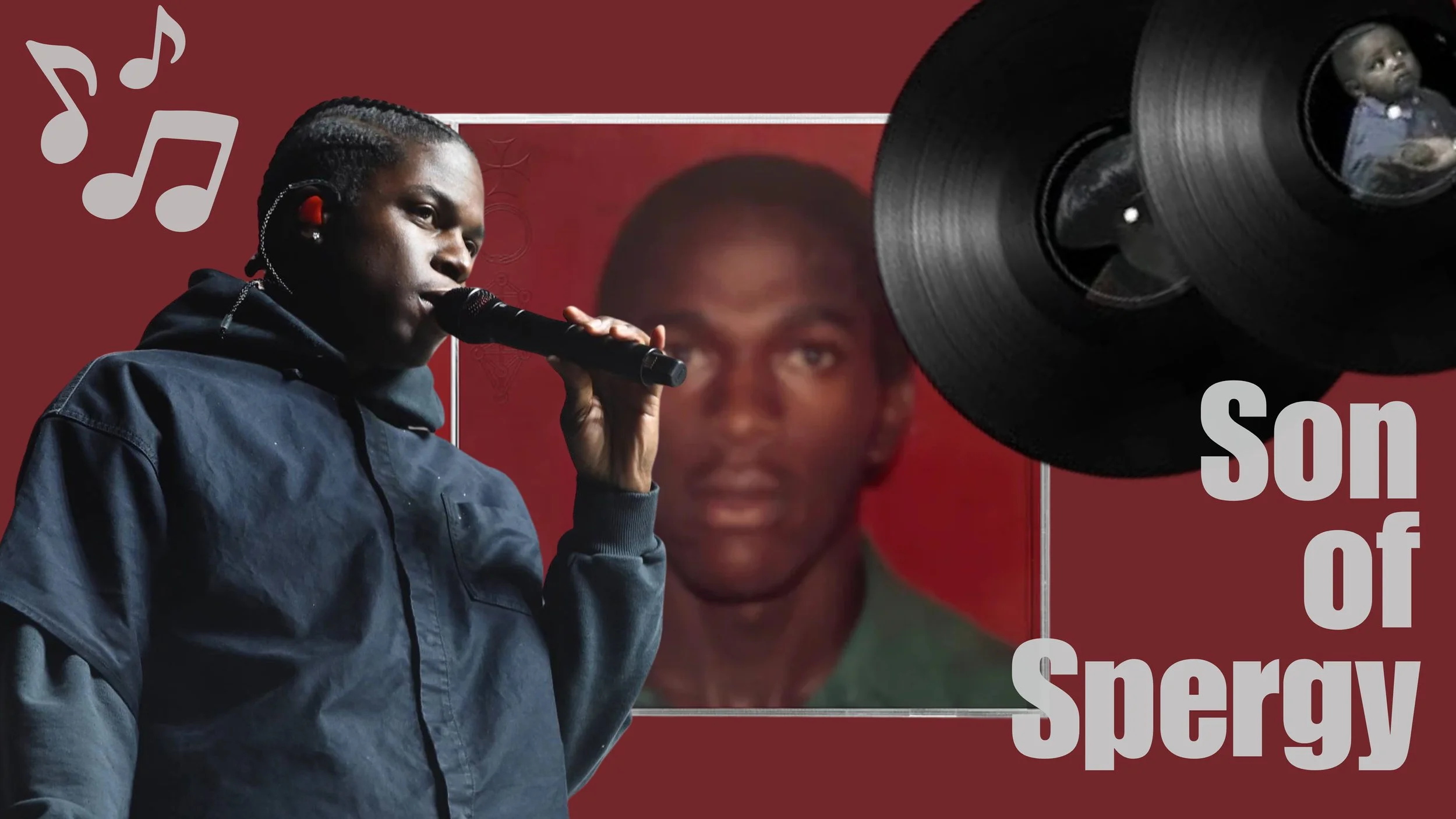
Graphic by Sienna Lewis, Staff Photographer
Love, family, faith and growth are introspective topics that require those in search of self-acceptance and inner peace to examine and ponder.
In Daniel Caesar’s most transformative album yet, “Son of Spergy,” these themes are dissected through personal experience and reflection, raising questions directed both toward the artist himself and to his newfound mainstream audience.
Caesar’s early career began with a boom, the releases of both his EP “Pilgrim’s Paradise” (2015) and debut studio album “Freudian” (2017) receiving overwhelmingly critical acclaim. Critics and audiences alike praised his genre-bending sound and stylistic mix between modern R&B, gospel, soul and rock; a unique blend which set the artist apart from traditional R&B artists.
Following these projects, Caesar released the experimental albums “CASE STUDY 01” (2019) and “NEVER ENOUGH” (2023), both of which solidified his position as a mainstream artist.
However, “Son of Spergy” is Caesar’s potent attempt at reflecting on his life journey from childhood to adulthood, displaying a level of maturity and self-awareness that shapes his music. With nuanced questions regarding his upbringing in the church, familial disconnect and young love, the artist turns to his friends and family — accompanied by an inner dialogue with a higher power — in search to discover his own answers.
The opening song, “Rain Down (Feat. Sampha)” sets listeners into a field of tall grass and deafening birds, placing us into the middle of a story in which we’ve missed the first and second act. “Lord, let your blessings rain down on me,” Caesar bargains. An encompassing instrumental and ethereal gospel vocals set the stage for the rest of the album — a church service packed with journey and acceptance.
Songs like “Baby Blue (Feat. Norwill Simmonds)” and “Touching God (Feat. Yebba & Blood Orange)” welcome us into Caesar’s experience as Ashton Simmonds — a life before the stage name. His formative years of boyhood, living with his three siblings and parents (Norwill and Hollace Simmonds), offer the audience an inside look to how his childhood shaped his music, philosophies and relationships.
In “Root of all Evil,” he sings, “What have I done? What should I do? / Am I a man, or a beast? Somebody, please discipline me, for I am a sinner,” conveying his ambiguous guilt — perhaps of his mistakes or, more notably, stepping away from his roots of religious faith.
“CASE STUDY 01” explores conflict between science and religion, with songs such as “SUPERPOSITION (feat. John Mayer)” and “ENTROPY” that use scientific motifs to explain his development as both an individual and as an artist. Thus, “Son of Spergy” seems to act as an apology toward God, a figure that Caesar had turned away from with the rapid onset of fame and independence after leaving home to pursue music against his parents’ wishes.
The album features two of Caesar’s family members: Norwill and Zachary Simmonds. Norwill Simmonds, Caesar’s father and singer of gospel and church music, adds to “Baby Blue” a dualistic theme between love and parental connection. Norwill’s tail-end appearance, a gospel refrain, gives the lullaby-like song a golden exit and departure from the dialogue between Caesar and his subject.
“No More Loving (On Women I Don’t Love) (Feat. 646yf4t)” features his brother, Zachary (646yf4t) in a back-and-forth friendly competition, combining their differing styles with their similar vocal articulations. A musical superstar including his family members to create music is not charity, though it may be viewed as such. Rather, it is Caesar’s way of expressing gratitude and inclusion toward the individuals that shaped his character in ways that public audiences don’t have access to.
The closing song, “Sins of the Father (Feat. Bon Iver),” follows the same trend of Caesar’s previous albums, consisting of two passages separated by a lengthy silence. However, this patterned silence in the double-song is reinvented into a meditation full of imagery and atmosphere, turning the day filled with sun and birds into an evening of rain and introspection. Caesar uses this recurring structure to depict a transition into a new, matured era of life.
“Son of Spergy” is not an album for us; it’s for Ashton Simmonds. There’s a certain privilege in being able to observe such an intimate portrayal of a public figure’s private life. Alongside friends such as Clairo, Mustafa, Blood Orange and Rex Orange County (all of whom helped with the creation of the project), questions are not answered and solutions are not found. Rather, Daniel Caesar, in an active journey to find answers to his questions, instead finds peace.