
Album review: ‘Kiss All the Time. Disco, Occasionally.’
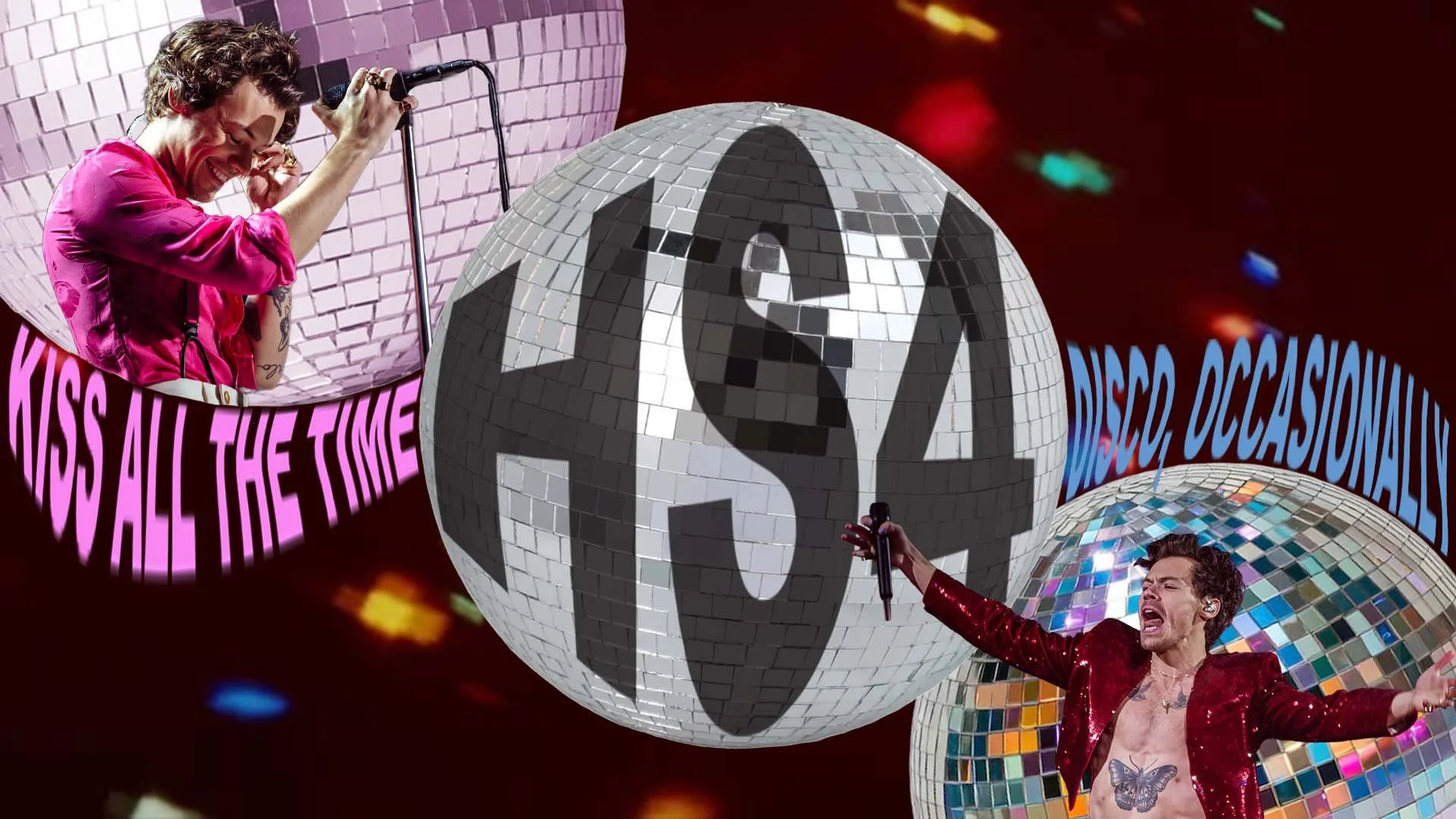
Collage by Trinity Johnson, Photographer
“We belong together” was the sentiment that first came from Harry Styles’ fourth studio album, “Kiss All the Time. Disco, Occasionally.,” after the artist’s four-year hiatus upon the Jan. 22 release of the album’s only single, “Aperture.”
With clear influence from artists like LCD Soundsystem and Tame Impala, Styles’ newest album ventures into fresh territory, occasionally falling short, with some songs coming off as less The 1975 and more department-store pop.
However, “Kiss All the Time” does deliver on many fronts, especially in the melancholy-pop style the artist has become known for. For many fans who had been (more or less impatiently) waiting on new music from Styles for years, it does just the trick.
The album is a lot of things: a life motto, a toe-dip into a new genre and, notably, a blueprint for the two-sided nature of its soundscapes.
“Kiss All the Time,” the album’s more melancholic side, is on-par with Styles’ older work, reminiscent especially of his debut album, “Harry Styles.” Alternatively, “Disco Occasionally,” represents a new facet of his sound, incorporating elements of dance music that he hasn’t previously explored.
“Aperture,” the first and only single released ahead of the album, was Styles’ first official return to music since 2022. Fans who had found themselves saying “HS4 at midnight” for years now had new hope; not only was HS4 (Harry Styles’ fourth album) coming out, it would be in the near future.
The song created some controversy among early listeners, with many describing it as “techno.” Listening to the full scope, the listener can understand where notions like these were coming from — and also the ways the album came up short.
“American Girls,” the second track, was the true indicator of what the album intended — familiar soundscapes with melancholic lyrics, but with a new and undeniable danceability. Styles doesn’t do too much, leaning into what he knows works.
Firstly, his initial appeal from U.K. boyband One Direction, referenced in the lyrics “‘I’ve known you for ages’/ It’s all that I’ve heard / My friends are in love with American girls.”
Secondly, a soft-spoken, borderline-reflective intro followed by a more powerful chorus. In total, there are only fourteen unique lyrics throughout the song — it’s anchored in its chorus and buoyed by its production, striking a nuanced balance between familiarity and newness. Despite its clear Matty Healy influence, it still sounds like a Harry Styles song — for better or for worse.
“Ready, Steady, Go!” is borderline raunchy, but still can’t escape the PG-rated nature of boy band love songs. It does, however, have a notable urgency that identifies it with its dance-music contemporaries.
The fourth track, “Are You Listening Yet?” gives an edge to the album upfront. It does arguably the best job of capturing the dance-punk vibe of the album’s inspirations, but even still it can’t escape the undertones of pop production.
“Season 2 Weight Loss” grapples with Styles’ own identity both in terms of his career and his relationships to others. As far as Styles’ songs go, it doesn’t necessarily rank when it comes to sadness and nostalgia.
However, lyrics like, “It’s hard to tell when the thoughts are my own” and “Do you love me now?/ Do you?/ Do you?/ Do I let you down?” give it a certain emotional weight only buoyed by its production.
“Coming Up Roses,” the eighth track, is especially reminiscent of Styles’ past work in terms of sound, but also symbolizes his step toward a new genre. The song was first debuted at a London show by EDM artist Fred again.. on Feb. 26, furthering the merging of Styles’ world into the world of dance music — despite using one of the album’s saddest songs.
The closing track, “Carla’s Song,” is both melancholic and hopeful, and acts as a fitting closure for an adventurous album. The sentiment is simple: “It’s all waiting there for you,” and for fans of Styles both old and new, the album is waiting.
The intersection between the album’s halves is what redeems it, steering it away from cookie-cutter pop and veering into new territory while maintaining much of Styles’ sonic identity. It’s a manifestation of the boy band popstar versus indie-adjacent solo artist struggle that Styles has been continuously fighting to come out on top of.
“Kiss All the Time” maintains many of the subtle nuances of Styles’ other albums, whether in the sound production or the lyrics, with added outside influence. The intention of a dance-music album is there, but, for the most part, the execution is watery. For an album that was meant to branch out, it certainly feels safe.
Would Harry have been better off if he’d left the whole edgy-dance-music push behind? Possibly. Regardless, the result is an album with a much groovier, more danceable sound than his past work, while maintaining much of his identity as an artist.
From nods to his “X-Factor” start all the way across his solo career, the album is the culmination of an admirable career and an idea of where he’ll go from here. Despite fighting commercial-pop allegations and falling somewhat short on the dance-music front, the new album is worth the listen for old fans, and might even bring in some new ones. Its duality puts Styles’ range as an artist on full display in a way that is nearly impossible to deny.