
Album review: vulnerability and optimism duel on ‘Chasing the Chimera’
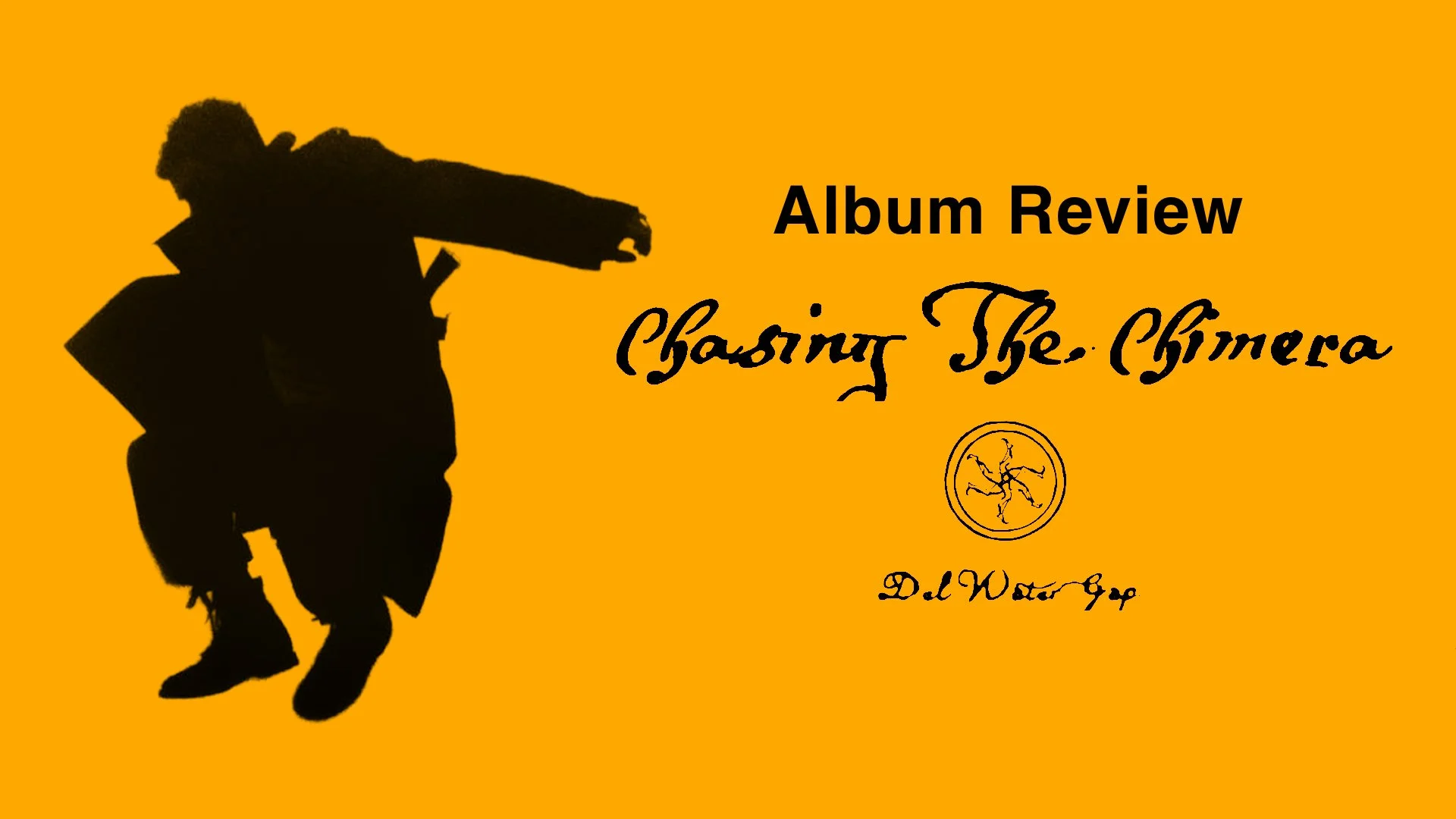
Graphic by Easton Clark, Photography Editor
On “Chasing the Chimera,” Del Water Gap threads together reflections on identity and love with deceptively upbeat soundscapes, melancholy-tinged lyrics and bright production, giving his newest release an air of familiarity.
Opening with “Marigolds,” Del Water Gap (DWG) brings a bittersweet tang to introduce the 12-track project, with an air of delicacy that is simultaneously piercing.
“Small Town Joan of Arc,” the second track, is a love song at its core. Painting a very specific portrait and dripping in metaphor, the lyrics allow Del Water Gap’s (hypothetical) lover to stand as a larger-than-life contrast to the mundanity of small-town living.
The song’s upbeat, shimmering instrumentation underscores the lyrical idealization, creating a tension between the brightness of the sound and the yearning embedded in the words, though it makes for an easy, casual listen.
Even in his love songs, there is a sense of looming hopelessness amidst the album’s catchy lyricism and upbeat sound — something Del Water Gap’s cult listeners have come to know and love.
“How to Live,” the third track on the album and the first single released, is an existential crisis delivered in a danceable package. Its staccato rhythm echoes the relentless pulse of self-doubt while grappling with the spiral of adulthood and the messiness and complexity of everyday life.
With lyrics like “I made a little money but it’s never enough/ She’ll tell me that she want me but it’s still ain’t enough” and “I can’t sleep/ Waste my days/ I’m so much older/ Than I can take,” the track poses questions about what it means to live.
What do we do with the gift of being alive? How do we make it mean something?
Whether or not Del Water Gap answers these questions with the rest of the album is up to the discretion of each individual listener. For now, maybe the solidarity in the search for answers is enough.
The following track, “Please Follow,” is reminiscent of Tame Impala in the “Currents” era with its groovy baseline and lush vocals. In the same vein, just like much of the thematic imagery on “Currents,” “Please Follow” is about letting down and letting go — more specifically, the difficulty of both of those things. Its almost jazzy, sultry sound mirrors the push and pull of a relationship, capturing the spirit of Tame Impala songs like “Love/Paranoia” and “New Person, Same Old Mistakes.”
“Eastside Girls,” the fifth track on the album, marks a sonic return back to a lighter, more stripped-back sound, though the lyricism is no less melancholic. If anything, “Eastside Girls” is one of the most reflective tracks on the album, grappling with themes like love lost, feelings of isolation and the passage of time.
Del Water Gap seems to be in a state of bargaining, though whether it's with a lover, himself or some higher power is up to the listener to decide. Lyrics like “I was just thinking, we could make plans/ I’ll steal the moonlight, just to see you dance” evoke nostalgia and longing more directly than in previous tracks.
The songs on DWG’s newest album have a notable jazz influence, with shimmering sound and percussive rhythms. There’s a certain twang, especially on tracks like “New Personality,” that give each track a layered, double-edged quality and balance melancholy with liveliness.
“We Don’t Have To Take It Slow” is a direct contradiction, standing as the slowest song on the record. It generally serves as a dichotomy, starting with a myriad of promises and a plea to make things work before the first chorus, and then flipping that on its head with the lyrics, “Honestly, I’m sick of making promises I’ll never keep/ I’d rather be alone.”
Picking back up on an upbeat swing, “Never Speak Again” is another dancing melody that sugarcoats its breakup storytelling. The rhythm is so lively it’s almost hard to believe the song delivers lyrics like “I can't tell you I was ever in love/ (Don't cry) You were always the better of us two/ And that's how I'll remember you/ If we never speak again.” In spite of the downer lyricism, the track has an irresistible energy that pulls the listener in before breaking their heart with the lyrics.
In the same way, “Ghost In the Uniform” takes a distinctly pop-oriented approach despite telling a story about an unwillingness to learn from past flings and love long outgrown. The track has multiple callbacks to DWG’s other work, including “Marigolds” as well as the 2018 single “Laid Down My Arms,” and is filled with metaphors that could easily go over the listener’s head without careful attention.
“Waiting On the Day” is moving, if not a little bland. It has the twang of “New Personality,” though it’s much more stripped-back in its production and melancholic in its sound. It’s the type of song that’s more or less forgettable on the first listen, though the listener comes to find more merit the second or third time around.
The third single released, “Damn,” directs the album back to an up-tempo, energetic sound, though it doesn’t last long. Even in the bouncy production, DWG’s yearning shines through, exemplified in the track’s themes of the price of loneliness that comes with freedom.
“Eagle In My Nest” marks a significant departure from romantic love to familial, and comes down hard on themes of existentialism and mortality. Seemingly a bit of a downer for a largely upbeat album, it’s actually fitting.
Though a marked difference from the 11 other tracks, the delicate distinctiveness of the last track gives the listener closure. Lyrics like, “It’s so hard/ Being alive/ No wonder everybody dies” are contrasted with other more hopeful motifs, such as “In the end/ Oh, in the end /I know I’ll be alright.”
There’s an urgency to Del Water Gap’s music that draws the listener away from the blatant heartbreak in his lyricism and keeps his fanbase engaged in what could otherwise be a bleak dialogue. Instead, his songs have a way of pushing the listener along the melody so they can’t dwell on the blows he delivers line after line; it’s plucky and light despite its existential, reflective and sometimes downright sad lyrics.
The familiarity of this album to Del Water Gap’s past work is anything but boring or repetitive. In fact, the throughlines are comforting and emotionally resonant. He asks questions at the same time we’re all searching for answers, holding up a mirror to our own tangled hopes and fears.
DWG reminds us that there can be beauty in the uncomfortable, and that reaching for meaning is a kind of meaning in itself. In shared uncertainty, “Chasing the Chimera” finds its emotional center, buoying heartbreak and ambiguity in melodies that keep everything from sinking too deep.