
‘It was almost like a moment of being able to grieve,’ Running Through Daisy Chain Fields
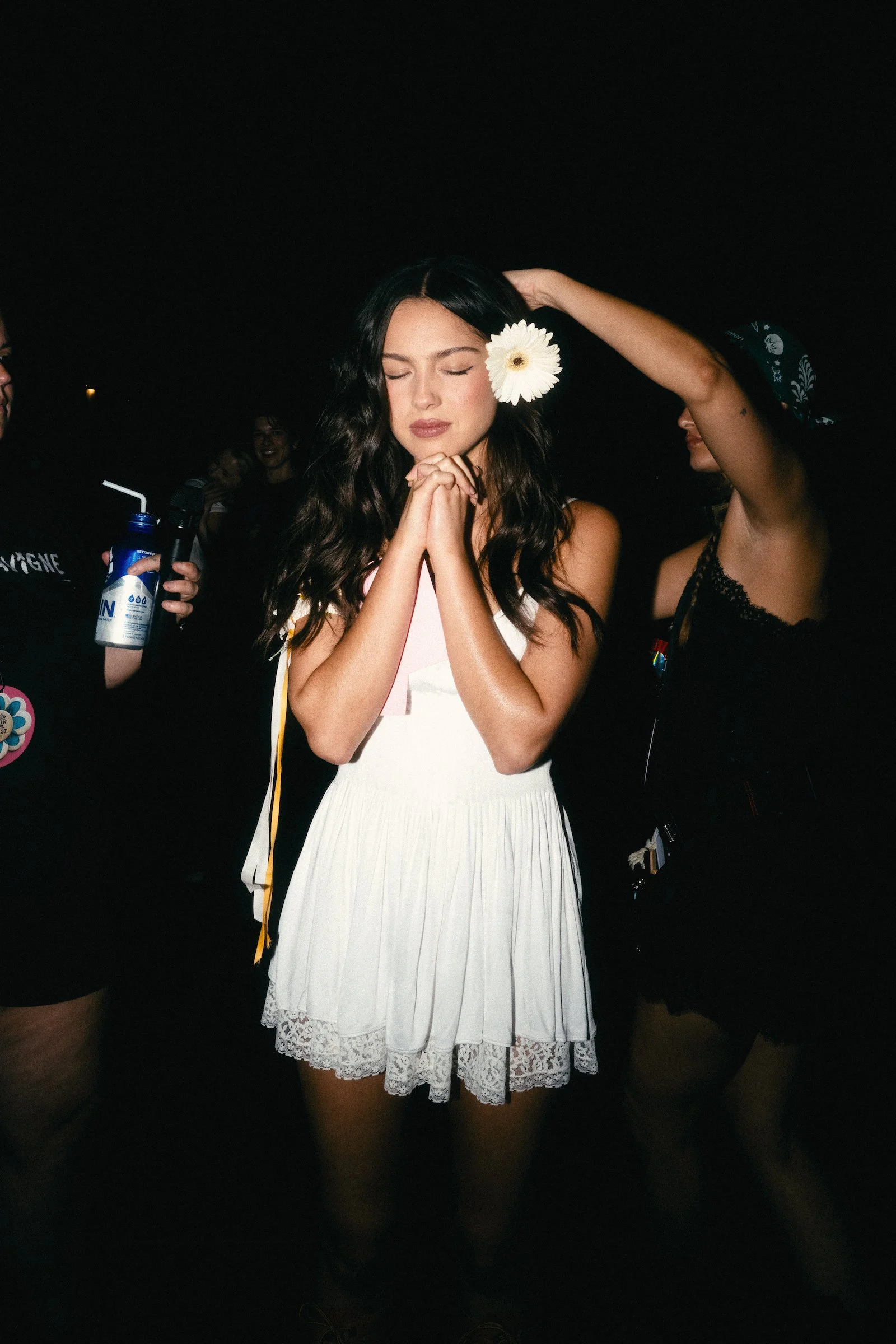
Festival-organizer Olivia Rodrigo getting ready to go on stage; Photo courtesy of Cynthia Parkhurst
“F*ck! I’ve got to bring my mom with me,” said senior business administration design and fabrication major Beatriz Pollard, when she first heard the news of an all-women-run festival.
On August 29 at Great Park in Irvine, California, a gathering for the inaugural festival, Daisy Chain Fields, commenced under the summer sun.
Winning three Grammy Awards, seven Billboard Music awards and four MTV awards in her early twenties is one feat, but creating and founding an all-women, benefit music festival is another that singer-songwriter Olivia Rodrigo achieved. Even greater is raising $20 million through the festival that will be divided equally among the featured 10 nonprofit organizations on women’s health, reproductive rights, ending gender-based violence and more.
Calling inspiration from its distant relative, Lilith Fair, a 1990s North American festival co-founded by Sarah McLachlan, Daisy Chain Fields too exclusively featured female solo artists and women-led bands.
Artists in the lineup, such as Bikini Kill, Stevie Nicks, Mitski, Garbage, Die Spitz, Doechii, Chappell Roan and more, supported Rodrigo’s mission in music as progressive social change.
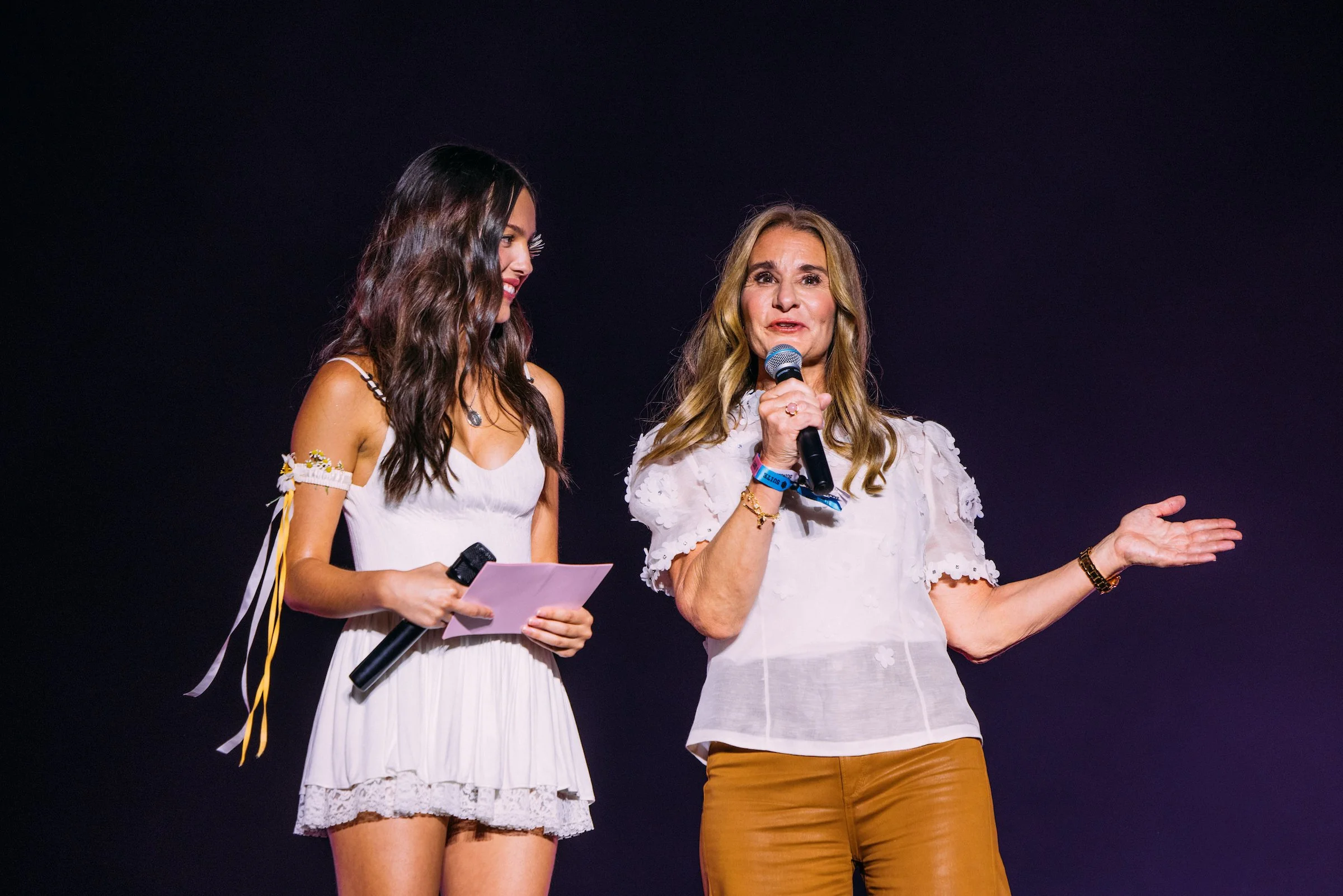
Olivia Rodrigo with Lilith Fair founder, Sarah McLachlan; Photo courtesy of Cynthia Parkhurst
The sets between the two festival stages didn’t overlap with one another, creating convenient breaks to try out the diverse food vendors. Along with pop-ups, such as Lego, Depop, Taco Bell and Etsy, art installations lined the field, adding to Rodrigo's worldbuilding.
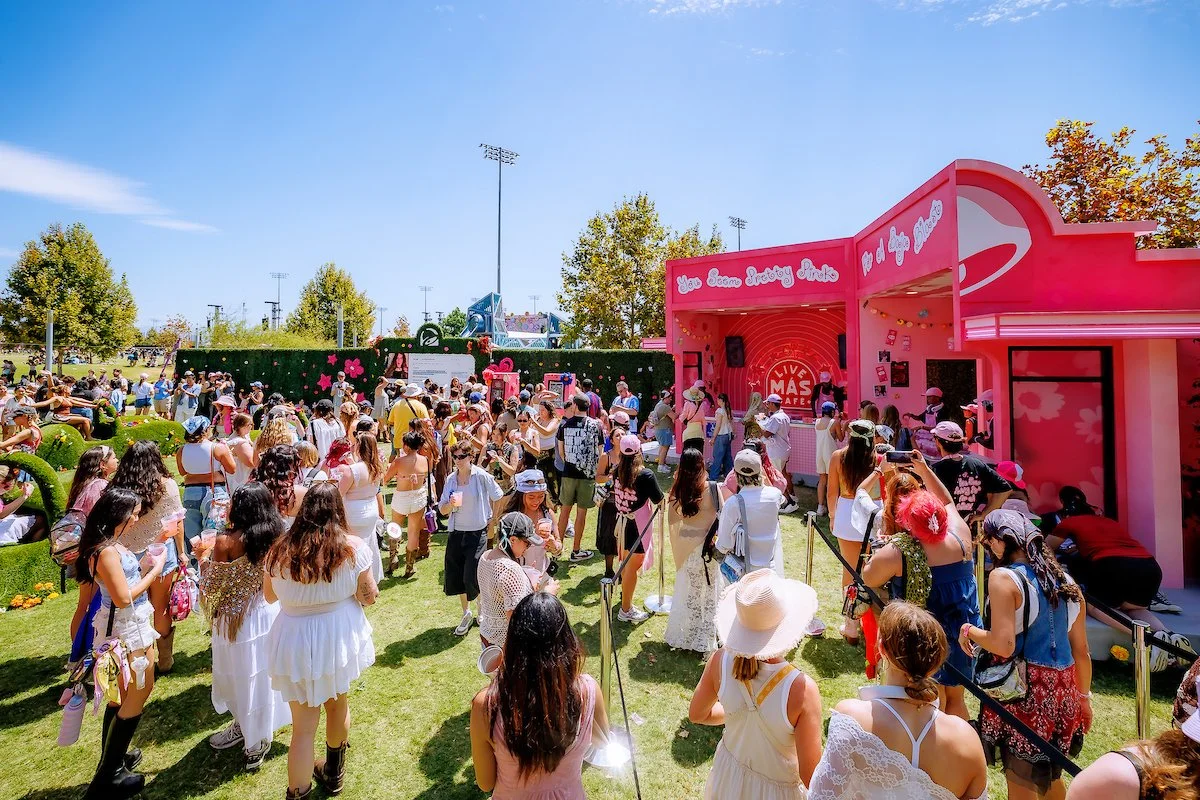
A lively congregation of folks exploring activities and food venders; Photo courtesy of Cynthia Parkhurst
A loyal regular to backyard shows and smaller venues, Pollard took a leap of faith with the scale of Daisy Chain Fields. Drawn to the mix of punk and girl pop, reasonable prices and the donation aspect towards organizations, she couldn’t say no to experiencing her first festival.
“Going with my mom was very heartwarming because she was into the metal scene growing up,” said Pollard. “It was really fun being able to be there with her and have that mother-daughter moment at the all-women's festival type of thing.”
Between each performance, a different organization would come on stage and share how the audience could support. For instance, before Doechii was the Black Mamas Matter Alliance (BMMA). Before Chappell Roan’s performance, they brought out drag performer Star Amerasu.
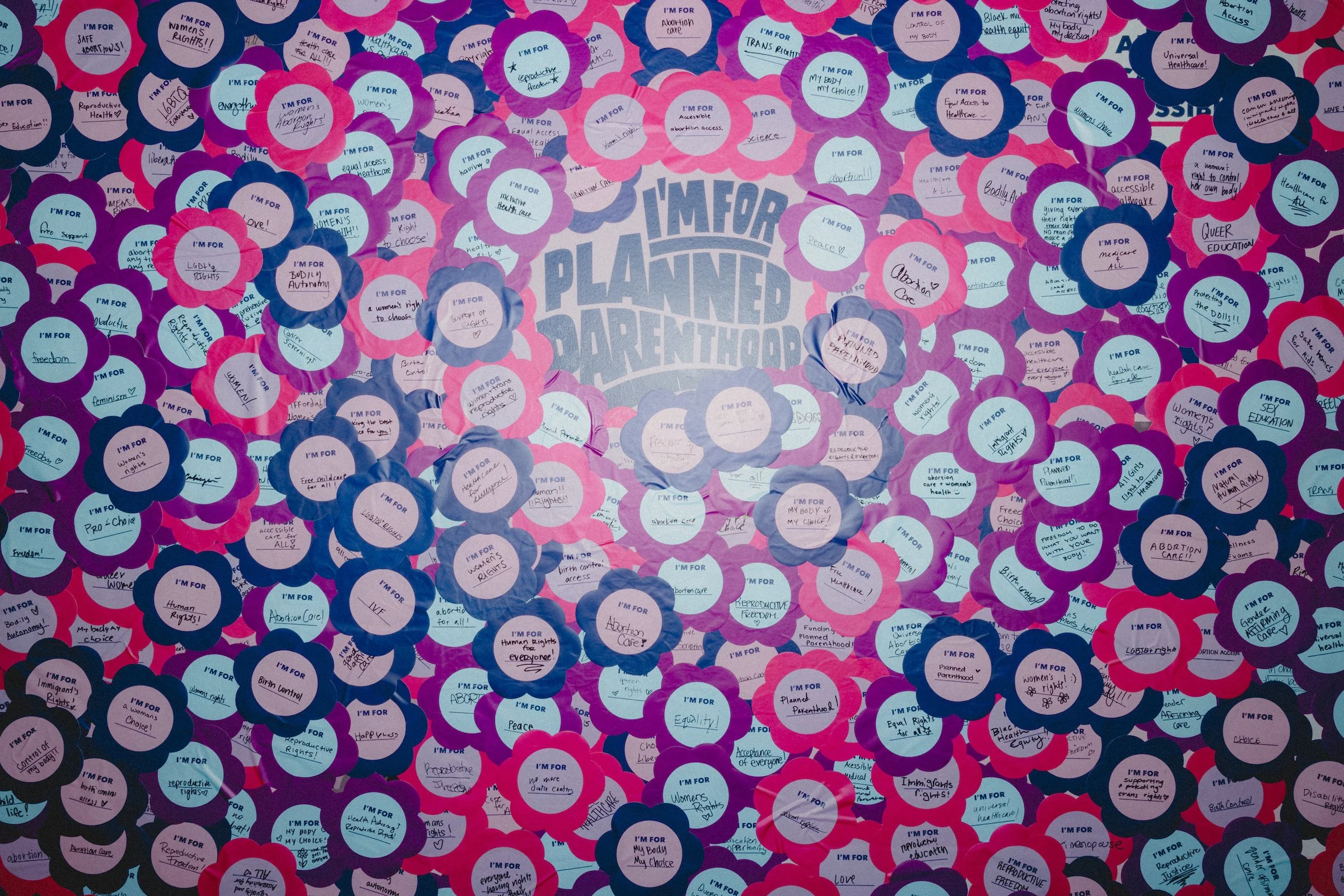
Planned Parenthood sticker wall; Photo courtesy of Cynthia Parkhurst
“I really liked Eli's message for bringing into call to action for Black Lives Matter,” said senior environmental science and policy major Gil Lopez Garcia. “I believe we should still understand that women and girls' causes are important, but there should be a level of awareness on how certain issues may affect others disproportionately through medical spaces, academics, professional workplaces, etc.”

BMMA, one of ten featured non-profit organizations; Photo courtesy of Cynthia Parkhurst
Along with the musicians, racial equity and human rights issues were spotlighted. According to Pollard, Bikini Kill reflected on growing up in 90s punk and the male-heavy subculture that caused things like guys throwing beers or spitting on them.
“Between all the artists joking about how hot it was, I think Kathleen Hanna (of Bikini Kill) said something that stuck with me the most: ‘[Girls], we don’t have to tell you to come to the front anymore. You’re already fucking there!’ “I think it says a lot about how far we have come with musicians appreciating and supporting female music fans,” said Brook Wellington, junior writing for film and TV major.
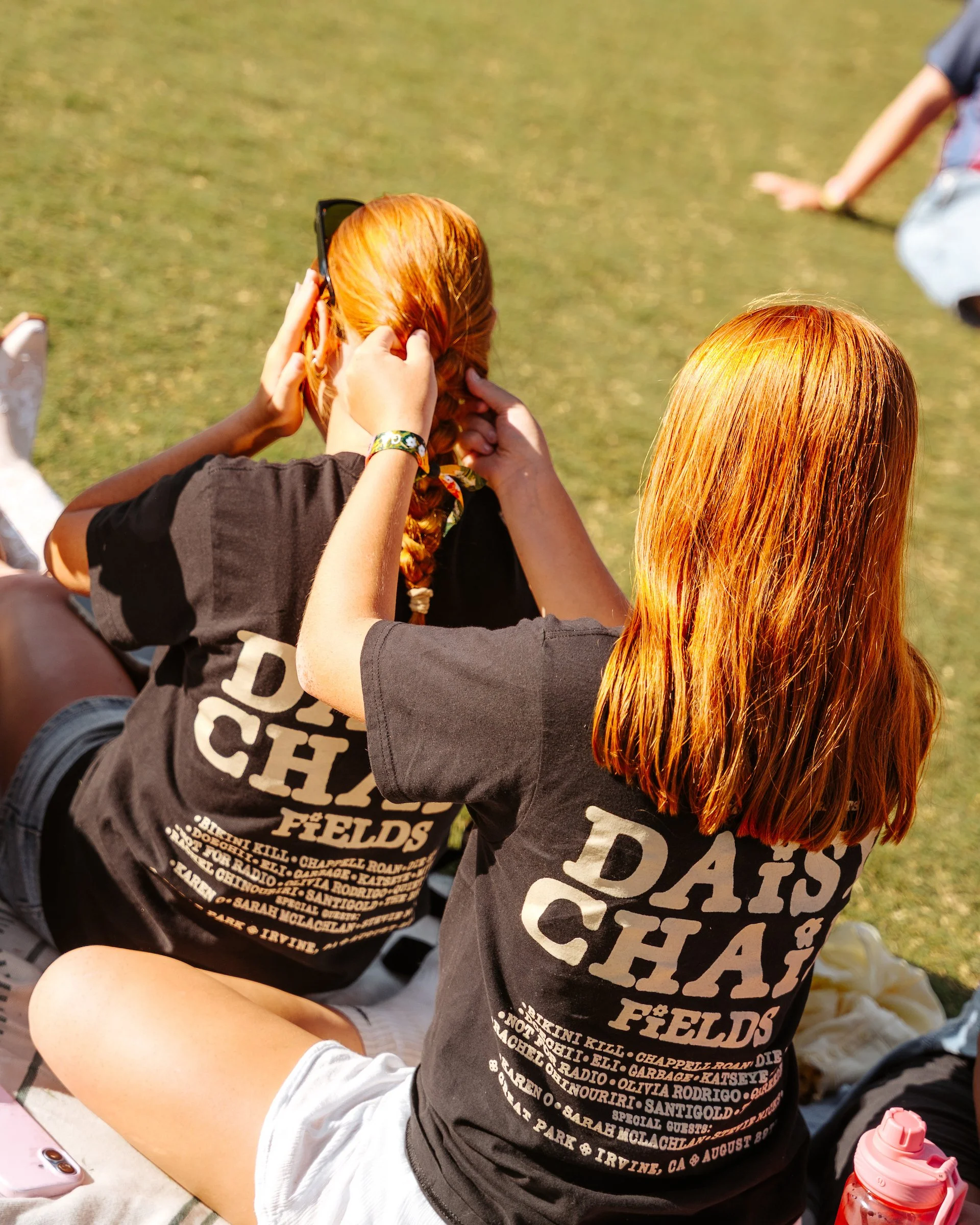
Braving the heat with a braid chain; Photo courtesy of Cynthia Parkhurst
The festival not only acted as a force against harmful male-centered ideologies, but also the laws on women's bodies enforced by our current government administration.
“In America, with women, feminists and the queer community, it feels like we have to be quiet,” said senior film and media studies major Abigail Biebl, also traversing her first festival. “It feels like we have to keep our head down until this passes. But this genuinely instilled hope back in me that change is possible.”
Positioned at the barricade during Rodrigo’s set, Biebl noticed a younger girl, about five or six years old, squeezing in next to her. When Rodrigo came on stage, the little girl sang out every word of her songs. At that moment, Biebl saw her younger self in her and was reminded that Daisy Chain Fields is especially for the younger generation.
“For me, Daisy Chain wasn’t made for my gain,” said Wellington. “Watching all the little girls on their parent’s shoulders, I realized most of this is for their benefit. And I’m completely fine with working hard right now to secure a better America for those girls in ten years.”
Among the women in the crowd, Biebl didn’t seem to notice many men who went to the festival by themselves to support. There were many “girl dads,” husbands and boyfriends, but not many single men there.
“In the right world, everybody's a feminist. Everybody supports each other and there's no power dynamic,” said Biebl. “But I know the one thing that these men can do right now is educate themselves.”
Beibl has had enough of the macho male figure energy. She wants men to read a book, and actually read it. Not stare at a singular page for 30 minutes, propped up and slumped along some park bench, hoping a woman will feed into their performance.
"It's not our job to educate them,” said Biebl.
Surrounded by women, Biebl felt a magical energy. In a society where it can feel like people don’t care about you or want the best for you as a woman, equipped with pepper spray or a knife and looking over your shoulder, Daisy Chain Fields felt the complete opposite, and so she relished in the oasis.
“It was almost like a moment of being able to grieve,” said Biebl.
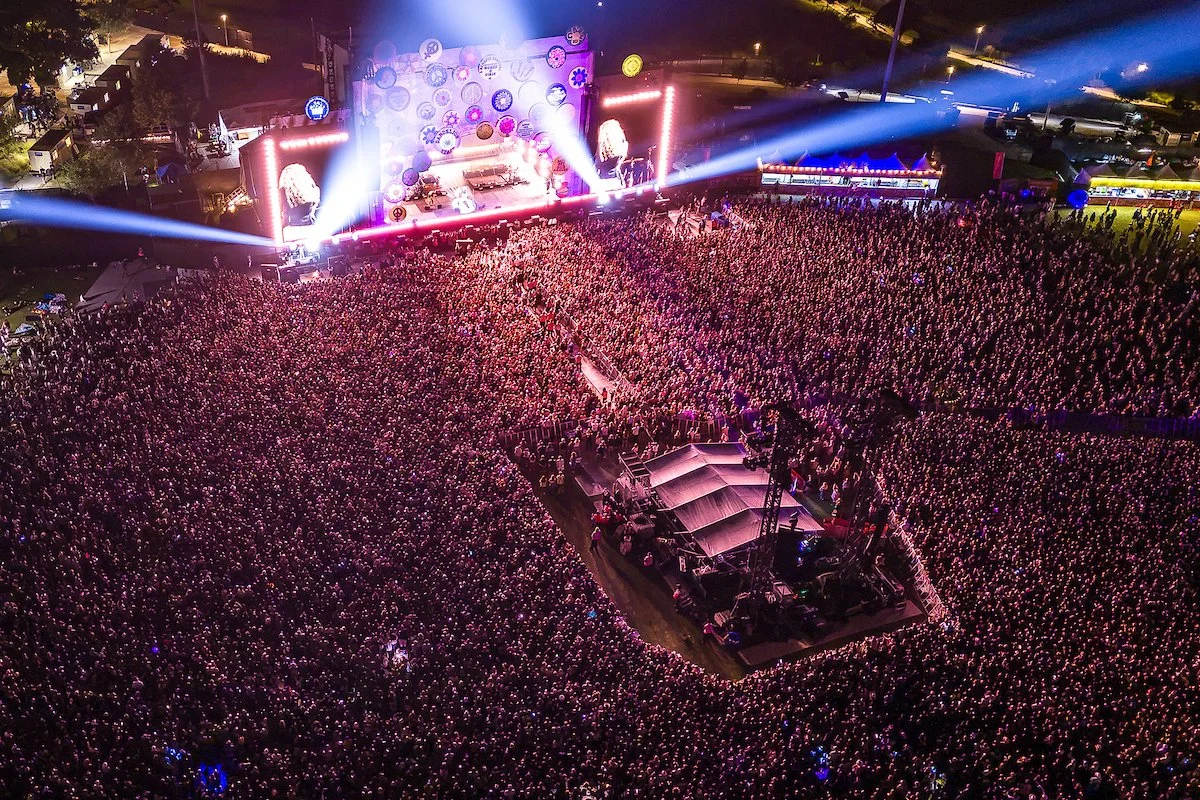
Daisy Chain Fields crowd; Photo courtesy of Cynthia Parkhurst
Rodrigo showed that age is an illusory barrier in achieving what may have been perceived as the near-impossible. Hope was not dead in daisy chains, friendship bracelets, pin trading and girls sitting atop their dad’s shoulders as they watched what would be a piece of history.