
Stop, move, shoot, repeat
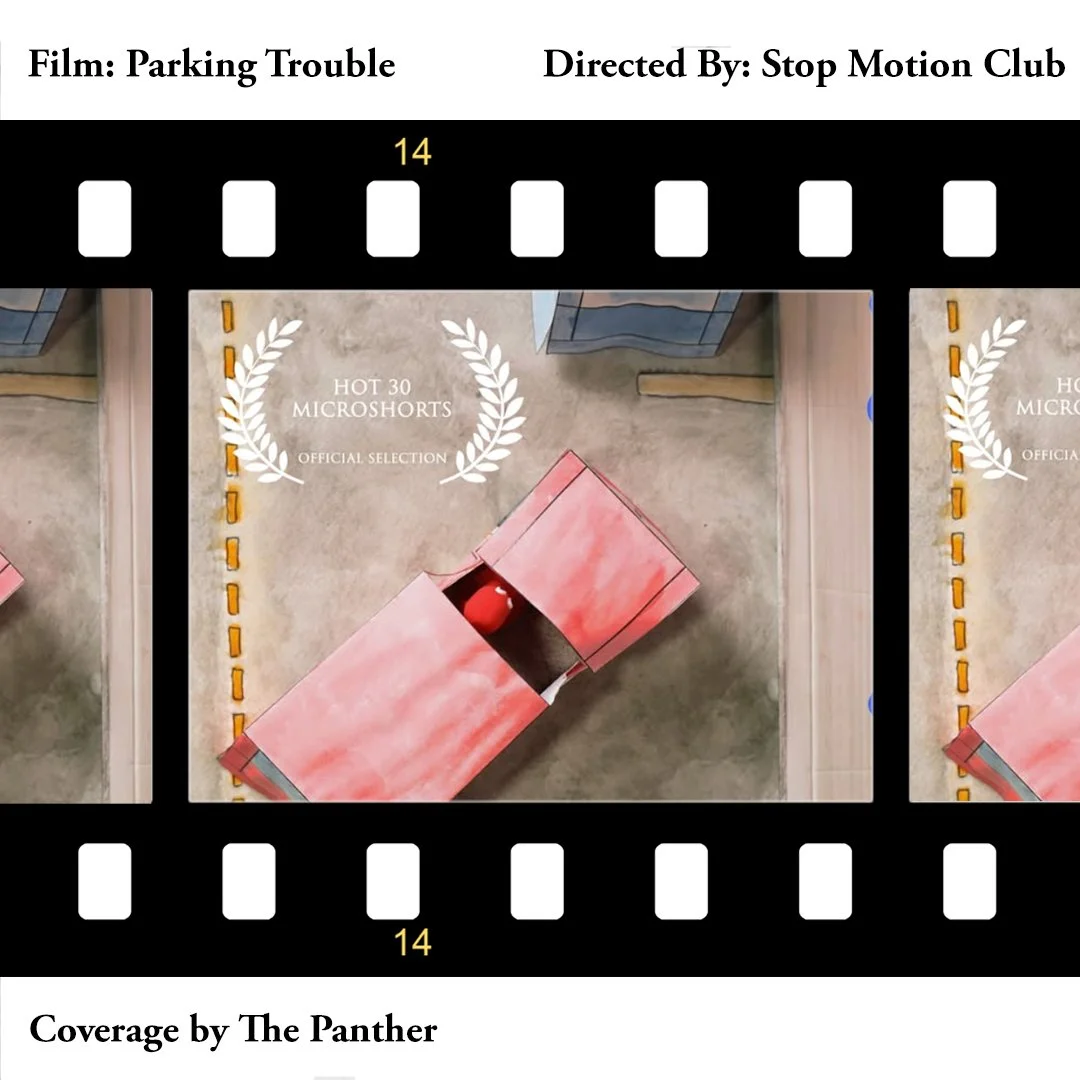
Graphic by Matias Pacheco-Ramirez, Photographer
A cardboard set sits under the studio lights. A clay figure is carefully positioned by hand. A camera shutter clicks. This process, which occupies hours of time, is the norm to create short films in Chapman’s Stop Motion Club.
In just their first semester, Chapman’s Stop Motion Club took their tiny sets to the big screen last month with Hot 30 Microshorts, showcasing their short film “Parking Troubles” at the El Cid in Los Angeles.
“Parking Troubles” is a one-minute short film that utilizes the club’s handmade sets and physical animation to turn an everyday parking predicament into a relatable, compact and visual story.
Jake Silber, senior film and television production major and the club’s co-president, shared some of the many fun experiences the team had putting it all together.
“It was really fun setting up the whole city,” Silber said. “Having the characters and the set be built, and seeing it all come together in this animation was really exciting.
Senior creative producing major and the club’s co-president, Sarah Falco, highlighted her personal favorite memory of creating the film.
“We had some super fun nights when we were painting the buildings,” said Falco. “I enjoyed the process of putting it all together, laughing, having a good time and overall getting to be creative.”
Stop motion, a form of animation, turns hundreds of images into a fluid sequence to create a film.
Films such as “Wallace and Gromit” created by Nick Park, or “Nightmare Before Christmas,” written by Tim Burton, popularized this form of animation and put a rise to stop-motion in the mainstream.
Unlike traditional filmmaking, where action unfolds in real time, stop motion brings scenes to life by moving physical objects in increments and taking hundreds of photographs of each adjustment frame by frame.
When it came to choosing the script for Chapman’s Stop Motion Club’s first film last Spring, a plethora of pitches were submitted for table reads, according to co-president Silber.
After the read-throughs, everyone then voted on what the team would produce for the semester, and “Parking Problems” won.
The club then moved on to build the set before the big shoot that spanned over the course of more than a few days. After came animation, editing, score, sound design and so much more.
Films such as “Parking Problems” emphasize the importance of teamwork. The large production team was noted by the co-presidents as key for getting this film produced.
Falco highlighted that many club members played a large part in putting the stop-motion film together by taking on roles they may never have experienced before.
“It was an opportunity to explore something they weren’t used to doing,” Falco said. “A good chance to get outside of their comfort zone.”
To highlight their work, co-presidents Falco and Silber were excited to screen their film at Hot 30 Microshorts, a short-film festival that showcases micro-short films between five and 60 seconds long.
“We saw their Instagram page, and we thought this would be a cool opportunity for us to partner with them,” Falco said.
As the club’s second semester approaches, they hope to produce another short film and bring together a community of creatives.
“People are so creative and always make something new we wouldn’t expect.” Falco said. “It is fun to be surprised by the people in our club”
Silber is excited for what’s to come this semester.
“I am excited to see what people are pitching this semester,” Silber said. “We are hoping for collaborations with other clubs and maybe even a guest or two this year for our film as well.”
Chapman’s Stop Motion Club hopes to put together a trip to see the “Wildwood” film, a stop-motion film by LAIKA, the same studio that produced “Coraline,” a widely known animated film known for its style.
In a world full of diverse filmmaking styles, stop-motion stands out for its collaborative, patient process. One that brings people together and builds a community, especially within Chapman’s Stop Motion Club.