
‘Yes, you're a dancer here, but you're also like a human first’
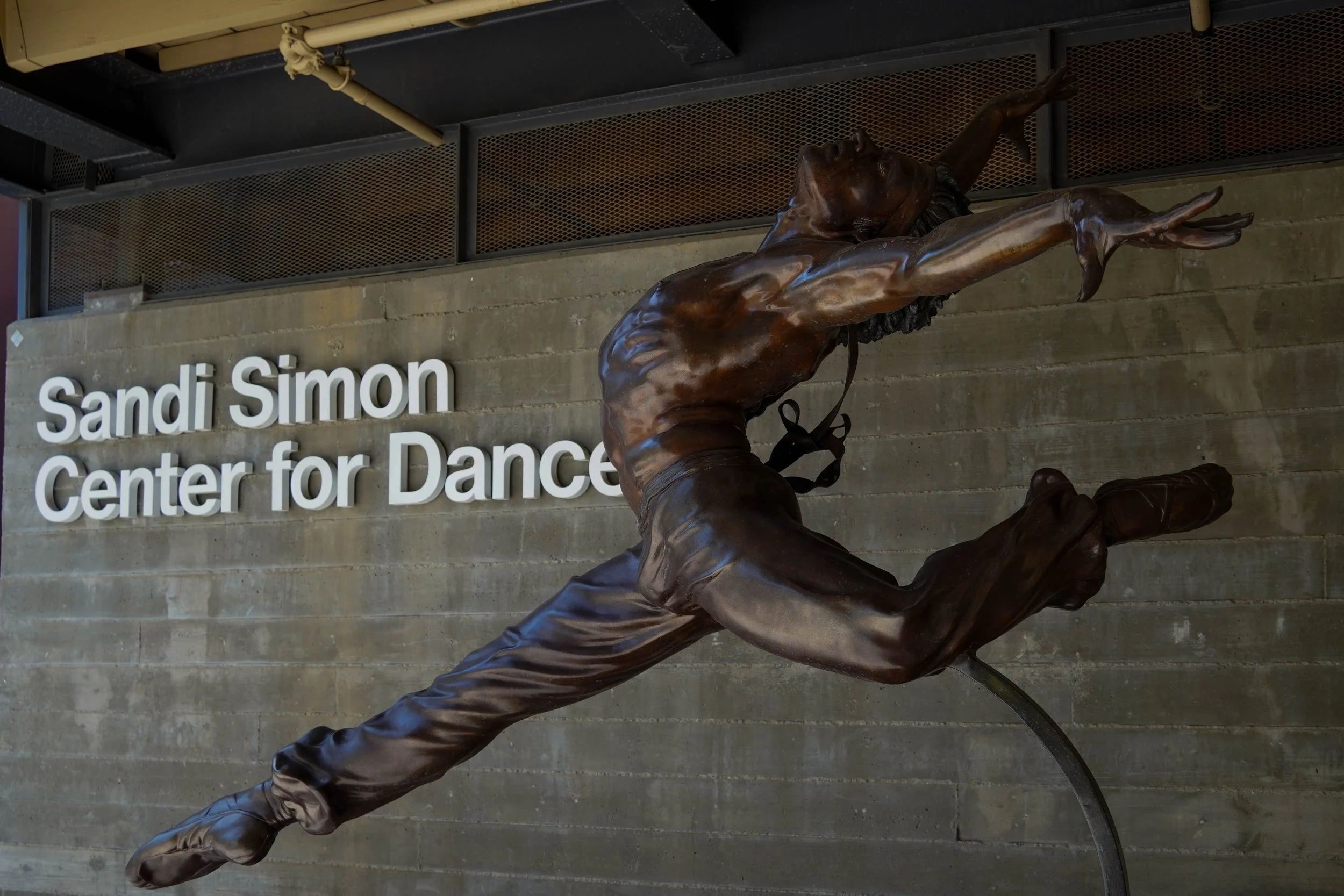
Photo by Trinity Johnson, Photographer.
“I think a lot of the Chapman dance ecosystem revolves around social aspects,” said senior dance performance major, women and gender studies minor and Co.Lab Co-President Jessica Henry. “There's a lot of things in dance that dance is a physical art form, but I also think it's an emotional and human place to connect.”
With various artistic departments on campus, from dance and theatre to music, art, writing and film, these close-knit programs often have their found families within them. Art is no longer solitary, but a conversational, shared exchange.
With that, a social bubble can emerge.
“It's something that you really dedicate your life to, specifically your high school years,” said Henry. “You don't have much social life outside of dance. Dance is your social life as well, and it kind of shapes who you are. At least for me, it shaped who I was.”
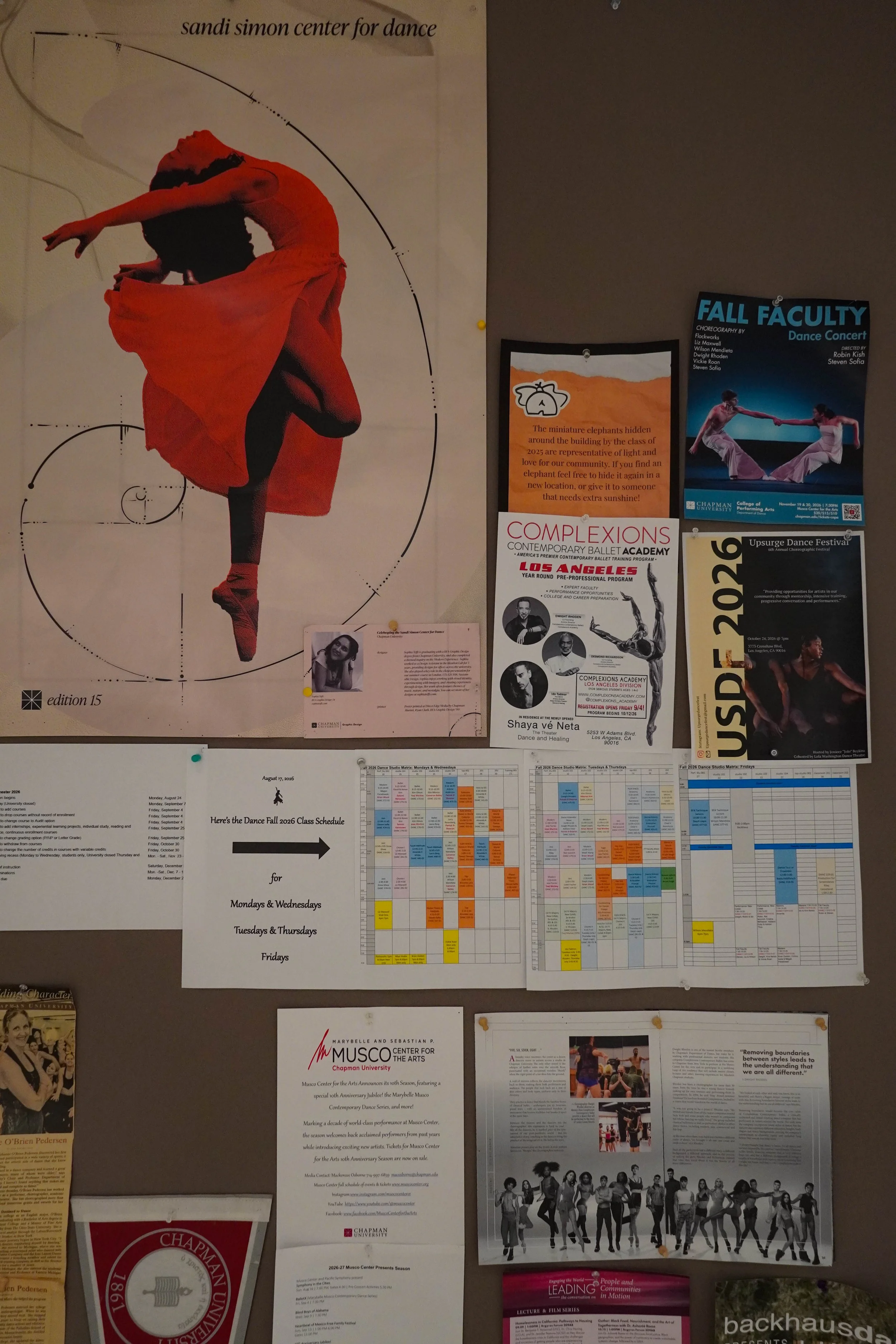
Photo by Trinity Johnson, Photographer.
Co.Lab is a relatively new student-run dance ensemble for contemporary-seeking, concert dance artists within Chapman. According to Henry, with a department that covers a diverse range of style training, there isn’t a distinct contemporary class in the Department of Dance under the College of Performing Arts (CoPA).
Co.Lab is one of many opportunities at Chapman that helps student dancers jump off into the professional world post-graduation.
“Lots of our best friends and roommates — while we want to mainly go into the concert contemporary realm post-grad — want to move to LA, get an agent, dance for an artist and the program has the assets and the resources to make it possible for everyone. Co.Lab is just one of those assets that really helps,” said senior dance performance major and Co.Lab Co-President Skylar Peterson.
For those who are interested in the contemporary artistic style, Co.Lab is a hub for like-minded creatives in this genre that are willing to push the boundary of what dance can be.
“We do a lot of artistic things that a lot of people on the outside of the dance department might think are just weird or, you know, too crazy or avant-garde, and I think a lot of us also have interest in doing European stuff,” said Henry. “So I think a lot of the social aspects of the dance department come from our ability to sit and talk about dance and not just dance. We do a lot of writing about dance and a lot about how we connect.”
Photo by Trinity Johnson, Photographer.
According to Henry, becoming a dance major is a lengthy process. After two rounds of auditions and a callback, you are only then accepted into the department. Along with performing and moving in the department is a lot of writing, anatomy and kinesiology-focused classes that ask how dance connects to society and culture.
“Dance as a career, bodily-wise, doesn't have as long of a longevity timeline as a different major would be,” said Peterson. “So it's important to have outside interests besides just performing because it's not feasible for your entire lifetime, and we all know that.”
According to senior dance performance and business administration double major and Co.Lab Co-President Adria Libert, they’re not only dancing, but training their brains to teach dance and maintain the health of their bodies.
“Yes, you're a dancer here, but you're also a human first, and it's really important to have balance,” said Peterson.
Chapman Dance Alliance (CDA) is another student-run organization centered around dance that holds open classes and an end-of-semester show.
“We think dance is deeply cultivated within Chapman’s community and reaches far beyond just the dance department,” said senior dance performance majors and CDA Co-Presidents, Courtney Chiu and Jonah Smith. “It’s prevalent through Greek Life philanthropy events, the wide variety of dance clubs and organizations on campus and the incredible residencies and performances at the Musco Center for the Arts.”
According to Chiu and Smith, dance at Chapman is a loving and supportive environment that welcomes anyone who simply wants to move, discover parts of themselves and bring their experiences into their practice.
However, a slight division lingers.
“We would say that there is somewhat of a division between dance clubs due to the difference in dance majors, minors and non-dance department affiliated students,” said Chiu and Smith. “This unfortunately has been an ongoing division that we have been constantly trying to dismantle, as the dance clubs on campus all have similar intentions and goals to bring a sense of community and family within the dancers of the broader Chapman community.”
Having been established at Chapman for quite some time, the organization has been fortunate in campus presence, but hopes to build upon their foundation with stronger dance accessibility to welcome students from all backgrounds.
Photo by Trinity Johnson, Photographer.
“If anything, our biggest challenge is continuing to expand our reach beyond those who are already connected to dance,” said Chiu and Smith.
With each co-president of both organizations beginning their dance journey at a young age and falling in love with it, whether inspired by their older sister, joining a small studio or traversing through competitive dance programs, it is apparent that there is no right way to get into the dance world.
“I think the appreciation for the art form is so universal, and I think all it takes is just watching one show to be like, ‘Oh my god, like this is crazy,’” said Peterson. “The art form lends itself to being so interesting, fulfilling and eye-opening for people, and I think that's one of the best parts of this major at Chapman specifically because the school is a smaller size; the dance program gets more visibility.”
With CDA recently holding a guest masterclass with Los Angeles dancer Holden Maples, who worked Yung Lean, Katy Perry and Tate Mcrae at the 2026 MTV Video Music Awards (VMAS), the organization were overjoyed to see the turnout of non-dance majors that came out to share their Monday night with them.
“I would say let yourself have an open mind and open heart, even if you're not used to this form of dance,” said Libert. “It's less of a club and more of a community.”