Review | Netflix’s ‘East of Eden’ is eerily enthralling
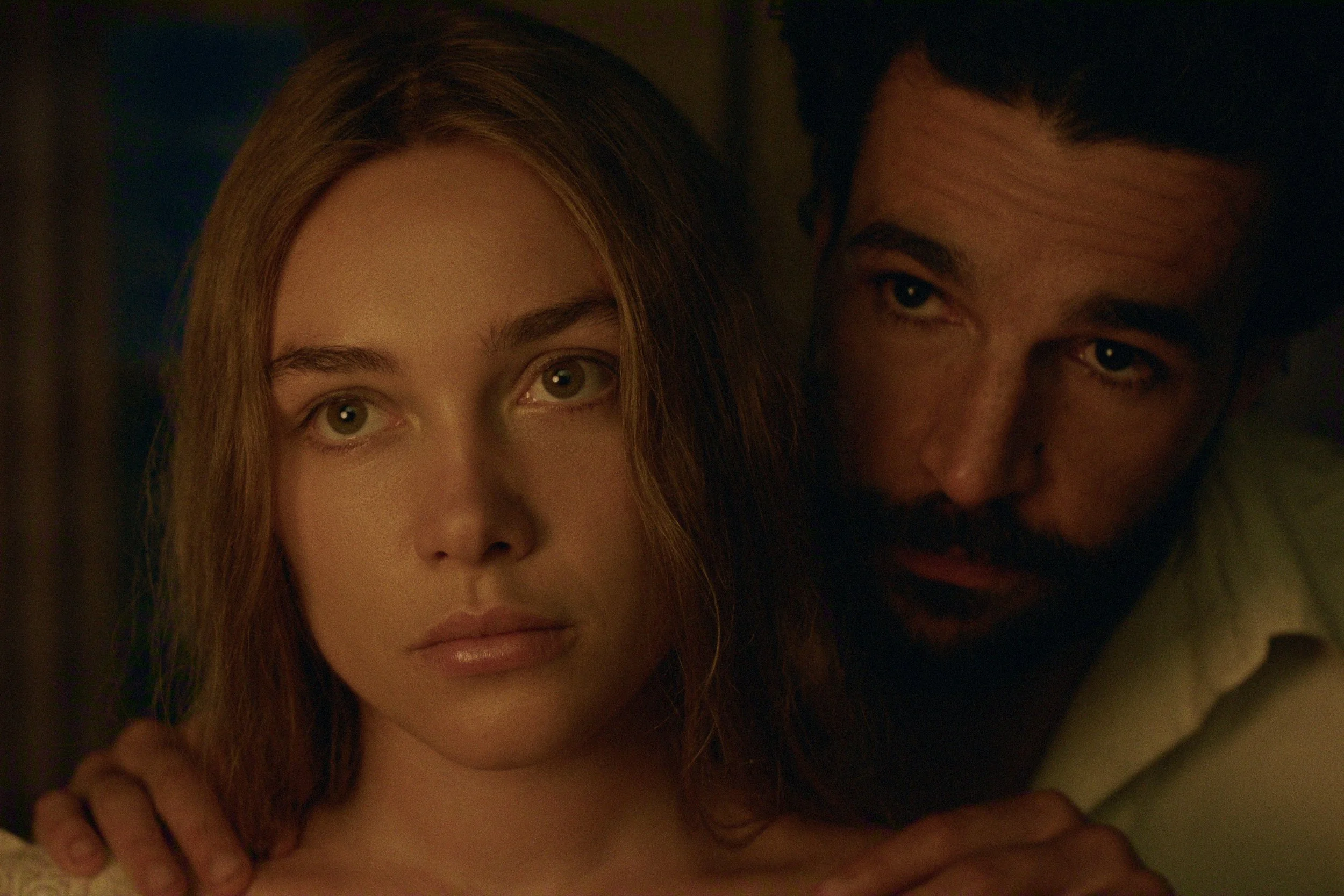
Florence Pugh and Christopher Abbott in “East Of Eden”. Courtesy of Netflix.
Content Warning: This story contains discussions of sexual assault and sexual violence. If you or someone you know has experienced sexual assault, support is available.
National Sexual Assault Hotline: 800-656-HOPE (4673) or visit RAINN.org to access confidential support and resources.
Eyes swollen shut, smeared with blood and beaten, Florence Pugh leaves a trail of blood in her wake as she claws herself through the gravel in the opening scene of Netflix's newly released adaptation of “East of Eden.”
Zoe Kazan’s seven-part series brings John Steinbeck’s original work to life, and every hour-long episode is extraordinarily grotesque and perverse in every way.
Every moment watching felt scandalously crude, and yet, I still found myself peeking from behind my fingers, eagerly seeking more. I could feel myself recoil at every puff of smoke, slimy drop of spilled champagne and sharp strike that felt visceral against my skin as I watched.
Ripe with sin and scandal, the series retells the biblical fall of Adam and Eve, following the story of Adam Trask (Christopher Abbott) and Catherine Aimes (Florence Pugh).
A veteran of the Indian Wars, Adam lives a hollow life upon his return. After years of estrangement, he and his brother Charles (Mike Faist) take charge of their family farm, where they live in contentment until Catherine, beaten nearly to death, arrives on their porch, bringing with her encroaching turmoil.
As Adam nurses her back to health, he grows to love her, while Catherine’s heart remains forever unattainable. Pugh’s blind stares into the camera are piercing and remind the audience that her mind is never fully present nor at peace. Kazan uses the eyes as the window into Catherine’s mind, something the original novel excludes. The camera latches onto her stare and zooms in on her long enough to build that skin-crawling discomfort; the distress and growing weariness in her eyes becomes an excellently crafted symbol for her fear of being seen as her true self.
“East of Eden” is most notable for Catherine’s depravity; the twisted accounts of her inherent wickedness are never truly explained in the book. The series begins with Catherine seemingly kind and gentle at heart — but after marrying Adam and being forced to follow him to California, she loses pieces of her identity. As Adam seeks out the promise of sprawling success in the Salinas Valley, Catherine discovers she's pregnant and begrudgingly gives birth to two twin sons. Fighting to escape the confines of her marriage — now that her sons threaten to tie her to her husband forever — she shoots Adam and flees, leaving him hallowed by her absence.
It isn’t until her pregnancy that we see the beginning of her descent into madness and our minds begin to collect the flickers of wickedness we happened to misplace during every flashback into her past.
Steinbeck’s narrator paints Catherine as born evil, her actions being compared to those of a demonic myth. From a sought-after courtesan to the madam of the most infamous brothel in the Salinas Valley, Catherine manipulated people’s affection for her to mine for power. But unlike Steinbeck's original novel, in Kazan’s adaptation, Catherine Aimes is much more than a villain.
We see that her vile, manipulative nature is made, not born. Raped as a child, Catherine was perpetually objectified by men and grew to find them wicked by nature. To her, there is no love, only desire. No affection, only obsession.
Using heavier makeup as time passes to represent Catherine’s grip on her power fading as age threatens to strip her of her beauty; the camera appears to tremble and spin in a whirlwind as her sanity spirals.
Kazan's enhancement of Catherine’s story, or simply, Pugh’s audacious performance alone, made the series feel like largely her story. The audience is invited into Catherine’s twisted mind but I would argue it allows us to better understand Steinbeck’s message.
What called for the creative change? I suspect, “timshel.”
Genesis 4:7 reads: "If thou doest well, shalt thou not be accepted? And if thou doest not well, sin lieth at the door. And unto thee shall be his desire, and thou shalt rule over him."
Throughout the novel, this verse is said to bring solace to characters in their misfortune. Adam’s steward, Lee, sought out the original Hebrew translation, which contained “timshel” in place of “thou shalt,” translating to “thou mayest,” transforming the verse and the overall message of the novel.
Kazan’s decision to explore Catherine’s past illuminates the core message of timshel. While her life had produced her hatred for men, her actions remained a choice. While Adam’s creation feels obsolete without Catherine, his decision to retract from life was his own, and despite their sons (Cal and Aaron) following the path of Cain and Abel (a jealous boy who kills his brother out of anger), Cal’s persistent efforts to be “good” in spite of the hate he sees within himself perpetuates the existence of timshel in the world of East of Eden despite the intergenerational trauma that persists.
Rightfully so, the world they’ve created is dark and brooding compared to warm flickers of the past; the world feels tainted green in a way, as it imitates the grimy unpleasantries of the Salinas Valley. But our perception of the world changes as Catherine ages, and the carefully constructed illusion she has worn and draped atop the world around her begins to fall.
Like many of its counterparts, “East of Eden” is an adaptation that does a marvelous job at crafting the world, but often leaves us with questions when they plant homage references from the novel that only hit home to readers of Steinbeck’s original work.
Netflix has embraced Steinbeck’s provocative world and captured just over 600 pages into a marvelously rich adaptation; from the hazy depths of the brothel halls to the putrid decay of flesh with each death, the world is meticulously crafted and, unlike the gauche recreations of canonical fiction in the past — notably, Baz Luhrmann’s “The Great Gatsby” — authentically captures the story’s gritty essence without embellishment.
“East of Eden” is definitely one to watch if you’re ready to gawk and squirm in your seat. The journey is long and winding, but it is evocative and, like Catherine, will leave you intrigued and have you coming back wanting more.