
Review | So far, ‘Bridgerton’ season four is a story we’ve seen before
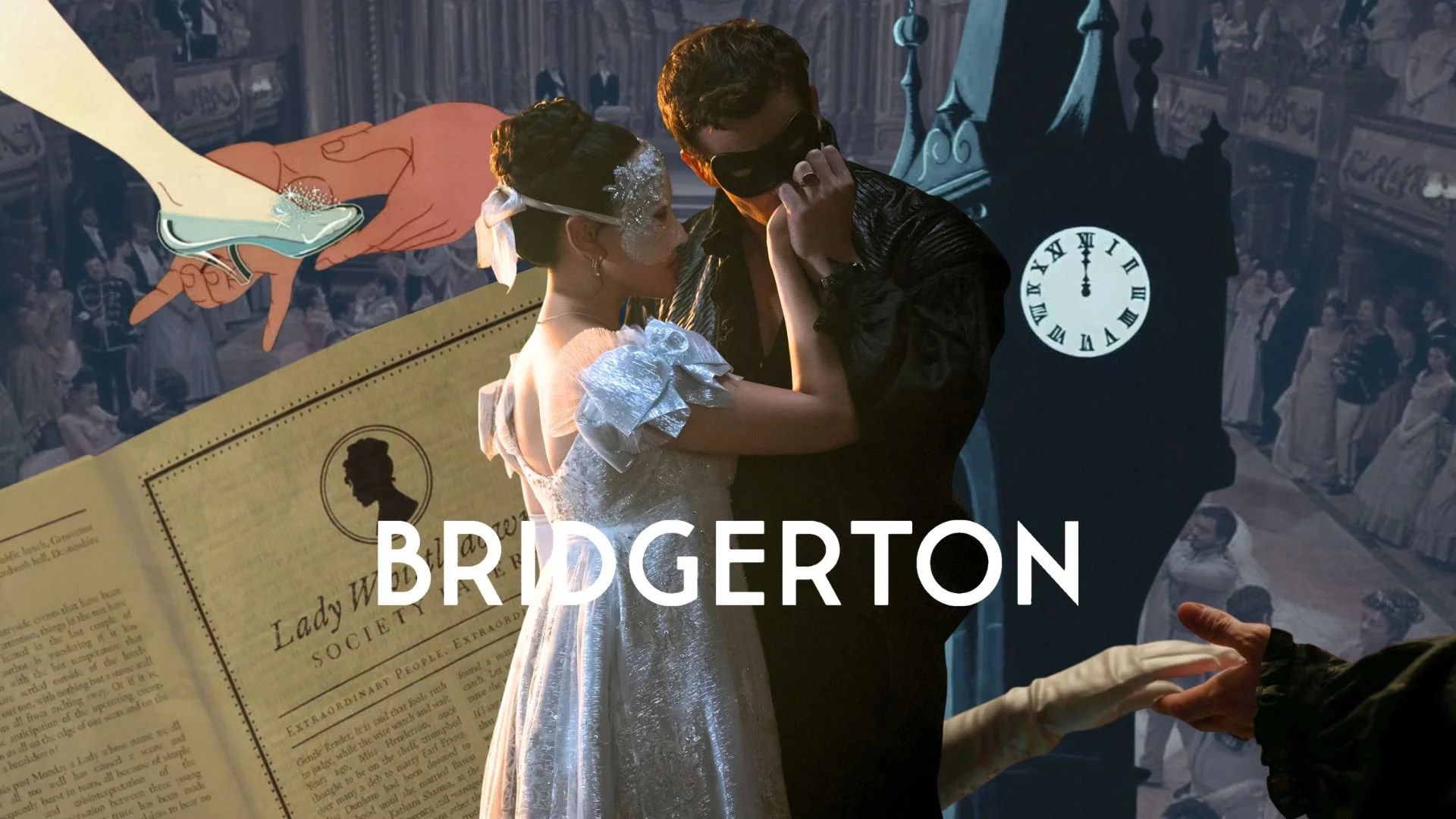
Collage by Riley LeBlanc, Photographer
Dearest gentle reader, the first half of “Bridgerton” season four just dropped, and I am disappointed to say the least.
In recent years, fans of the show have been awakened by the historical British Regency era coming to life on the screen. The vibrant color palettes and intricate fashions have drawn viewers into a world of nobility, drama and romance since 2020. It is no surprise that the series was renewed for a fourth season, but even with all the glamour, I could not help but feel uninspired by the direction of the plot.
While the familiar presence of the Bridgerton family from seasons prior provided comfort and continuity, viewers may be surprised to learn that the season's central romantic plot took an unusually predictable turn.
The romance of the season blossoms between Sophie Baek (Yerin Ha) and Benedict Bridgerton (Luke Thompson). Sophie may be a new character, but her story is not. Sophie is highly comparable and follows a near-identical path to the Cinderella folktale. From Sophie's hidden identity, to her enchanting appearance at the lively Bridgerton ball, to escaping at midnight and leaving an article behind for Benedict to find, the parallels are impossible to ignore. Sophie's backstory also shows her life as a maid to her terrible stepmother and stepsisters after her father passed away — another unmistakable similarity.
Although the season remains a captivating and eye-catching watch, it opens the question of where adaptation ends and imitation begins. In a series celebrated for its creativity and modern reinterpretation of history, the reliance on such a familiar storyline invites viewers to wonder where originality is sacrificed for the comfort of familiarity.
The emotional stakes and tension of the story were significantly diminished because the audience could anticipate Sophie and Benedict’s trajectory from the start, causing moments meant to feel suspenseful to instead feel inevitable.
Even with this, however, there was a certain charm about seeing a story from my childhood come to life, reimagined on modern television. The Cinderella-esque tale evokes nostalgia, allowing viewers to engage with the story from a place of childhood comfort. In this light, the choice of utilizing a predictable story can be endearing, giving the audience a sense of the magic we felt while watching fairy tales as children.
Aside from the central romance, this season offers a new and unique perspective into the lives of the staff of the noble families. The series often romanticizes the noble life, but this is the first time we see what happens behind the scenes through Sophie’s struggles as a maid. From this perspective, we see that the social hierarchy extends beyond royalty and nobility to the household level.
Despite its reliance on a familiar fairytale structure, season four of “Bridgerton” doesn’t simplify its female characters’ inner lives and their subtle protests against injustice. This season highlights the quiet strength found in resilience, self-awareness and individual empowerment. It exposes Sophie’s limitations through her gender and class standing as a young worker. Her experiences emphasize the strength it takes for women to survive in an unjust society.
While the Cinderella structure sometimes limits narrative tension and lacks originality, the season continues to expand the complex, emotional and female-led narratives of the series.
“Bridgerton” balances familiar nostalgia with present-day social issues in a way that is understandable and eye-opening to the viewer. It also serves as a guide for all to reflect on the roles of power and privilege within society.
The remaining episodes will be released on Netflix on Feb. 26, and I look forward to seeing if there are any unexpected twists to what has been a predictable story so far.
