
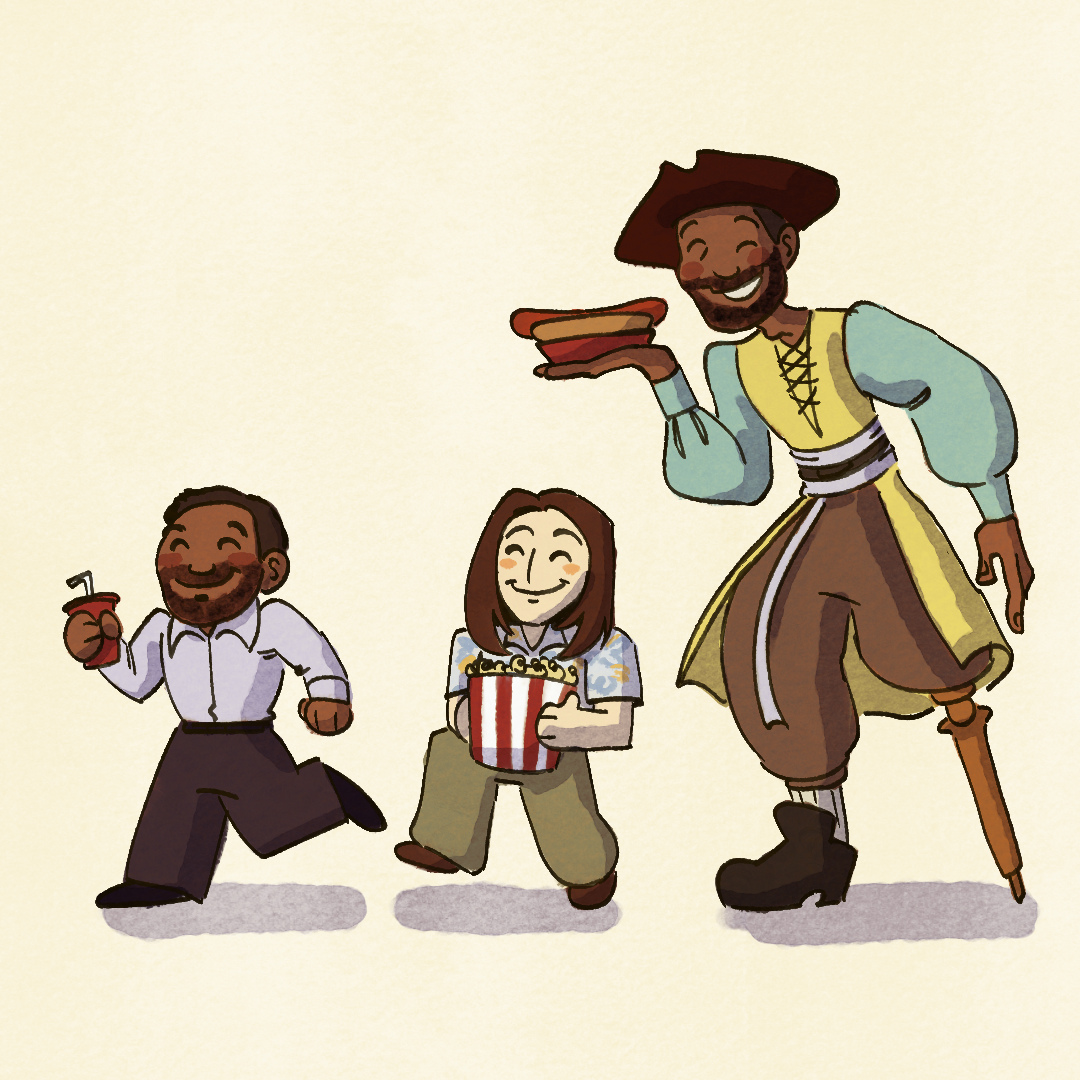
Illustration by Lexi Forman, Cartoonist
Whether you’re an AMC A-Lister or haven’t been to the multiplex since “Barbenheimer,” it’s likely that you found yourself in a movie theater this summer. The fresh on-screen concepts of “Obsession” and “Backrooms” transformed this summer’s cinemascape — a horror renaissance rising from the ashes of the genre’s crumbling protocols. Audiences have gladly welcomed this new wave of horror auteurs.
Currently, “Obsession” and “Backrooms” stand in 10th and 11th place in this year’s box office ratings. Other franchise horror films like “Scary Movie," “Scream 7” and “Insidious: Out Of The Further” landed far lower. Where studios see established, commercially successful stories, burnt-out audiences see reused and recycled cash grabs. The two most popular horror films of this summer stand out amongst a sea of cheap thrills that have been done to death.
“A lot of (the reviews) I saw (for ‘Scream 7’) were just like, ‘This movie is so bad,’” said film and media studies senior Alyse Helm. “It’s a slap in the face to the studios that reusing old (intellectual property), trying to please the fans and just making money off of them isn't gonna work anymore. The movie still made a lot of money. But people weren't happy with it.”
Audiences are hungry for movies that pack a strong narrative punch. But instead of reworking the stories, studios have simply penciled emotional beats into the margins of regurgitated, sensationalized screenplays. And the attempt to create depth has only torn holes in the genre’s conventions.
“They don't know what they're trying to make,” junior film and television production major Reed Baron said. “You want to watch (‘Evil Dead Burn’) because it's scary, but they try to cram a really important story into a movie that isn’t made for it. It could have been a great message, but I didn't care as much for it because it didn't fit the rest of the movie.”
This summer, audiences responded better to directors with a more earnest voice. For example, the summer also brought with it an ironically relevant film: “Teenage Sex and Death at Camp Miasma.” It meticulously breaks down the psychology behind a ravenous horror audience and the outdated conventions within the genre, while also adding something new to the conversation around these movies.
“Younger, fresher directors are making things that people actually want to see and actually resonate with. (‘Obsession’) is a story that speaks to a lot of the anxieties or fears that we're feeling as young people,” said senior broadcast journalism and documentary major Annie Gelfer. “Horror has the ability to connect to our inner psyche (in a different way) than other films can.”
Young filmmakers such as Curry Barker and Kane Parsons have proven that horror is more important than what’s on the screen. “Obsession’s” strong allegorical backbone allowed the film to subvert typical horror structure, connecting to the younger generations’ fears that have gone underexplored by horror films of the past. Meanwhile, “Backrooms” struck a nostalgic chord in young audiences familiar with the Internet urban legend that inspired the film.
“Young people that have been watching videos on YouTube. We were the first generation to be introduced to storytelling in that way,” said Gelfer.
“Backrooms” director Kane Parsons notably began his creative journey as short form YouTube creator “Kane Pixels.” His promising background generated curiosity by offering a refreshing mode of storytelling.
“I was already really excited about ‘Backrooms’ when I'd initially heard of it — just because all the stuff that Kane had done on his YouTube was really cool,” said Baron.
If the results at the box office weren’t indicative enough of audiences’ shifting interests, the discussions in online forums even further illustrated the public’s response. By building mystique through public stunt marketing tactics, seats were packed even at early screenings.
“When I saw ‘Obsession,’ everybody was reacting in the theatre,” Gelfer said. “I love that about the movies. When people react in a way that is very genuine, it’s like, I'm not crazy for also thinking this is scary. It feels like such a sense of community to sit in a theatre with a bunch of strangers. And people really want to continue that experience afterward.”
“Obsession” and “Backrooms’” rich concepts opened up extensive online discussion. Commentators noticed the minute details and unpacked the complex characters of “Obsession,” while speculating on theories and connecting “Backrooms” to the original internet lore.
Perhaps the biggest contribution to the success of “Backrooms” and “Obsession” is a greater cultural trend, in which social media has made film discourse highly active and accessible. What was once a career steeped in traditions of those who’d come before is now an activity for any filmgoer to participate in. Not only does this provide studios and independent filmmakers with genuine, often enthusiastic feedback, it also serves as their free source of marketing. When the theater experience continues past the credits, it’s important that the film’s concept is substantial enough to pass the test of the virtual soapbox.
And the rising interest in dissecting horror films has further illuminated the fault in the studios’ outdated strategies of reviving properties.
“New voices are really coming through, and it's not just old people that have been telling the same stories over and over again,” said Gelfer.
It seems the new blockbusters are the films that respect the genre enough to know that one creatively chilling concept, a wish gone wrong or an endless room, is worth 50 pounds of fake blood.