‘Tayo na!’: ‘Forgotten Island’ is one to remember
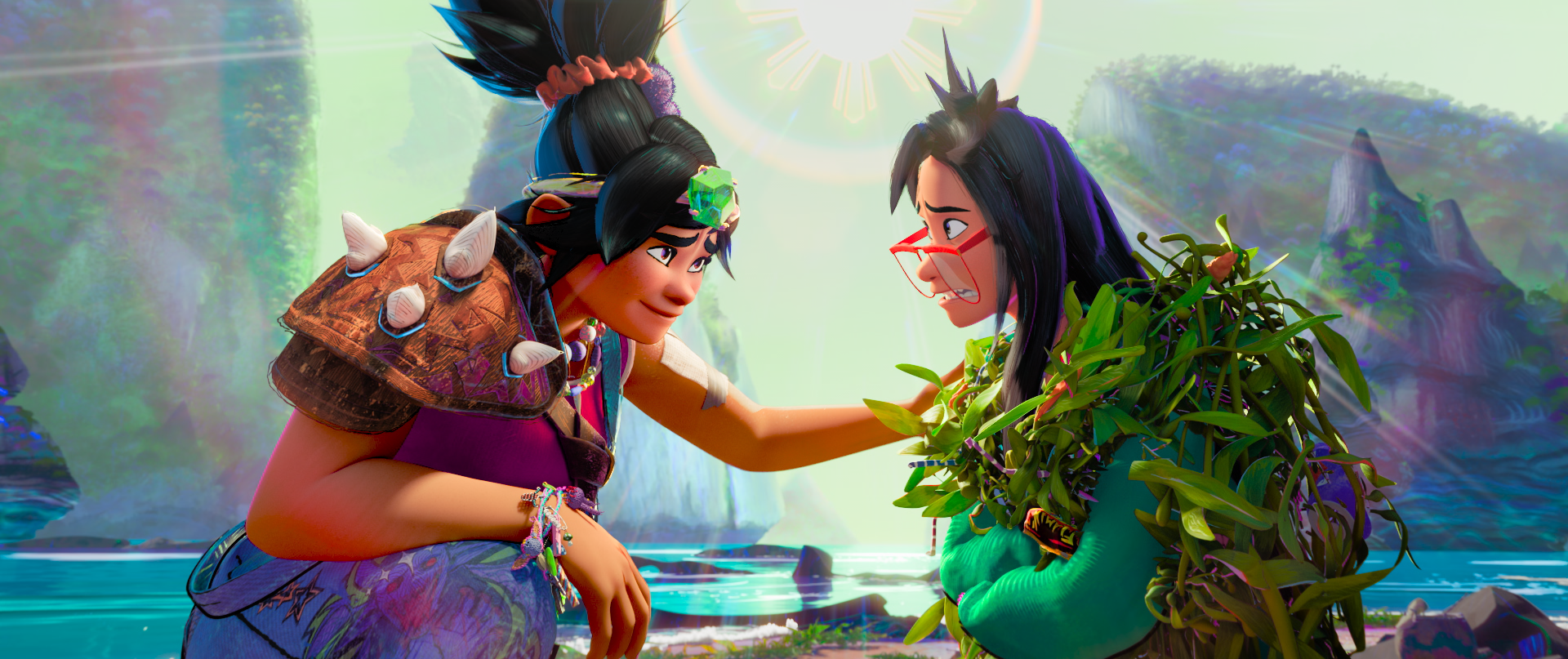
Photo courtesy of Universal Pictures
As the lights in the Folino Theater dim at Dodge College’s pre-screening of “Forgotten Island,” someone in the packed audience shouts: “For the Philippines!” A dozen others respond with the same cry. It’s more than a patriotic chant — it’s an acknowledgement of shared identity. The Filipino community was buzzing with anticipation towards seeing their culture wholly portrayed for the first time in an animated blockbuster. The new Dreamworks film did not disappoint.
The film follows two childhood best friends, Jo (H.E.R.) and Raissa (Liza Soberano), as their final day together is spent trying to escape the mythological island Nakali. The film did an excellent job of blending the realistic and fantastical elements of the Filipino experience. Even before we entered a world of talking dogs and speed demon birds, we were introduced to the colorful world of the Philippines in the ‘90s. Between rocket launches, purple sand beaches and orange cheeto dust, the film made great use of a beautiful setting so rarely explored in American media.
The familiar staples of the Filipino experience, like parties full of family members singing karaoke, were paid justice through the eye-catching animation style. The accuracy of the period piece paid off, with friendship bracelets, boomboxes and Polaroids littered throughout the film, solidifying its visual uniqueness. And “Puss in Boots: The Last Wish” directors Joel Crawford and Januel P. Mercado doubled down on the highly stylized animation, including snippets of both live-action television and influences from non-Western animation.
With the Tagalog catchphrase “Tayo na!” Raissa and Jo are whisked into an entirely under-explored setting of visually compelling mythology: Nakali. In a “The Hangover”-style memory wipe, the two must remember the previous 12 hours and find their way back home. They explore the island, collecting clues and meeting a slew of comedic characters — most notably Raww, a talking dog (Dave Franco). For a beat, the film dipped into some overdone animated kids’ movie territory of bodily humor cop-outs and lines like “They’re! So! Cute!” But its integrity was ultimately rescued by the daunting Manag (Lea Salonga), a flying vampire creature wreaking havoc on the island and its civilians. The character design was truly flawless, and honestly deeply petrifying for a kids’ movie.
But even more unsettling was the threat of Raissa and Jo having to compromise their lifetime of memories together. The story is a beautiful portrayal of the deep connection built from growing up with a childhood best friend, and how that relationship changes alongside the people within it. By the end of the film, there wasn’t a dry eye in the house. The film is a lovely exploration of how memories of our past don’t hold us back, but instead ground us while encouraging us to grow.
Unfortunately, a lot of this was acknowledged in a super on-the-nose speech, with the line “memories are magic!” It’s right up there with the Dreamworks cliche of subbing out alcohol for caffeine as homage to the parents in the audience (which was also present throughout the film). But I get it, Dreamworks. Memories are magic.
Beyond the weight of memories in our interpersonal relationships, the themes also play into bringing Filipino culture to the forefront of American media. In a mediascape so vacant of representation, Filipino people have resorted to sharing their experiences through their strong loyalty to their traditions and commitment to collective cultural memory. As the film puts it: memories make you who you are. And we’re so lucky that Filipinos finally have popular media with a colorful and vivid depiction of their identity.
Mabuhay!