
Hustle, heart and filmmaking: An evening with Spike Lee
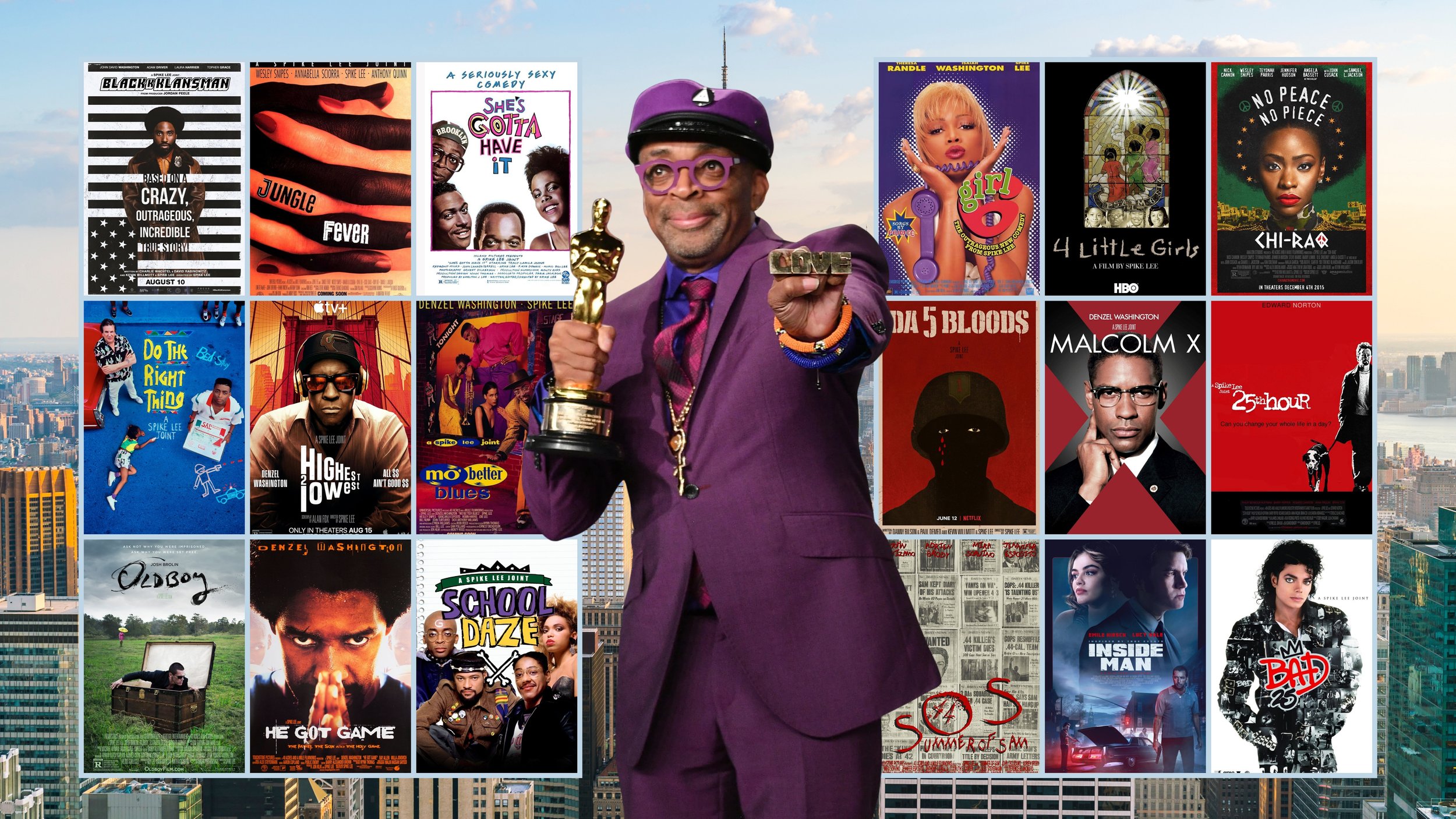
Graphic by Sienna Lewis, Staff Photographer
There are few masterclass guests who are jumping from their seats with excitement to speak to students. Spike Lee is one of them. His passion was in your face, an extension of the bold, unapologetic voice that has defined his career and made him one of the most influential directors in American cinema.
Lee commanded the stage, asking students questions, riling up the crowd with his jokes and enthusiasm. It was clear Lee was in control, answering the questions he pleased and going on vibrant tangents about his life and work.
Students were on the edge of their seats, soaking in every bit of advice from the legend. He repeatedly spoke over moderator Scott Feinberg, and the crowd hollered in cheers at his witty and lively remarks. As he spoke about his life, his upbringing in Brooklyn and the history of his family, students quieted in anticipation of his next punchline.
It’s no surprise that Lee knows how to demand attention. His films, like “Do the Right Thing” and “Malcom X,” have long been revered for their fierce political commentary and authenticity.
Lee carries a message for filmmakers about taking up space and possessing determination. Now the artistic director of the graduate film program at New York University’s Tisch School of the Arts, Lee recalled his time as a student at the university, where he earned his Master of Fine Arts. He spoke about a time he almost got expelled from NYU after making the short film “The Answer,” a response to “The Birth of a Nation,” which has been criticized for its racist message and impact.
Spike said he never had a problem with the film being shown, but with the context it was shown in: “That film was racist, and the KKK was dormant when that film came out, and (it) brought the Klan back into life. Consequently, Black men were lynched, raped and murdered, but that was never taught.”
Lee spoke about the impact of films he’s made and urged students to make their own film, no matter the context. He acknowledged the changes since he began his career in terms of accessibility and financing. He noted that when he was coming up in the 1970s, film schools were often the only way young filmmakers could access cameras and equipment.
“Don’t let that kill your dream. As I said before, everybody has a phone, everybody has a laptop and people are being discovered all the time for their short films. So you gotta make a way. Simple as that,” Lee said.
Lee told the crowd that having talent is one thing, but that success comes from putting in the work.
“You think you can fake the funk, scam people, (but) the people will know,” he said. “The people in hiring positions, they can see that fake shit from miles away. But if you’re hustling, I mean, when people hustle, you know right away, they want it.”
He said no matter what your major is or what you pursue, you have to put in all the work, and there is no way to fake it. Lee spoke about waking up bright and early for set days with no alarm.
“You find that you don’t mind getting up at 4 o’clock in the morning to go to work,” Lee said, “When you have a job you love, you don’t even need an alarm. Because I know I’m gonna have fun and I’m doing what I love. I don’t have an alarm! I’m blessed with doing what I love.”
Alexis Kuncar, a creative producing junior who attended the masterclass, said she wrote that quote down.
“This was extremely inspiring and heartwarming to hear the excited, ‘butterfly’ feeling before going to set or working with your team doesn’t go away, even in the life of an experienced filmmaker like Spike Lee,” she said.
The masterclass was overflowing with emotion. Spike Lee brought laughter, hope, honesty and moments of quiet reflection like no other masterclass I’ve attended.