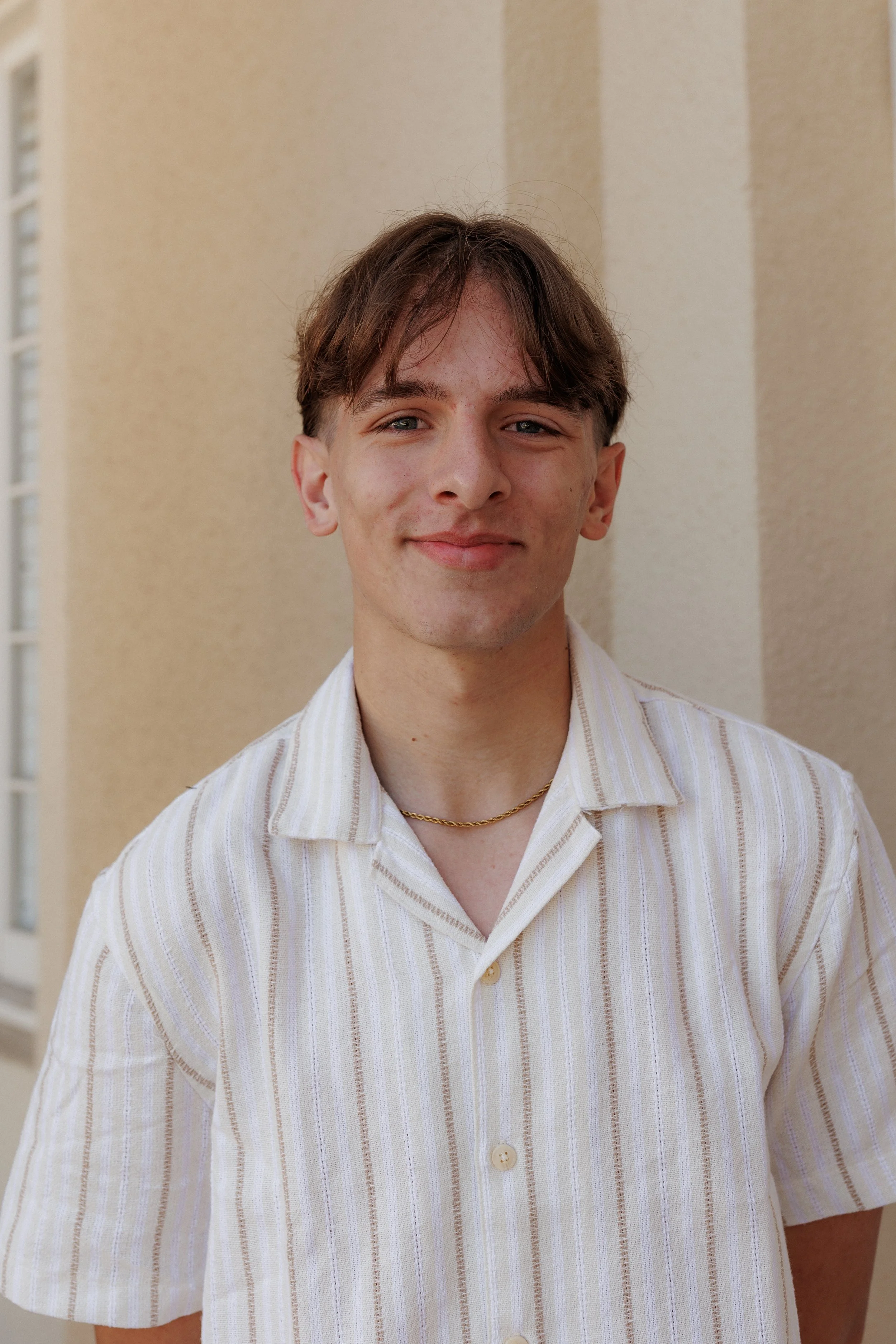
The life of an adjunct professor
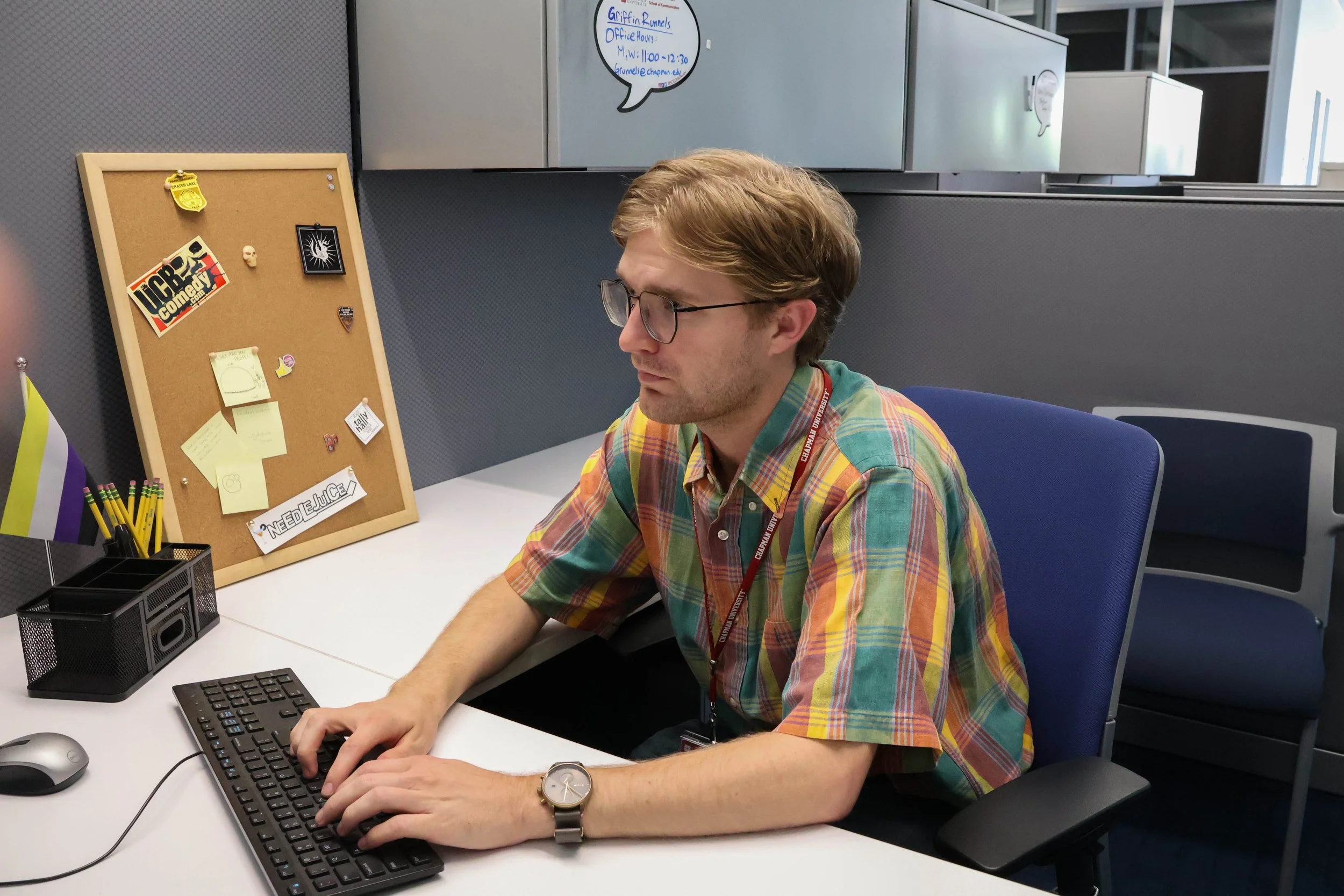
Photo by Trinity Johnson, Photographer
A virtual mound of student assignments awaits Griffin Runnels. Things may look calm, with just a computer and a few personal items on the adjunct professor’s desk, but that’s a long way from the truth. Their 9 a.m. business communication class has just ended, and office hours don’t start until 11 a.m. The time to get work done is now.
They only teach one class at Chapman, but with their public speaking courses at Orange Coast College (OCC) in Costa Mesa, there is a lot of grading to get through. Runnels must pore over practice cover letters for 20-plus undergraduates, and then they need to make sense of their notes about the recent presentations students gave at OCC.
Sure, Runnels could just give it a half-baked effort and call it a day. But they care about their job. No, they love their job. Plus, if students are going to take the effort and do their best on these assignments, then the grading must be fair.
If Runnels doesn’t finish, they could — and often do — take the work home. The only problem is that they don’t get paid for getting it done off campus. It’s free labor. Even taking work from the community college to their office at Chapman is a sacrifice. OCC only pays for the hours that Runnels actually lectures.
So, they get started. Grading while balancing efficiency with fairness.
As is the life of an adjunct professor.
“I’d love to be (at Chapman) full-time,” Runnels said. “That would be a stable job in a time where job stability for a professor or part-time adjunct is hard to come by.”
Runnels has been teaching communications studies at Chapman since the fall of 2024, after doing three years of undergraduate and graduate school at the university. Classes have always come and gone, but last semester, it looked like they had a fairly nailed-down schedule: a business communication class and a gender communication class at Chapman, then three public speaking courses at OCC.
But now, half of that income is gone. Down to one class at Chapman and two at OCC, Runnels said they have been very lucky not to need a third job. If their rent situation wasn’t favorable, they might also be working shifts at Trader Joe’s or Target.
In the fall semester, Runnels won’t be teaching at Chapman. There is no space. So the hunt for extra classes has begun, whether that’s more at OCC, or another community college like Santiago Canyon, Runnels is hoping to secure something before the summer. But the volatile job market isn’t making it easy.
“The nature of this kind of job is a little bit mercenary,” they said. “You’re hoping that something happens so you can get in … Both times that I started teaching at Chapman, it was because someone had to stop teaching a class.”
Part-time professorship lends itself to opportunism. But even with a growing use of adjuncts at universities, teaching enough classes to get by financially is far from a guarantee.
The adjunct landscape
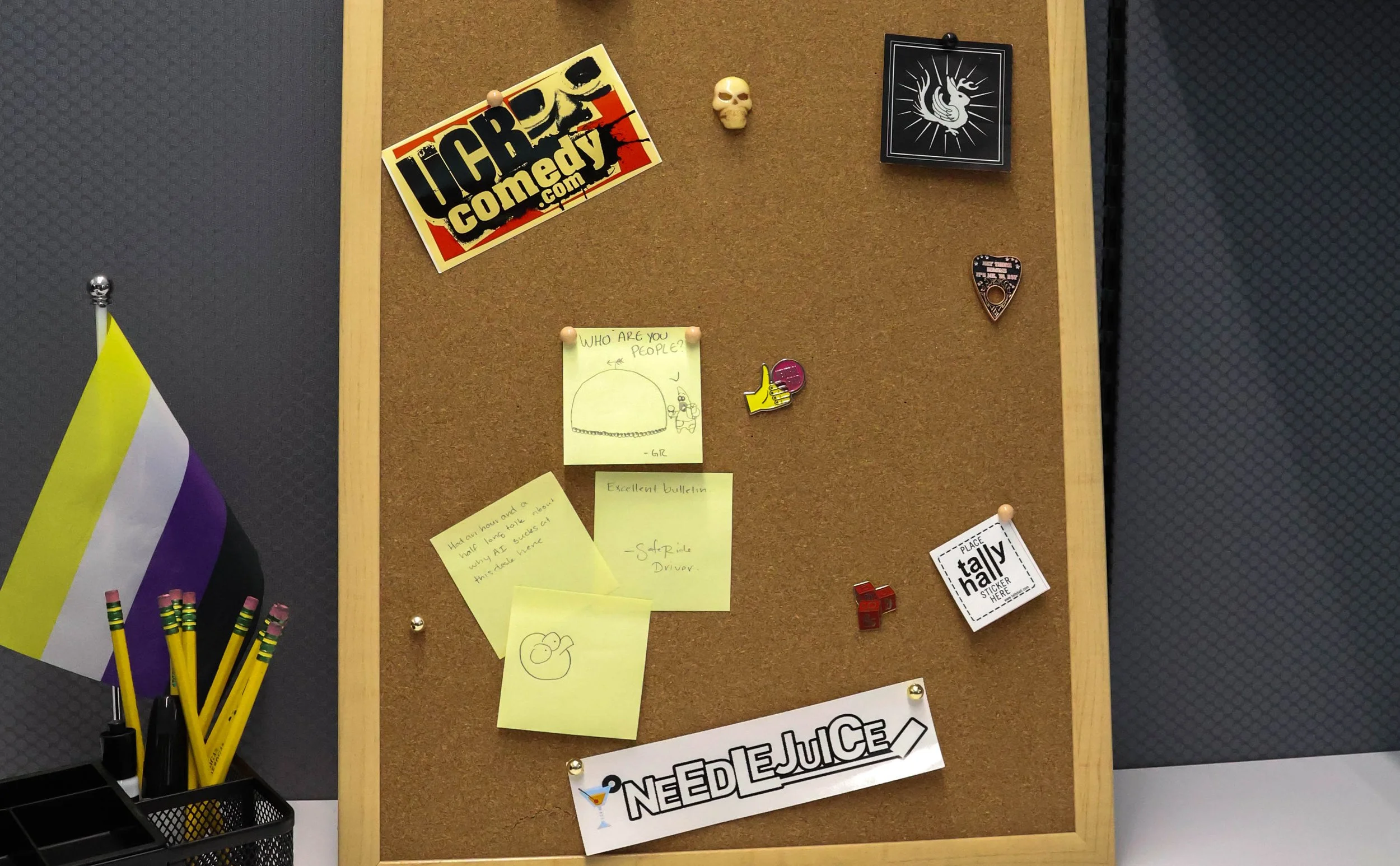
Photo by Trinity Johnson, Photographer
Forty percent of faculty in higher education is made up of part-time lecturers. As adjuncts don’t make annual salaries, they offer universities a cheaper, easily replaceable option. There is no long-term contract, and classes are decided on a semester-to-semester basis.
Around 50% of faculty at Chapman are adjuncts. The percentages are lower among STEM majors, while the humanities represent a larger chunk of adjunct professors.
Runnels said the School of Communication is a younger program, and because it is still building, it is harder for professors to get full-time work.
As for their work at the community college, Runnels said it is much more tiring.
“It’s a different beast,” Runnels said. “There have been times, especially last semester when I was teaching three classes (at OCC), where the fatigue gets to you.”
However, Runnels kept emphasizing luck when it came to their situation. Even with all the hardships of part-time jobs, they know that others have it tougher.
Runnels has been able to make sure their Chapman and OCC classes fall on different days of the week. They can somewhat compartmentalize their work and keep an organized schedule.
Still, the best-case financial scenario for an adjunct is teaching five-plus classes at two different institutions. While the money was better, Runnels said that the workload of five classes last semester started to weigh on them.
“I mean, hell,” they said, “that’s hard.”
Freeway fliers

Photo by Trinity Johnson, Photographer
Runnels pulls out their phone and checks the map. Twenty-two miles. They should probably grab some gas before heading off to Costa Mesa.
As they pull into the station, the sign says that gas is now $6 per gallon. Weighing their options, Runnels decides to pump enough to get to class and back for the day. With their life budgeted to the cent on an Excel spreadsheet, there is no room to fill up the entire tank today.
Thankfully, Runnels doesn’t need to stop anywhere else today. They won’t be rushing from school to school, but that soon could be their reality. With no work at Chapman for at least the fall semester, Runnels knows they will need a few classes at other colleges to make ends meet.
“If I can get two (more) classes, I’ll start being able to make what I need to make,” they said.
Like many other part-time professors, Runnels will soon need to pay for a full tank. They’ll go 20-odd miles in this direction and that. There will be no time for grading or planning. Lunch will be eaten on the 405. They’ll be flying on the freeway.
So why does Runnels still want to pursue this career? It isn’t because it’s easy. It’s not because the pay is good. It’s certainly not for stability. Why, then?
“It’s fulfilling,” they said. “This is the first time in my life that I’ve really known that this is what I’m here to do. I love this job so much.”
At the core of everything for Runnels is a love of communications studies and of shaping young minds. Education is their lifeblood. Runnels wants to pursue a Ph.D. at Chapman. Learning and teaching, that is their fuel. And it is worth more than any tank of gas.
Fun and relaxation
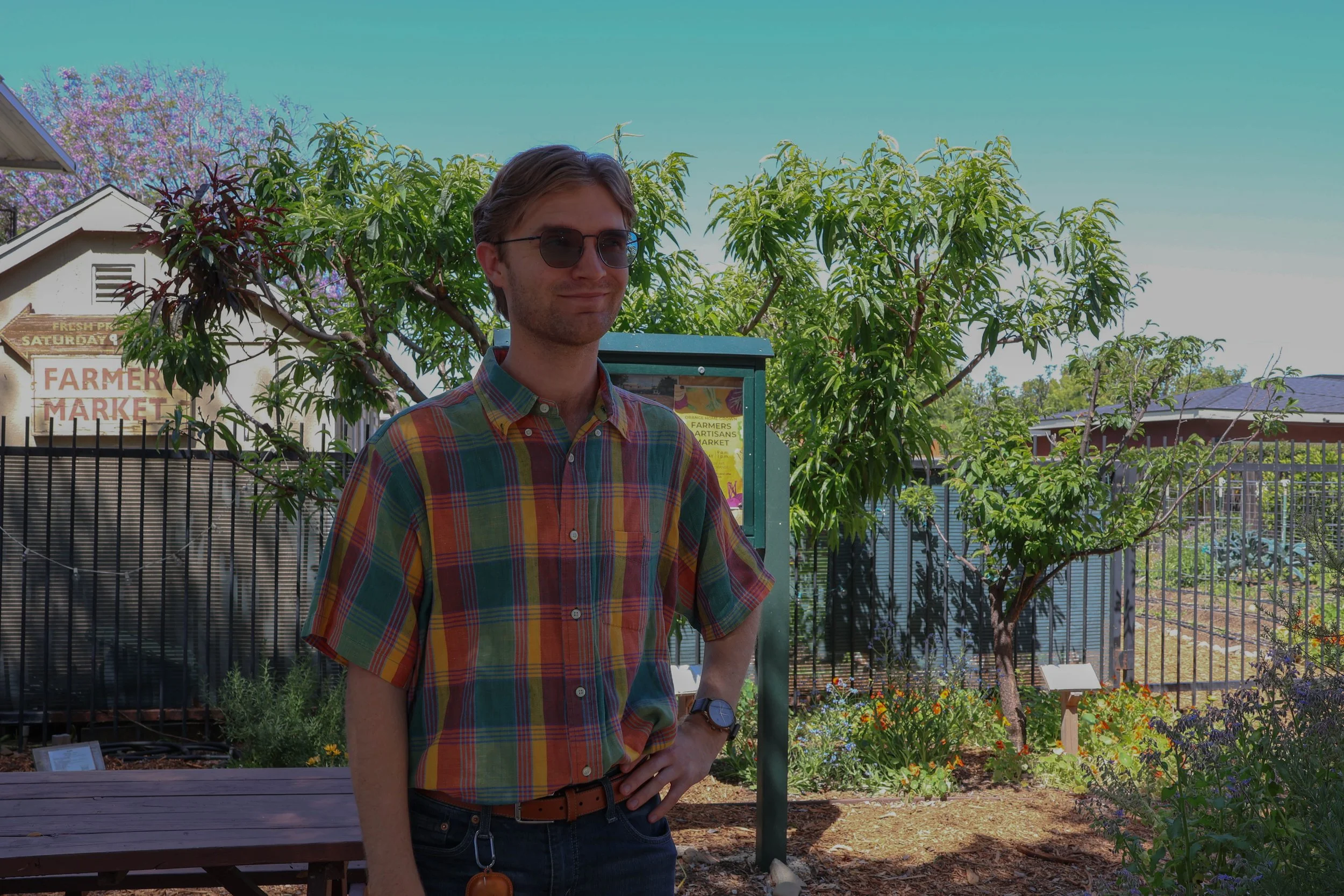
Photo by Trinity Johnson, Photographer
Between grading, planning, driving and teaching, the adjunct’s life may not leave a lot of room for thrills. It is a paradoxical structure of somehow always being at work and still not making enough money to have a break. But as Runnels walks up to their friend's apartment, Chapman fades into the background.
Runnels knocks on the door, ready to enter into an alter ego. For they are preparing for a few hours of fun. Their friends have a Dungeons & Dragons campaign going, and through busy schedules, everybody has found a day to meet up. A day to unwind.
Gone are the worries of finances. This is not the day to care about classes for next semester. This is the day to worry about whether or not Runnels can roll a nat 20 and kill off the big bad evil guy.
Sometimes, Runnels finds time to spend with their partner. Taking a stroll on the beach, going on a date night. Or they are seeing family. Not much could be more important than connecting with loved ones in the area, but most of their non-work hours aren’t strictly free.
“(The job) is kind of like a 24-hour, on-call type of thing. You’re still getting emails from students over the weekend or after class hours,” Runnels said.
The decision to have free time is a conscious one for Runnels. To stay off the computer for a few days. To push the work until Monday unless it is super-double-urgent. There can be a sense of guilt that comes with it, but also liberation.
Some weeks are better than others. It just depends on how much work there is to be done. Oftentimes, Runnels is just trying to find peace through all the hecticness.
“When it gets busy … free time for me looks like a nap.”
The more classes Runnels teaches, the more their free time will shrink. It will be harder to organize a schedule where assignments are spaced out. There will be more lectures to prepare for and more hours on the road.
“Tough is the way I’d put it.”
As is the life of an adjunct professor. Not ideal, nor easy going. But for those like Runnels who love the job, there are no other options. They will power through the hardships because teaching is their calling.