
Why 2026 is the year of nostalgia
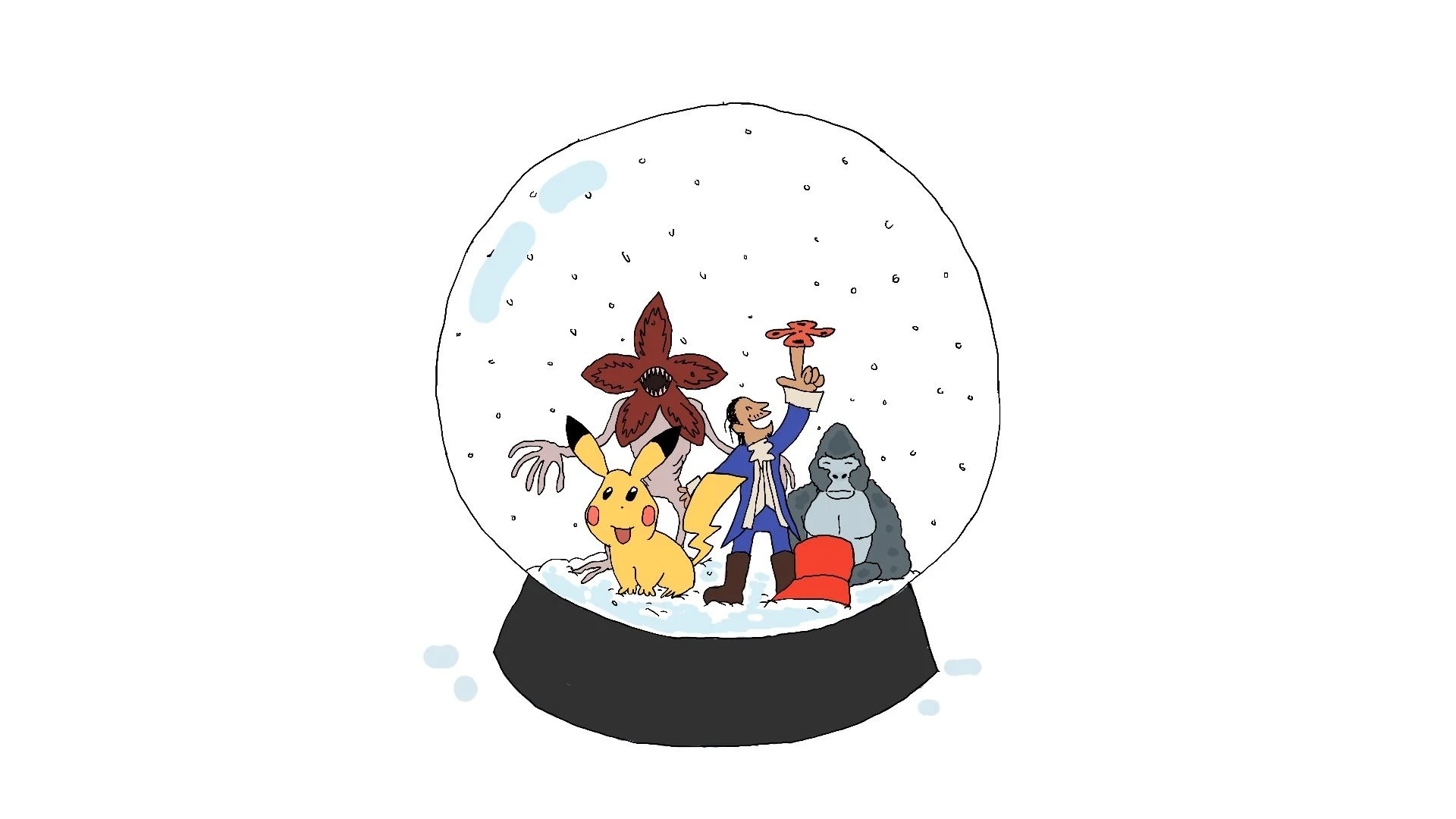
Illustration by Sami Seyedhosseini, Cartoonist
For most, the year 2016 is best summarized by fidget spinners, bright pink iPods, slime and Starbucks Unicorn Frappuccinos.
“I would say no one really knew how brilliant that year was as it was happening,” said senior psychology major Gianluca Giorgi.
With the surge of “2026 is the new 2016” posts coursing through social media, these trend markers seem to bring back memories that people feel particularly nostalgic for. But what exactly are people yearning for beyond Victoria’s Secret and the Snapchat dog filter?
“It was a time where people started to just be themselves and be unapologetic,” Giorgi said. “Whether or not people were nervous and depressed and closeted or fearful, I think it was such a turning point in pop culture and fashion that it's too important not to embrace.”
Looking back a decade ago, the tangible items that trigger people’s nostalgia can be attributed to a desire for the maximalism of the year’s trends. While people might experience more accessibility to individuality in 2026, 2016 was one of the last times pop culture enjoyed such a cohesive, singular aesthetic. This aesthetic emphasized excess over refinement. There was a sort of simplicity in following a trend that was more about embracing fun than rigid conformity.
“There isn't really a set form of style or fashion, and people are craving that sense of (conformity) in a sense, and they’re looking for some kind of way to feel more connected to people,” said senior strategic corporate communications major Katie Conway.
Another topic that students expressed nostalgia for was outdated behavior on social media, before today’s concern of digital footprint and online perception. Students remember a time of Tana Mongeau’s storytimes, Shane Dawson’s conspiracies and Logan and Jake Paul’s feuds, which shared the same effortless nature that added so much charm to online content of the time.
Social media was still a form of authentic interaction, and the collective interest in a small pool of popular content encouraged connection rather than the schism driven by hyper-specific algorithms and the targeted ads of today’s online experience.
“It was definitely a more simplistic time on social media, and now with booming influencer culture, it's a very, very different world to live in. So much more of our consumer habits are also, overall, influenced by social media, (while) a lot of it then … was what we actually were interested in,” said Conway.
Conway specifically said YouTube creator Logan Paul being “cancelled” was the moment this behavior shifted.
The notorious online event led to a wave of “cancel culture,” where fear of being exiled from an online domain and rejected by their followings led creators to further refine their content, saving followers from particularly harmful content, but at the same time creating a layer of distance between the creator and their fanbase.
This shift in online behavior affected not only creators, but also the average person’s experience on social media. While people once felt comfortable posting silly photos with the “Rio de Janeiro” filter, those same users now felt the need to think more carefully about what they were sharing online, soon leading to heightened feelings of importance regarding perfecting one’s online image.
What people really miss from 2016 is the freedom that came with a period before social media posts held actual relevance in real life social situations.
“There was no embarrassment, and now it's a very nostalgic feeling for so many … because that was a funny and fun time to be alive,” said Conway.
Additionally, many of those participating in this trend were likely in elementary or middle school during 2016. Because of that youth, they associate childhood freedom with the era..
“We were kids back then. We didn't need to worry about a job after college or how much money we're going to make, how we're going to afford rent and groceries,” said senior political science major Roshnee Moorthy.
Many people feel that sharing younger photos of themselves and participating in trends from the time allows them to reconnect with their inner child.
“People are trying to just be themselves and not (worry) about being cringy, because everyone (innately is). Everyone had a cringe phase, and I think when you get into your (early 20’s) you really start to realize it's okay to retreat to that,” said Giorgi.
In addition to heightened concerns of self-expression in recent years, sensationalized politics divide people more than before.
“At the time, I could be like, ‘everyone has different opinions,’” said Moorthy. “At this point, it's a little different because it feels like now, (some are) opposed to … the color of my skin. It feels a little more nuanced and complicated and weird than it did in 2016.”
Many feel that recreating those “ideal” tween or teenage years of 2016 as young adults themselves allows them to relive the same experience. But unfortunately, because of the nature of today’s world, it’s impossible to fully indulge in 2016 trends without experiencing 2026 judgment.
People struggle to get an intangible experience from simply following a tangible aesthetic. Many prefer to recreate 2016 trends in “safe spaces” such as social media or at parties, where they can wear the experience as a costume of flower crowns and skinny jeans. All indulgence in the trend is executed with an ironic approach to a genuine experience, which creates a certain detachment from the most prominent theme of the time.
“To some extent, it's in irony, and to some extent, (there’s) even legitimacy in irony,” said Moorthy. “You’re using the Rio de Janeiro filter, putting moustaches on your fingers … That is more the ironic part, but I think people yearn for a time when things were simpler in the world … Things were cheaper, people could afford to live.”
A sense of escapism permeates the whole trend. Nonetheless, in an era of expected uniqueness, participating in a trend allows these young adults to genuinely connect to an integral part of the Gen Z experience.
The connection our generation has with 2016 is seemingly deeply embedded in all of us, and participating in trends is just one way we can connect to the community of our generation. As more and more people follow the trend, maybe we will be able to further pursue the carefree authenticity that marked the era.