
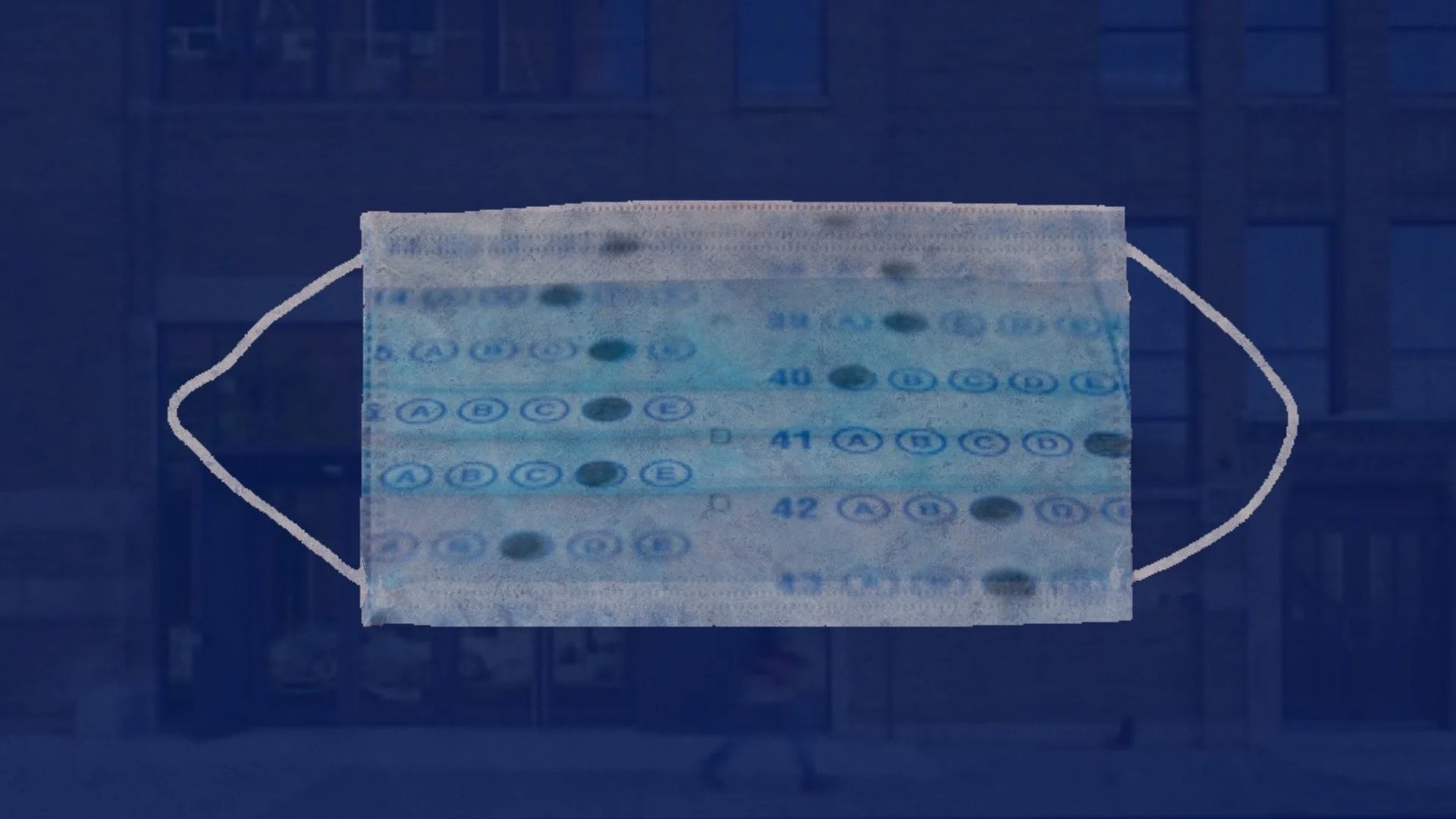
Graphic by Zoe Wren Arntsen, Illustrator
Chapman University has seen an increase of nearly 200 students requesting accommodated testing in the last four years, according to Assistant Director of Disability Services Amelia Holzer — and they are not alone.
The University of California system reported that around 9% of students in the 2023-2024 school year utilized resources from the UC Disability Support Service (DSS) office, including, but not limited to, accommodated testing.
“Looking specifically at the last five years, it's hard not to attribute some responsibility to COVID-19,” said Joy Xu, Chapman’s testing center department assistant. “Quarantine in particular forced many people to reckon with their mental health.”
In addition to the physical and mental toll that COVID-19 had on many individuals, Holzer said medical advancements have also helped expand resources and who is able to get proper diagnoses.
“(We know) how different diagnoses manifest in different types of people,” said Holzer. “Whereas historically it was all white boys, now we are getting more nomadic knowledge and more people are coming in with diagnoses.”
Testing accommodations were legally codified in the Americans with Disabilities Act (ADA) of 1990, which mandates that testing entities offer accommodations for individuals with disabilities so that an exam “accurately reflects an individual’s aptitude, achievement level or the skill that the exam purports to measure, rather than the individual’s impairment.”
Currently, testing accommodations are offered on a case-by-case basis, depending on students’ needs. Some offered at the Chapman Testing Center include a distraction-reduced environment with fewer or no peers, extended testing time, light-sensitive environments and text-to-speech read-out-loud software.
Holzer also acknowledged a larger trend in higher education that is affecting the number of students who enroll with disability services, not only at Chapman.
“Globally, we’re seeing an increase in students with disabilities attending college — which is great news — it also means that disability services offices have more people coming through the door with disability documentation,” Holzer said.
The Chronicle of Higher Education states that in the 2019-2020 school year, 375 universities reported 10% or more of their students were registered with disability services. In the 2023-2024 school year, it increased to 562 institutions.
The team at Chapman said pressure to fulfill all accommodations is specifically challenging around midterms and finals, especially since they have taken over organizing exams for the Fowler School of Law as well.
“When we have lots of tests scheduled for the same time, we do have to think more about how and where we place students for tests, keeping in mind the different spaces we can provide for each student's accommodations,” said Xu.
Holzer said that she hopes the Testing Center will expand in the future to create more individual testing rooms for students.
“We only have about nine private testing rooms at the testing center, so we use what we have and try to finagle different times while still making sure students get (their) accommodations,” Holzer said. “(In a) dream world, we would have twenty private rooms, and I think that's somewhere down the line.”
As a whole, Xu said that the increased trend in students needing testing accommodations and utilizing disability services is evidence that the testing center should be allotted more resources to better serve students.
“At the end of the day, our function is to provide accommodations that create equitable testing experiences for students with disabilities as with students in the classroom,” Xu said. “Any resource, from more staffing to provide more attention to students who are testing, to more dedicated testing spaces across campus, would aid our office significantly with our function.”