
Photo by Isabella Savea, News Reporter
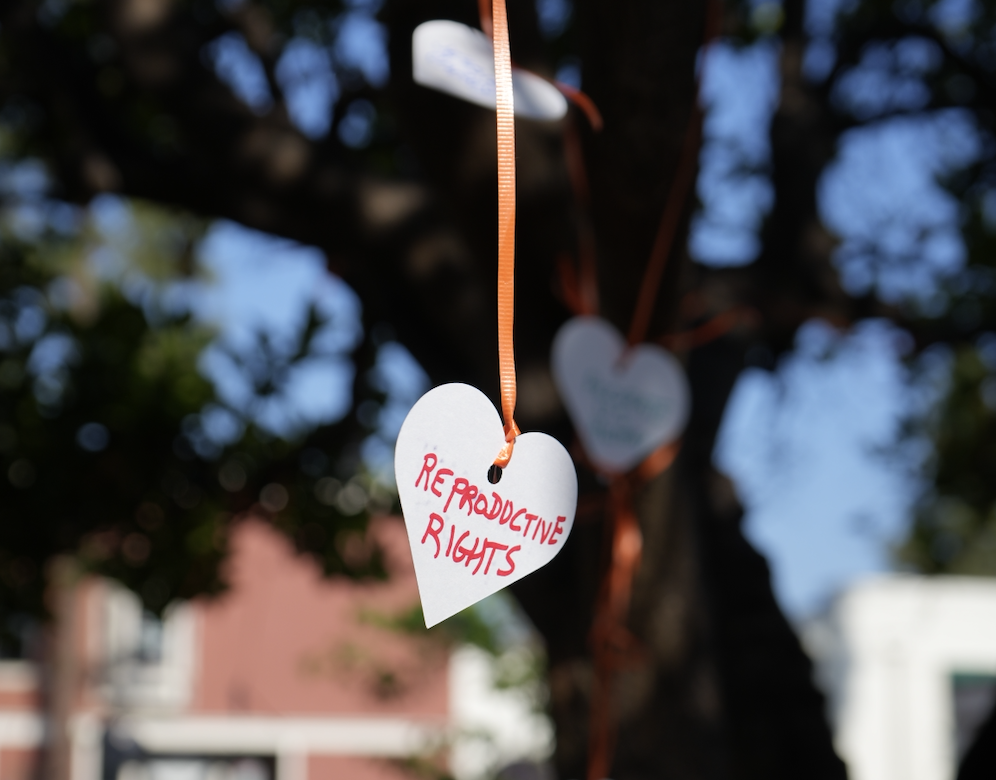
He held a small pink paper heart between his fingers with the name "George Floyd" written across it in black marker. After tying it to the tree of handwritten hearts, he paused for a moment — tears rolled down his cheek as he held the paper heart near his chest, surrounded by hundreds of protesters who say the Trump administration has them feeling angry, afraid and unheard.
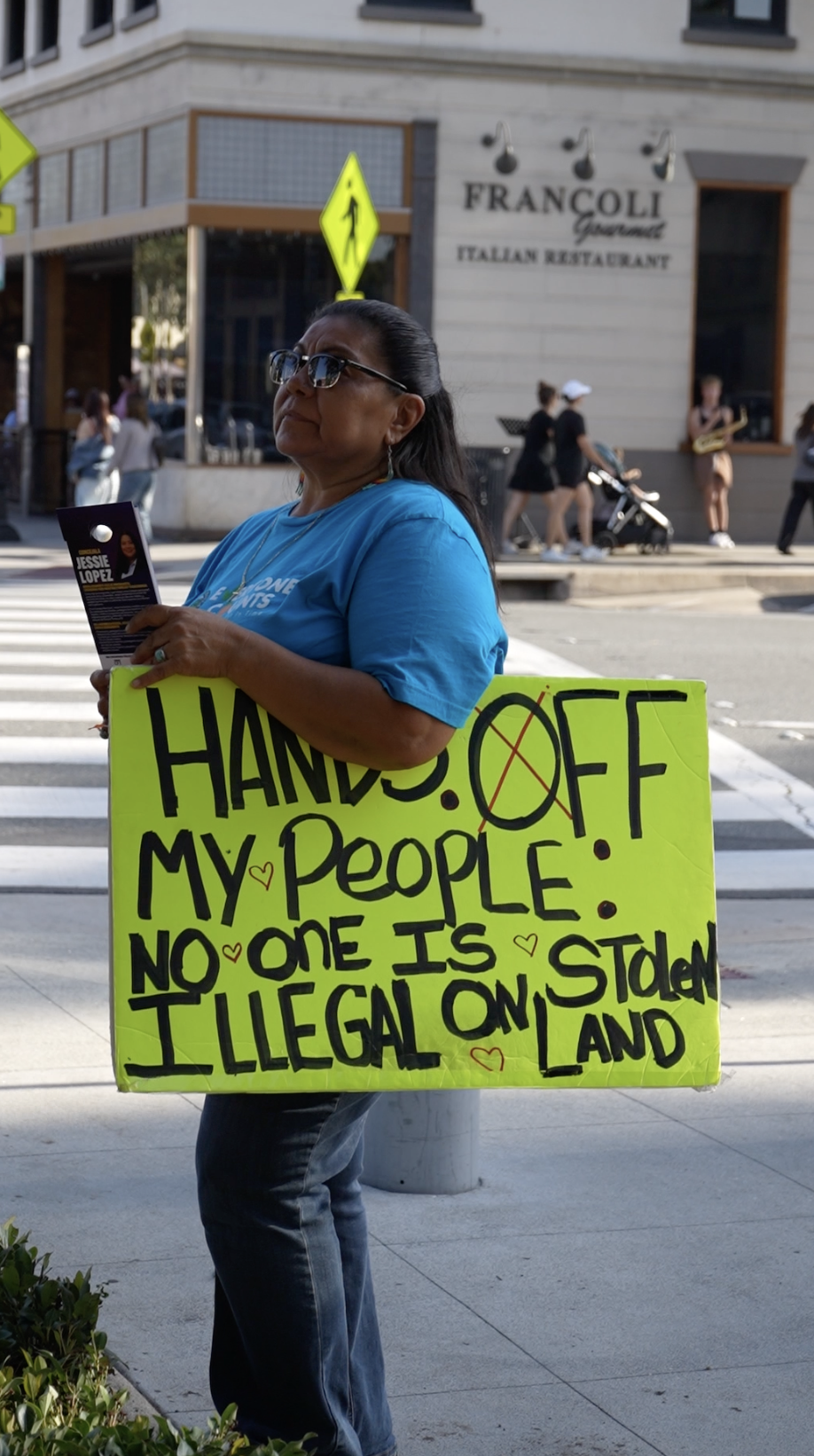
On May 1 — also known as May Day or International Workers’ Day — Indivisible Orange, a local organization fighting for change, took to Orange City Hall and the Orange Plaza to rally and push back against actions of the Trump administration.
Protesters started with sign waving in front of the city hall before marching to the Orange Plaza traffic circle to tie paper hearts with writings on them of things they’ve lost since Trump took office, alongside the policies they are protesting that day.
Evangeline “Vangee” Oberschlake, an alumna of Chapman University from the ‘80s and protest organizer, is one of many from the local group.
What started with Oberschlake standing solo in front of a Tesla repair shop in disagreement with the Department of Government Efficiency (DOGE) now has dozens of other locals joining in on the movement.
“It’s not just authoritarianism. We’re looking at fascism, and we’re all here for different reasons," said Oberschlake.
Photos by Isabella Savea, News Reporter
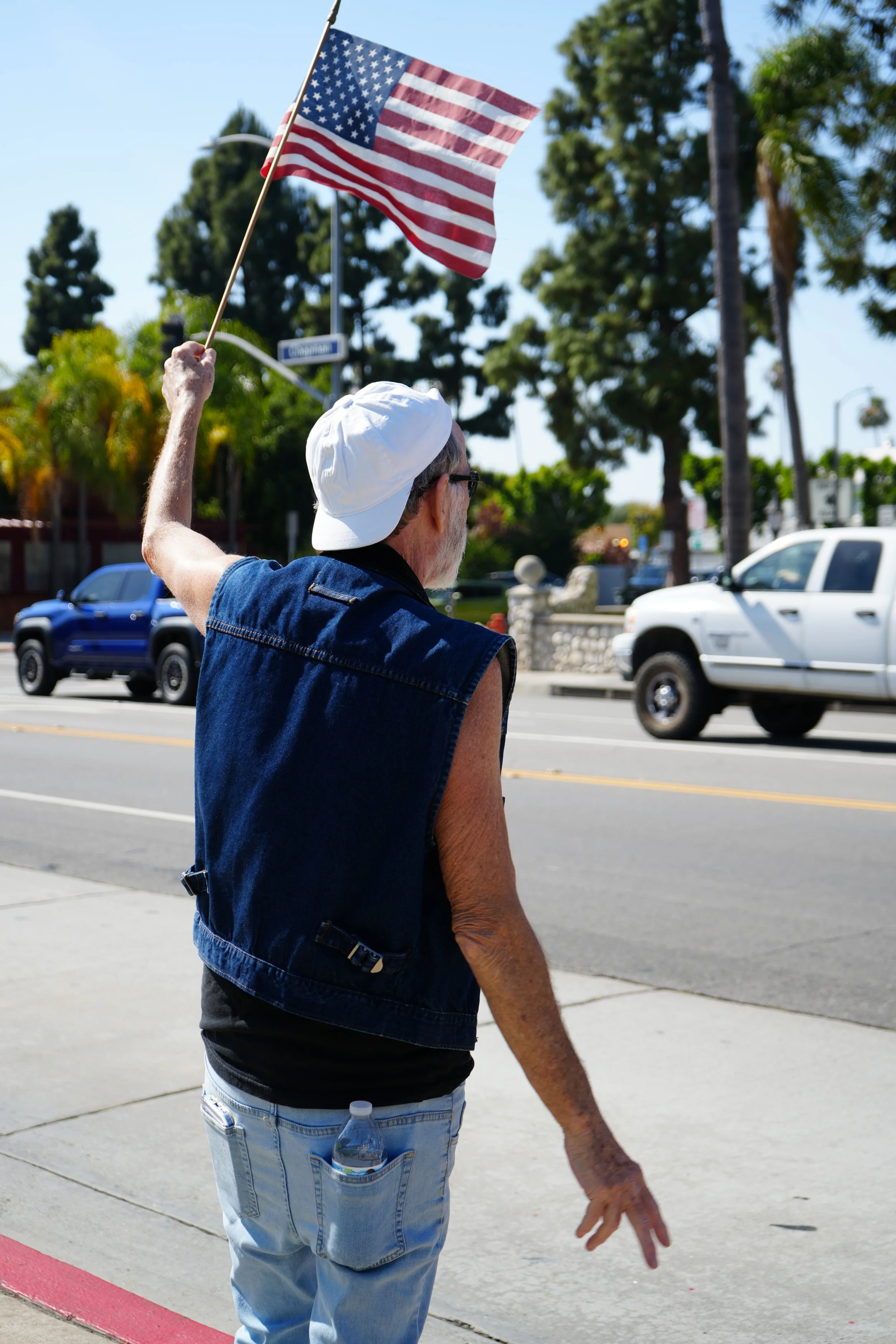
Chapman peace and justice studies professor Richard Ruppel says that protestors across the world rallied for labor rights, higher wages, economic justice and opposition to the war in Iran. Ruppel also mentioned that the American protests were a bit more focused on national problems, including the popular movement “tax the rich.”
“(On May Day) people protested the treatment of Palestinians by Israelis and the way the fossil fuel industry pays off our politicians to protect its profits at the expense of the environment,” said Ruppel.
As a U.S. military veteran and mother, Oberschlake refuses to just sit and wait for change.
“I took an oath when I was 18 years old to defend the Constitution, and I decided that no matter what, I wasn’t going to run, I wasn’t going to hide,” she said. “I was going to honor my oath, and I was going to stand up and say something, do something.”
Similarly, Ruppel started the university faculty group Chapman Solidarity in Feb. 2025 in response to the Trump administration’s assault on academic freedom, the rule of law and shared moral and ethical values.
Part of Chapman Solidarity’s mission is to organize forums open to students, staff and administrations, including last spring’s event with social activist Chris Kluwe, as well as this year’s Organizing Under Duress series sponsored by the peace and justice studies department that included the “Know Your Rights” training.

Ruppel says that the on-campus group stays in touch with Indivisible Orange and other groups, including Stand Together for Higher Education, American Association of University Professors (AAUP)and PEN America.
Oberschlake and Ruppel both emphasize the importance of protests, agreeing that it brings people together.
Oberschlake recounted memories of watching the Civil Rights Movement when she was younger, later organizing sit-ins and walkouts in high school.
“It’s important that we (do) not forget our history,” said Oberschlake. “We stand on the shoulders of giants that got us as far as we’ve gotten.”
Ruppel says that demonstrations are also a way to get the attention of people in power.
“We get politicians’ attention when we march, and we demonstrate to each other that we are not alone,” said Ruppel.
As for the younger generations who feel alone in times of uncertainty or scared to use their voice in demonstrations, Oberschlake reminds them that they can make a difference.
“Be not afraid,” she said. “There’s no reason to live your life in fear. If you feel something is important, step up. Be smart.”