
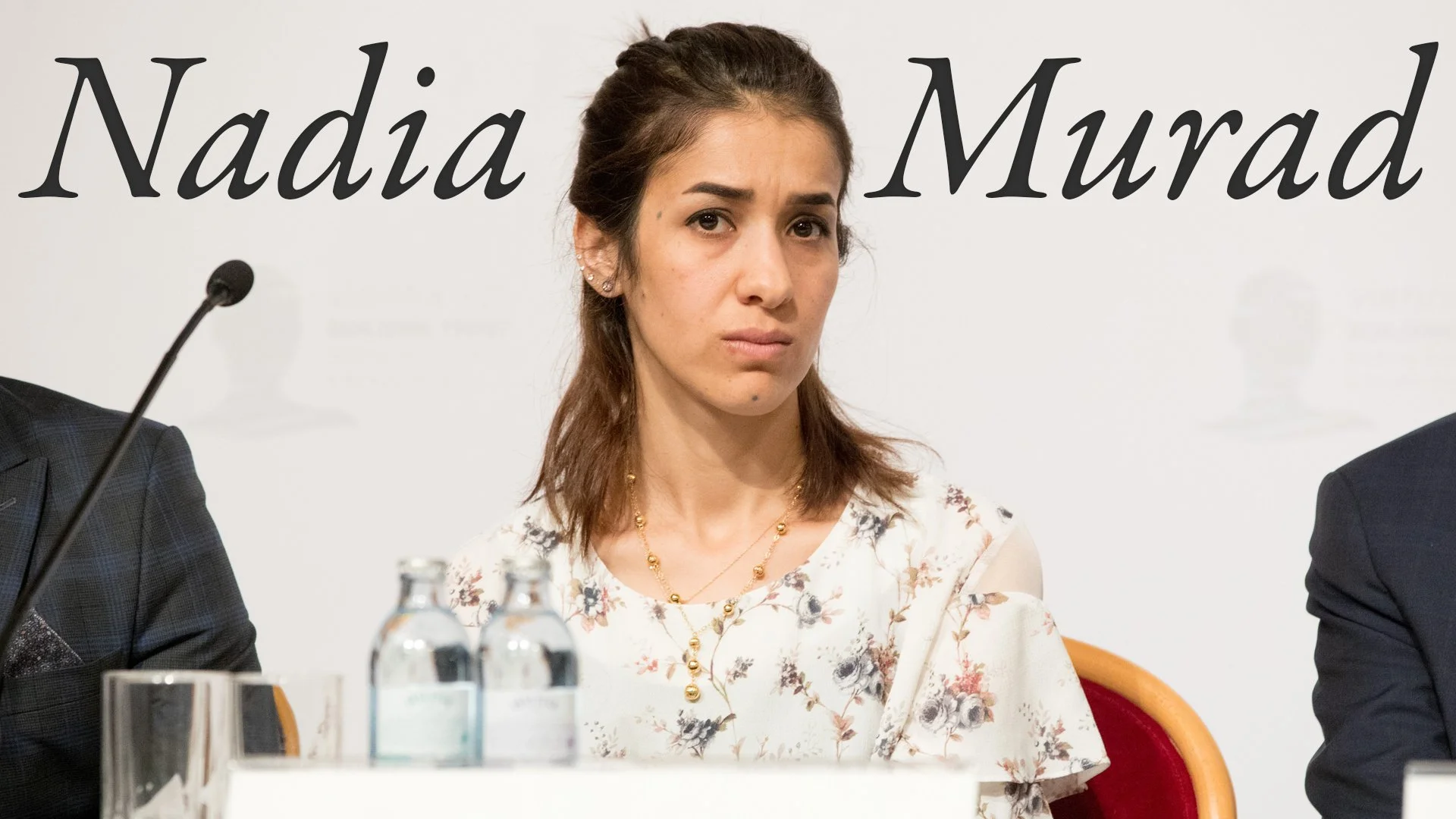
Graphic by Easton Clark, Photo Editor
The Musco Center for the Arts audience erupted in applause as Chapman Presidential Fellow and 2018 Nobel Peace Prize laureate Nadia Murad joined Wilkinson College Dean Jennifer Keene on stage Oct. 6.
During the conversation, students and other community members were informed on Murad’s story, activism and her future plans as she continues to raise awareness on the genocide against the Yazidi people, as well as the use of sexual violence as a weapon of war in our world today.
Born and raised in Kocho, a village of farmers in northern Iraq, Murad's life changed drastically in 2014 when Islamic State militants massacred the people of her village, including her six brothers and mother, and enslaved Murad and thousands of Yazidi women to the ISIS sex slave trade. For three months, Murad was raped, abused and beaten, managing a narrow escape through the streets of Mosul.
Using her experience as a call to action, Murad advocates for supporting survivors through recovery efforts, ending sexual violence as a systematic weapon of war.
“I want to be the last girl in the world with a story like mine,” reads the first statement on the Nadia's Initiative website. Murad's advocacy focuses on meeting with global leaders, traveling the world and publishing several articles and books about her experiences.
“The Last Girl: My Story of Captivity, and My Fight Against the Islamic State,” a New York Times bestselling memoir, is Murad’s account of the genocide against the Yazidi ethno-religious minority in Iraq and the several impacts it has years later. Murad said that writing stays there forever, for her family and others to read her experiences.
“Writing down your story is so much more different than when you share it,” she said.
Although wanting to move forward from her traumatic experiences, reflecting through writing her book was extremely important to Murad.
“I believe in documentation, especially when crimes like these types of crimes are committed,” said Murad.
Murad wanted to be a history teacher when she was young, and said how she never knew women could even write history books, pushing her further to document her experience so it is not forgotten.
Today, “The Last Girl” has won numerous awards, received recognition from prominent journals and has raised awareness to the public.
“It’s important for future generations, for students like you, to learn and prepare for when you are ready to go out there into these communities and with these global issues,” Murad said.
Murad continues to write, publishing “Returning to Iraq to Bury My Brothers” for Time magazine in early Aug. 2025, where she explained the relief and hardship when she found her two brothers, Elias and Jalo, on a list the Iraqi government released of 22 people whose remains had been identified.
Murad’s articles reflect on how she found her brothers as numbers 11 and 12.
“This is what genocide does. It reduces human beings to lists and numbers. But my brothers are not numbers,” she wrote.
Aside from the memoir, Murad has also written several other articles such as “Outraged by the Attacks on Yazidis? It Is Time to Help,” “My People Were Massacred Over Five Years Ago, the Genocide Continues,” “I am a Survivor of Islamic State Violence. Don’t Forget Us” and much more, documenting her experience.
Murad received the Nobel Peace Prize in 2018 along with Denis Mukwege, becoming the second youngest in history to receive it. Murad explained to the audience that she did not chase the prize and actually heard about it through her nomination. Although it brought lots of expectation, Murad explained her desire to continue to promote peace and work hard, per the award’s title.
Aside from the Nobel Peace Prize, she is also the first United Nations Goodwill Ambassador for the Dignity of Survivors of Human Trafficking, has been awarded the Sakharov Prize for Freedom of Thought, the Council of Europe Václav Havel Award for Human Rights, the Clinton Global Citizen Award and many more honors.
Murad reflected on the continuous practice of healing, explaining how, at the end of the day, it's being with people who take care of you, listen and support you, and gave special acknowledgement to her husband, nieces and family members.
There were also times when Murad got close to giving up, but explained how she found her way through.
“The second I became kind to myself, I saw the difference because I was focusing on myself,” said Murad, encouraging students to do the same. “Remember to do just a small, simple thing for yourself that makes you happy and relaxed.”
As the night came to a close, Murad signed her memoir for students in the lobby, allowing for conversation and a special interaction for students. Students left having received encouraging words, a courageous story and a signed copy.