
How much authority does Rate My Professor really have?
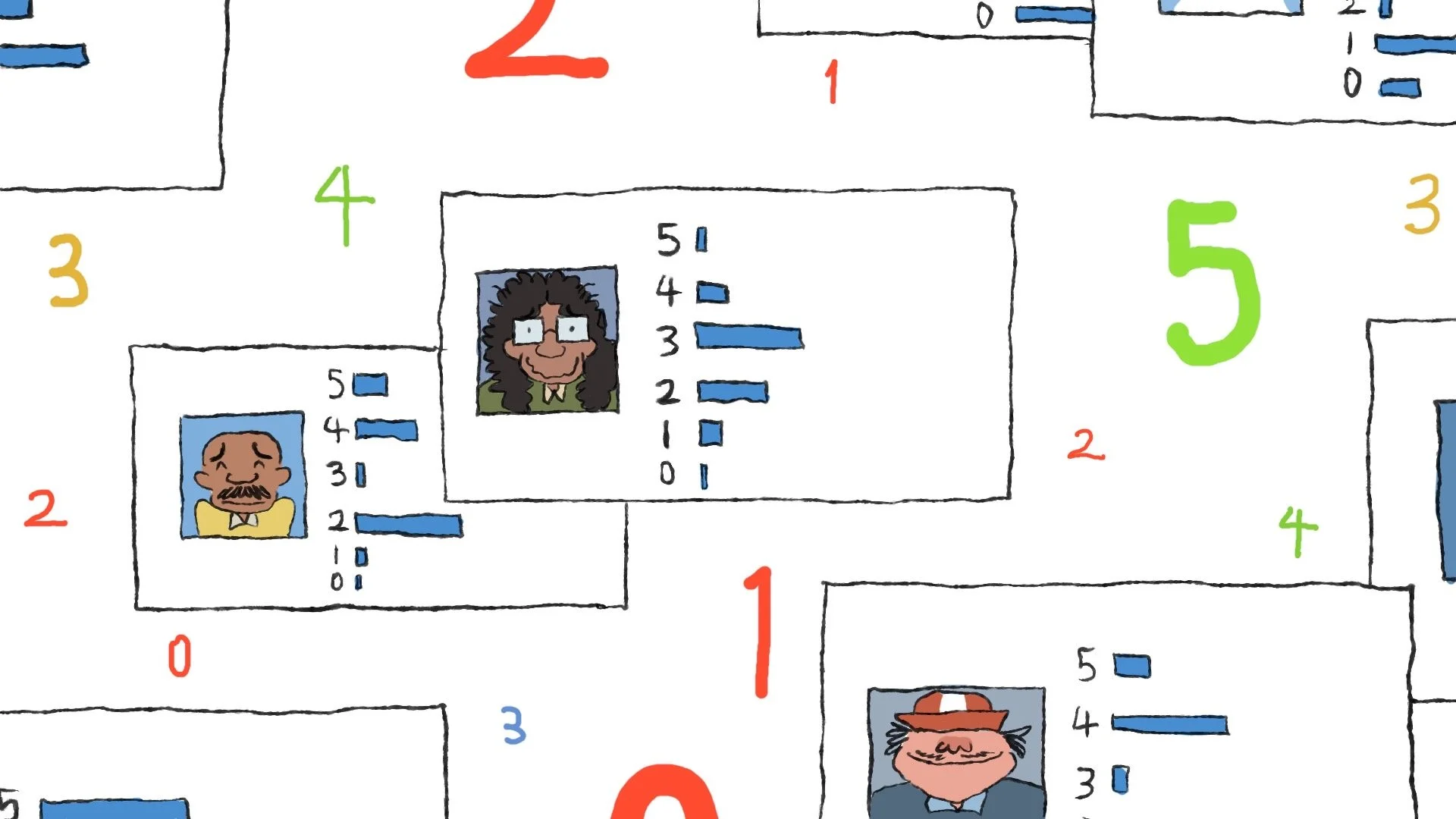
Illustration by Sami Seyedhosseini, Cartoonist
With spring registration already past, a new fear creeps up on students: difficult professors and dreadful coursework. The wait to see what their professors and classes will entail can be a painful one. However, there are some resources that can help, such as Rate My Professor (RMP).
While some students may design schedules with class times prioritized, others may focus more on the professor's ability to teach the subject and the course load by relying on other students’ experiences via RMP.
Created by John Swapceinski in 1999, the site allows college students to anonymously rate professors at college campuses across the United States, Canada and the United Kingdom.
The ratings allow students to state if courses were difficult, what grade they received, textbook requirements and a space to write out an anonymous comment on how they felt about the professor or class overall.
Although anonymous, Samantha Dorian, a junior public relations, advertising and entertainment marketing major, explained that she has never personally put in a rating on RMP.
“I’ve voiced my opinions in the Chapman course evaluations, but I’m always worried that a Rate My Professor review will get back to me somehow,” said Dorian.
Some academic professionals argue that the one to five scale is unreliable and biased, yet it's one of the few ways students can conduct adequate research on a professor.
Alli Briggs, a sophomore public relations, advertising and entertainment marketing major, explained that she usually only rates a professor on the site when she feels strongly about the way they taught, whether that be good or bad.
“Either way, people are going to end up in these teachers' classes, but sometimes it’s better to be prepared if they aren’t the best,” said Briggs.
Comments can range from simply saying they were a decent professor to a detailed account of being assigned thousands of assignments and ridiculously hard exams.
Dorian said she would rather follow word-of-mouth credibility than RMP.
“Sometimes, ratings seem to be a little bit subjective, but if there are glaring red flags, I tend to either proceed with caution or move on to another class,” said Dorian. “I trust my friends more than anonymous reviews, but it’s still worth a look.”
Briggs explained that a good amount of the reviews are negative, but sometimes she has to take the class anyway due to scheduling difficulties.
“There has been one time I have regretted taking a professor with bad reviews, but I’ve also been pleasantly surprised with some who have gotten poor ratings, I really liked them,” said Briggs.
Abby Babson, a senior business administration major, took a professor who had a poor rating on RMP, which ultimately proved to be true.
“There were very concerning ratings for an accounting professor that I had to take,” said Babson. “These comments turned out to be true immediately at the start of the semester, so I’m glad I had time to mentally prepare.”
However, Babson cares more about the timing of her classes rather than the reputation of her professors.
“I think Rate My Professor is a helpful website for most students, but I think the majority of people care more about class times than how much they like their professors,” said Babson.
Since the site is anonymous, comments can be extreme, and the majority are either great or terrible.
Chapman’s faculty as a whole is rated 4.1 in overall quality; however, the professors have varying ranks, and not all have reviews.
RMP remains a helpful starting point for students looking to gauge what a professor might be like, but it rarely determines an entire schedule. Most still rely on what they hear directly from friends and classmates rather than anonymous reviews.
Ultimately, no rating system fully prepares students for a class; in reality, they often don’t know what a semester will bring until it begins.