
New Pre-Health Professions Office offers resources for post-graduate success
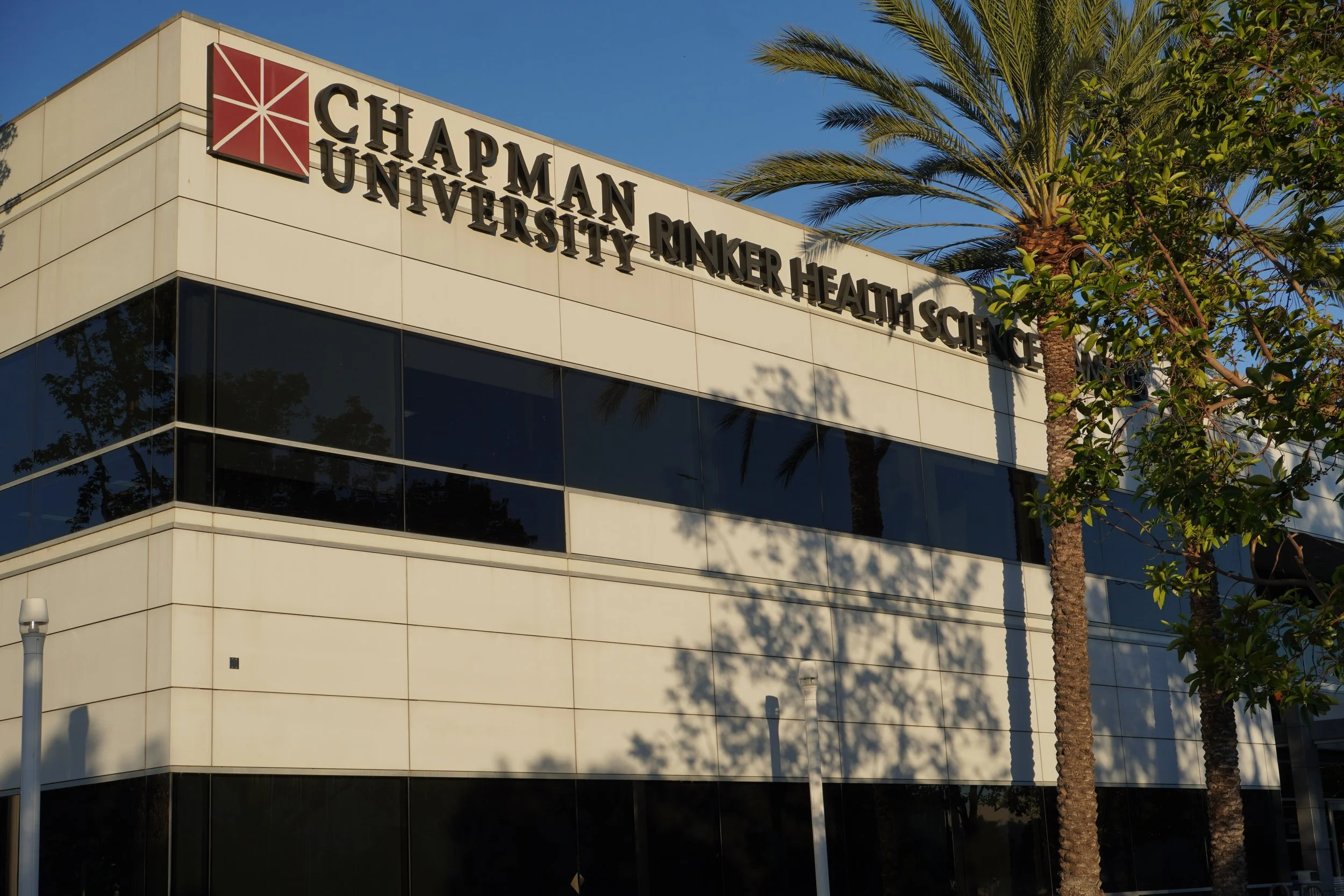
Photo Courtesy of The Panther Archives
This year marks the beginning of a new Pre-Health Professions Office for Chapman University undergraduates, led by director Randy Zuniga.
The office aims to equip students on pre-health pathways, including but not limited to medicine, dentistry, nursing and occupational therapy for professional school.
Zuniga plans to kick off the semester with multiple events introducing the office and its services, including an open house in Hashinger Science Center 102A (date TBD) and a talk in Irvine Lecture Hall on Sept. 8 at 5 p.m.
Zuniga emphasized that having a centralized office regardless of students’ affiliated college provides clarity on prerequisites, timelines and opportunities in order to make students feel more comfortable and confident in their specific post-graduation pathways.
“What makes this office especially valuable is that we’re connected to national professional associations, which means we’re dialed into the latest updates and changes in admissions requirements each cycle,” Zuniga said.
In the past, students on pre-health pathways have come from a couple of different colleges, namely Crean College of Health and Behavioral Sciences and Schmid College of Science and Technology, but resources varied greatly between each one and often consisted more of general advising help than specialized resources.
“In terms of resources specifically catered to pre-health, I didn’t see much other than (Introduction to Health Care Professions),” senior health sciences major Hannah Lee said. “I feel like the career center was more catered toward networking and interviews, but pre-health is more niche when dealing with finding things like clinical hours. Honestly, I relied on student clubs more than anything else to help me navigate anything.”
The Pre-Health Professions Office will offer services such as one-on-one meetings, group workshops and drop-in advising. The focus will be on academic planning and professional school entrance exam preparation, allowing students to develop the core characteristics needed to succeed in the field outside the classroom.
Over 200 current pre-health students were surveyed about the top concerns they have in relation to advising. Many responses cited the inability to find consistent information about prerequisites and requirements.
“In response (to students’ concerns), we created the Pre-Health Den, an online resource hub with three core modules: ‘Explore’ for first-year students curious about the pathway and career options, ‘Prepare’ for current students who are now working towards a health career path and ‘Apply’ for those entering the application cycle,” Zuniga said.
In addition, Zuniga told The Panther that the office is planning workshops to guide students through the application cycle for professional schools, on topics such as crafting a strong personal statement.
However, some students pursuing more unique health pathways worry that they still won’t be able to find the specialized help they need, especially for upperclassmen who are already in the midst of the graduate school application process.
Senior applied human physiology and psychology double major Katie Scholle said Chapman offered no resources for her speech and language pathology pathway.
“I think it would (have been) helpful to have someone guide you through the different graduate school programs and the pros and cons of them,” Scholle said. “There aren’t a lot of graduate school programs and resources online in the first place.”
Scholle added that she wishes there were a way to talk to students currently enrolled in graduate programs.
The Pre-Health Professions Office comes amidst changes to many health-oriented programs at Chapman. The health sciences major has done away with its previous areas of focus, and the applied human physiology major has been phased out entirely.
As a result, Zuniga hopes that the new office can supplement existing academic and career advising resources, focusing on students’ post-graduate success in addition to their undergraduate coursework.
“We look beyond graduation to the bigger picture, connecting coursework with the competencies and experiences professional schools expect,” Zuniga said. “By combining advising, programming and opportunities for students to engage with one another, we’re creating a space where Chapman students can thrive together.”