The difference a year makes
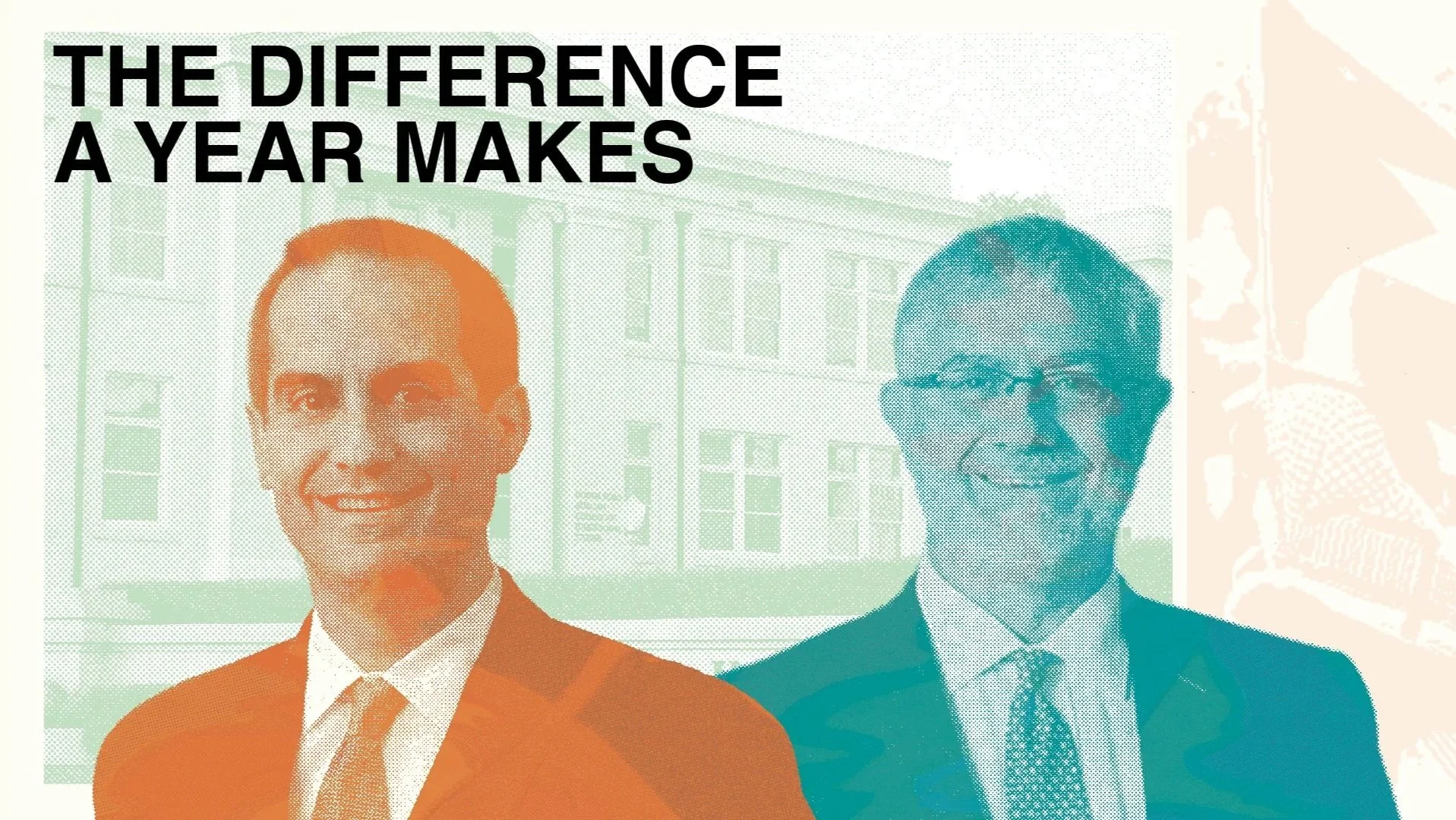
Photo collage by Easton Clark, Photo Editor
If a bright-eyed Chapman student from August 2024 time-traveled just one year into the future, they would be stunned to learn about what they missed.
The end of Daniele Struppa’s nine-year run as president of the university, as well as enrollment and budget issues, marked a year of immense turnover for Chapman.
Meanwhile, higher education in general has faced many challenges and experienced recent shifts due to pressure from the Trump administration. Diversity, equity and inclusion (DEI) programs nationwide, that had been implemented post-COVID, have since been dismantled in an attempt to avoid funding cuts. The same is true for how universities have responded to demonstrations in support of Palestine — administrations not bringing the hammer down on protesting students and clubs have been labeled as antisemitic.
Chapman hasn’t been immune to those issues, and the university underwent refashioning in some areas as a result. The Panther has compiled the key differences between last August and now, and what’s in store for the university moving forward.
Enrollment Issues and Budget Deficit

Photo from The Panther archives
The year started off with a smaller-than-usual freshman class. The low enrollment contributed to the formation of a budget deficit in the range of $25-$30 million.
The delay of federal student aid was a contributing factor to the dip in enrollment numbers. This also happened to be Chapman Court’s first year — a $160 million apartment complex that the school bought to accommodate more students in university housing.
To address the shortfall, Chapman raised student tuition by 4.5% instead of the usual 3.5% for this current academic year. Room and board increases also came at a 3.5% rate, instead of 2.5%. These additions were projected to bring in an extra $3 million for the university, still short of closing the deficit.
Chapman also eliminated 19 vacant positions, which freed up another $2.5 million. However, employees had to absorb more work and were not given salary increases.
Around the same time, executives at Chapman were reported to exceed the national average salary for their positions, which sat at just under $90,000. Struppa was making almost $1.2 million, and Matt Parlow — now Chapman’s president elect — was making almost $700,000.
It wasn’t until the end of March of this year that Struppa outlined his plans to close the deficit.
With a higher reported enrollment for this year, time will tell whether Chapman has further budget issues and how these cuts will affect day-to-day operations going forward. With threats looming from the federal government, there is no guarantee of financial stability.
Federal Grant Cuts
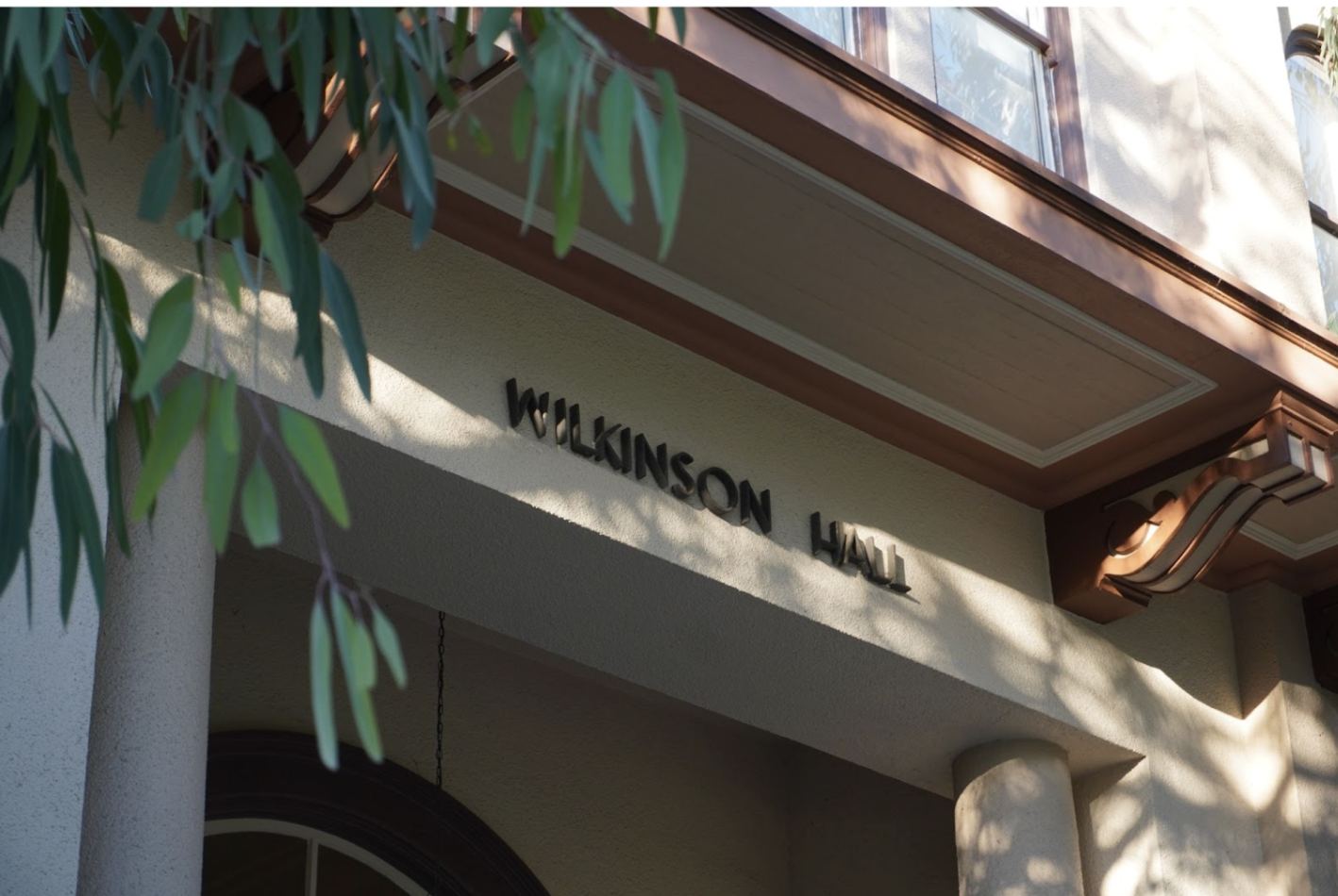
Photo from The Panther archives
With continued pressure from the Department of Education, Chapman faced the threat of funding cuts towards the end of the spring 2025 semester.
Universities across the country have faced the same problems, which have informed many recent decisions made within higher education. If the Trump administration wanted changes to be made, they have been made at many schools — nobody wants to lose money.
On April 3, some professors at Chapman had their grants revoked. The National Endowment for the Humanities told professors within Wilkinson College that their awards would not be honored, as decided by the Trump administration.
“It’s mindless, it’s ridiculous, it’s maddening,” said Alexander Bay at the time, a humanities professor. “The damage they’re going to do is going to take probably a decade to put back together.”
The total cuts have reached nearly $500,000, according to the Center for American Progress (CAP), which has been mapping federal cuts around the nation.
When the previous school year started, the loss of grant money was not anticipated. The decision left many educators stranded.
Sociology professor Pete Simi had his book “American Swastika” banned and his entire research funding revoked. Before this, he had spent 25 years looking into domestic terrorism.
Currently, the threat of further funding cuts is still up in the air, and the future is unknown. Chapman could lose another $200,000, according to CAP.
The End of DEI
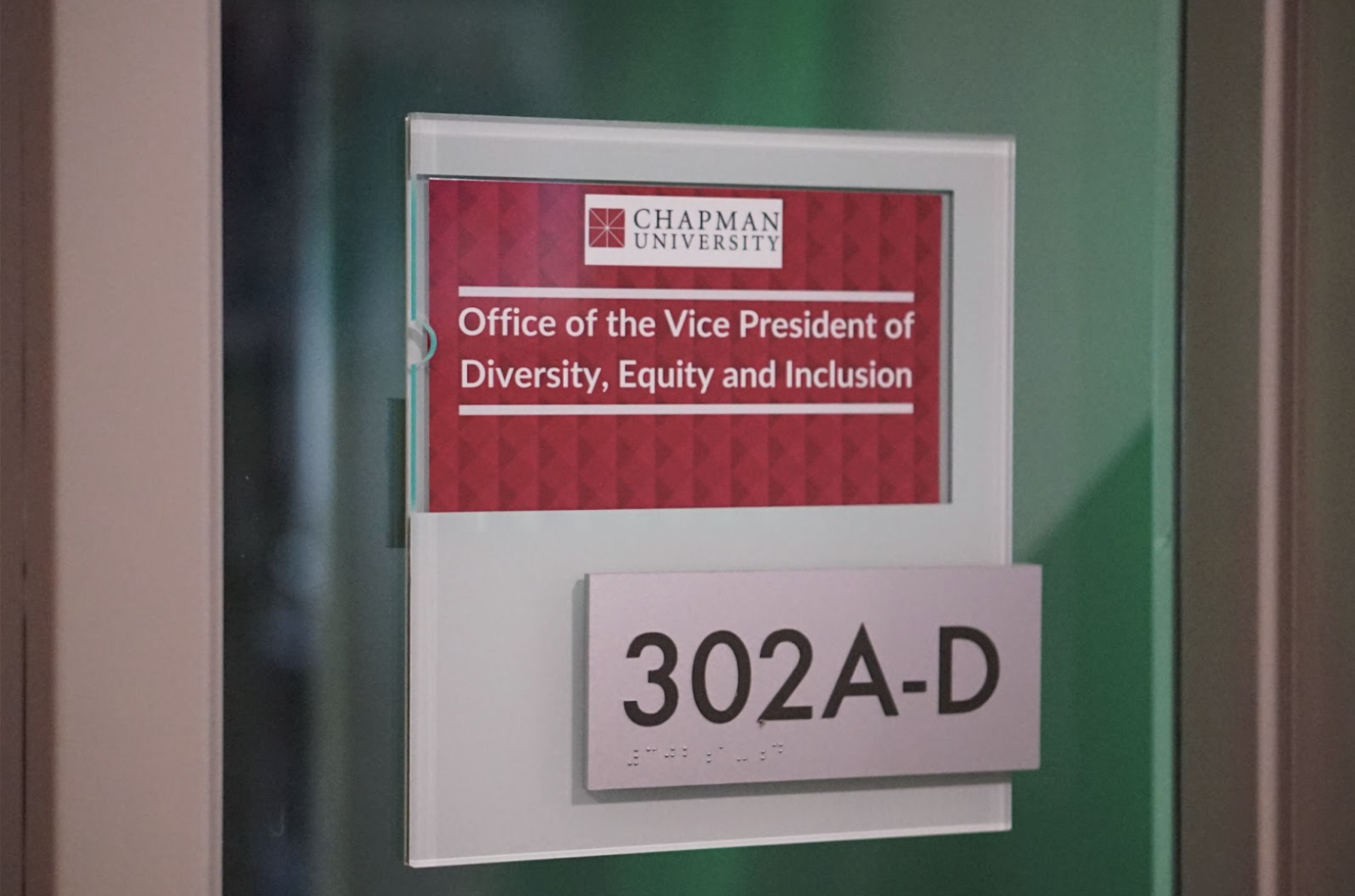
Photo from The Panther archives; Photo by Braylan Enscoe, Staff Photographer
In 2024, Chapman’s DEI program was entering its fourth year. For the first semester, the department was not the subject of any discussion. It was business as usual.
After Donald Trump was elected president, diversity programs across the country were forced out. At Chapman, it started behind the scenes as the Vice President of DEI, Reg Stewart, and Provost Norma Bouchard were put on leave in March. The university did not give an explanation, nor did they make an official announcement to students. Only staff and faculty were alerted via email by Struppa.
This was after the university had been put on notice and alerted of potential funding cuts by the Department of Education for antisemitism allegations.
Students and faculty members held a protest following these changes on March 17. Led by Students for Justice in Palestine (SJP), over 30 campus organizations demanded that Struppa and the Board of Trustees reinstate Stewart and Bouchard — and protect DEI.
“I hope (Struppa) hears this message and he chooses not to bow down to President Donald Trump, and he chooses to protect his students and staff,” said senior sociology major Hailey Bunsold at the protest.
Struppa declined to comment when The Panther covered the protests and the absence of Stewart and Bouchard.
Ultimately, despite walkouts, petitions and general outspoken support for DEI, Chapman ended the program with an announcement sent to everyone at the university on April 17. It was officially renamed and reorganized into the First-Generation and Promising Futures Programs, with employees of the office being given new titles. However, Stewart and Bouchard officially left the university, again with an announcement made only to faculty. Stewart’s position no longer exists, while Bouchard was eventually replaced by Michael Ibba on an interim basis.
This led to more protests throughout the rest of the semester, although none reached the attendance numbers of the initial large-scale walkout. Discussions around DEI continued on campus, but no changes were made for the rest of the spring semester.
On August 4, it was announced that the school is ending its DEI course requirement and replacing it with a new Global Citizen Program. This was only announced to faculty before The Panther broke the story; no formal announcement to students has yet been made.
International Students
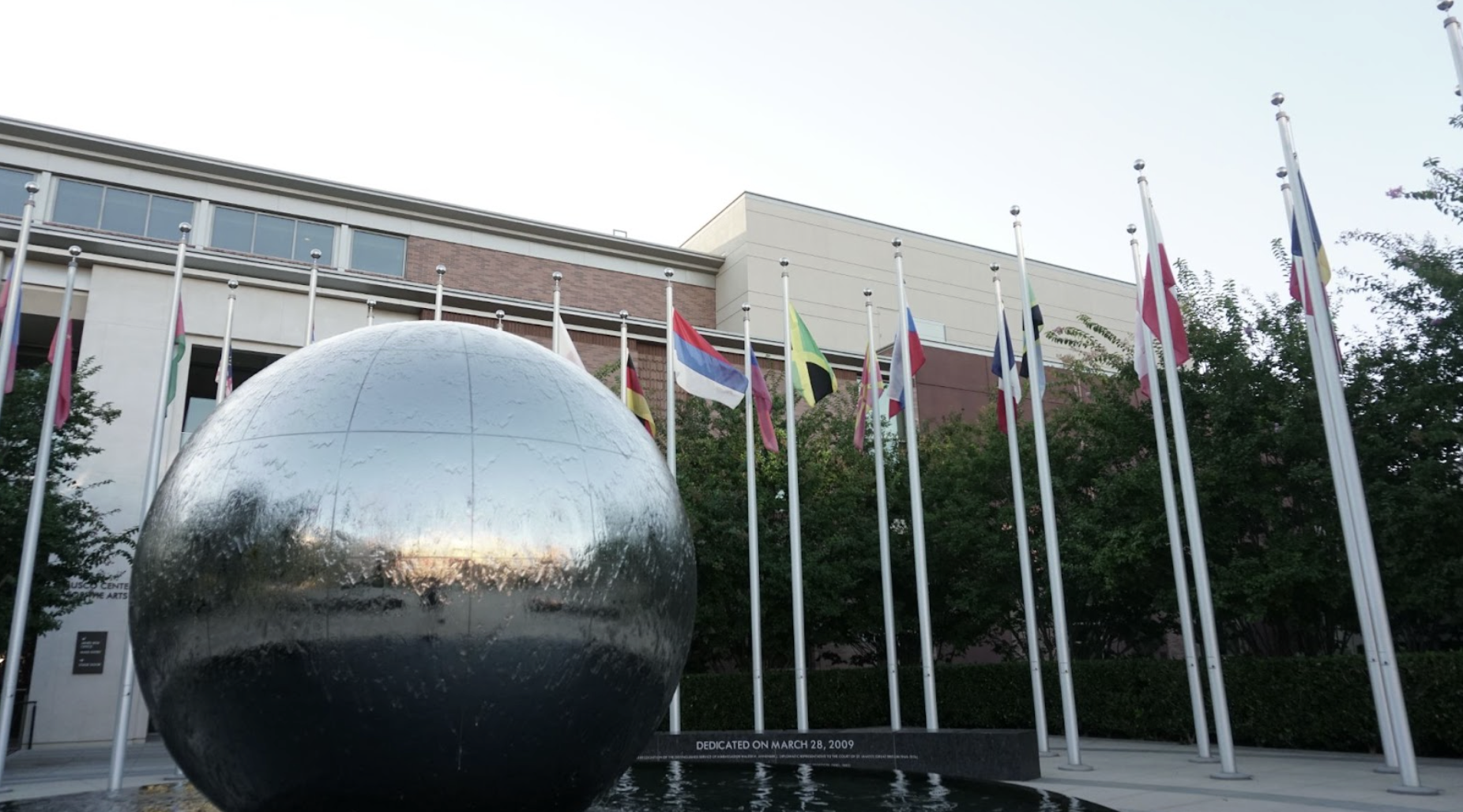
Photo from The Panther archives
One of Trump’s promises before taking the presidential office was to deport all of the illegal immigrants in the U.S. This summer, Immigration and Customs Enforcement (ICE) raids have become commonplace in Southern California. Los Angeles dealt with large-scale operations in early June, which were met with heavy protest.
In Orange, there have been anti-mass deportation protests as early as February. Later that month, the university announced that it would not change its policy around international students despite pressure from the Trump administration.
By the end of March, the mood had shifted on campus. As ICE agents began showing up to college campuses and detaining students, Chapman’s Latinx Club held a question-and-answer session with Jerry Price, the dean of students.
Price said that Chapman would not provide the Orange Police Department or ICE with the names or whereabouts of any students. However, he said that the school was not a sanctuary campus and that these decisions are left up to Struppa and the board.
Almost two weeks after that meeting, three international students had their visas revoked. Two graduate students and one postdoctoral student were given a week to leave the country with no reason given for the decision.
Lisa Leitz, an associate professor and chair of the department of peace studies, commented on the situation in an interview with The Panther.
“Chapman should support its students,” Leitz said. “(The) university must come together to fight the attack on higher education, free speech and our beautifully diverse students.”
With ICE raids in Orange County still prevalent, and the possibility of more students losing their visas, the fall semester is starting with uncertainty in the air for Chapman’s international contingent. As with many things at the university, change could come at any moment.
Gaza and Protests
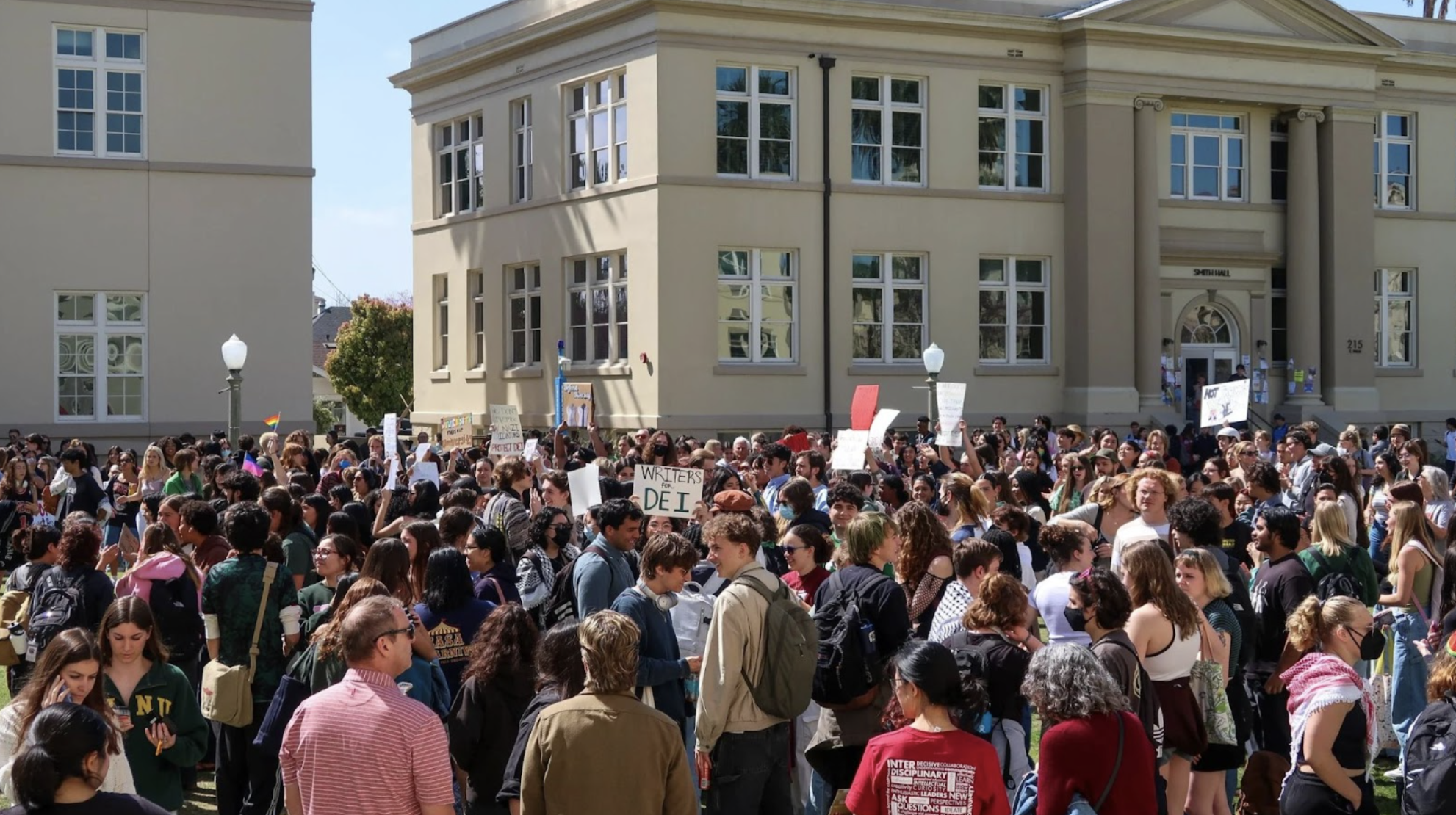
Photo from The Panther archives; Photo by Emily Paris
SJP started last school year hoping to make progress on their goal to get Chapman to divest from companies that fund and support Israel’s attacks on Gaza.
This was after their solidarity encampment took place in May 2024, ending with an agreement with the university to take down the demonstration in exchange for the chance to propose a divestment plan to the Investment Committee.
At the start of the fall 2024 semester, Chapman introduced a new policy that banned encampments. While Struppa said that the change would not stop the ability to protest altogether, this was the beginning of a battle over what was and wasn’t allowed for on campus protests.
On Sept. 10, SJP presented their proposal to the board. Almost immediately after, Chapman announced that it would be rejecting the divestment plan entirely. This was met with a campus-wide walkout from SJP.
Myth Moos, the then co-president of SJP, said that he felt the board came in with a decision already in mind.
SJP continued to protest against the Chapman administration, which led to discussions around free speech on campus. In September of last year, the club wrote phrases in chalk all around the piazza on campus. Some said “fuck Israel,” “Chapman kills” and “Struppa supports genocide.”
Price affirmed the right to free speech on campus, saying that since SJP didn’t violate the law, they wouldn’t be reprimanded.
It wasn’t until this past spring semester that debates about SJP came back up. Over the winter break, the organization was given the Dr. Martin Luther King, Jr. Community Service Award by the DEI office. Struppa condemned the club receiving the award in a campus-wide email, apologizing to Jewish students and families.
This led to the award being rescinded by the DEI office. Over 50 faculty members responded with an email to Struppa.
“There is nothing inherently antisemitic about critiquing Israel, as pointed out by 370 scholars; for many Jews, solidarity with Palestinians is a form of Tikkun Olam, the Jewish precept of making the world a better place,” they wrote.
The decision furthered the discussion about free speech on campus and marked the start of a semester where many faculty members spoke out in opposition against Struppa and the board.
On March 10, it was announced that Chapman was under investigation by the Trump administration for alleged antisemitism — they deemed that the university’s response to the SJP encampment and protests did not protect Jewish students.
After the announcement, Chapman started strongly enforcing campus policies on protests.
Subsequently, on April 8, five students were notified that they would receive disciplinary hearings for using amplified sound during class time at the first DEI protest.
Michael Daniels, an executive board member of SJP, said that the university didn’t target groups but rather individuals for a reason.
“It seems like (the administration is) really trying to strike fear in us,” Daniels said.
This led to a silent protest held by students and faculty on Memorial Lawn in late April, where participants said that the university was trying to silence its students.
Chapman held firm in its belief that they were not infringing on the students’ rights, but rather making sure that there were no disruptions to campus life. While other Southern California universities have banned their SJP groups entirely, Chapman has only banned encampments.
Struppa to Parlow
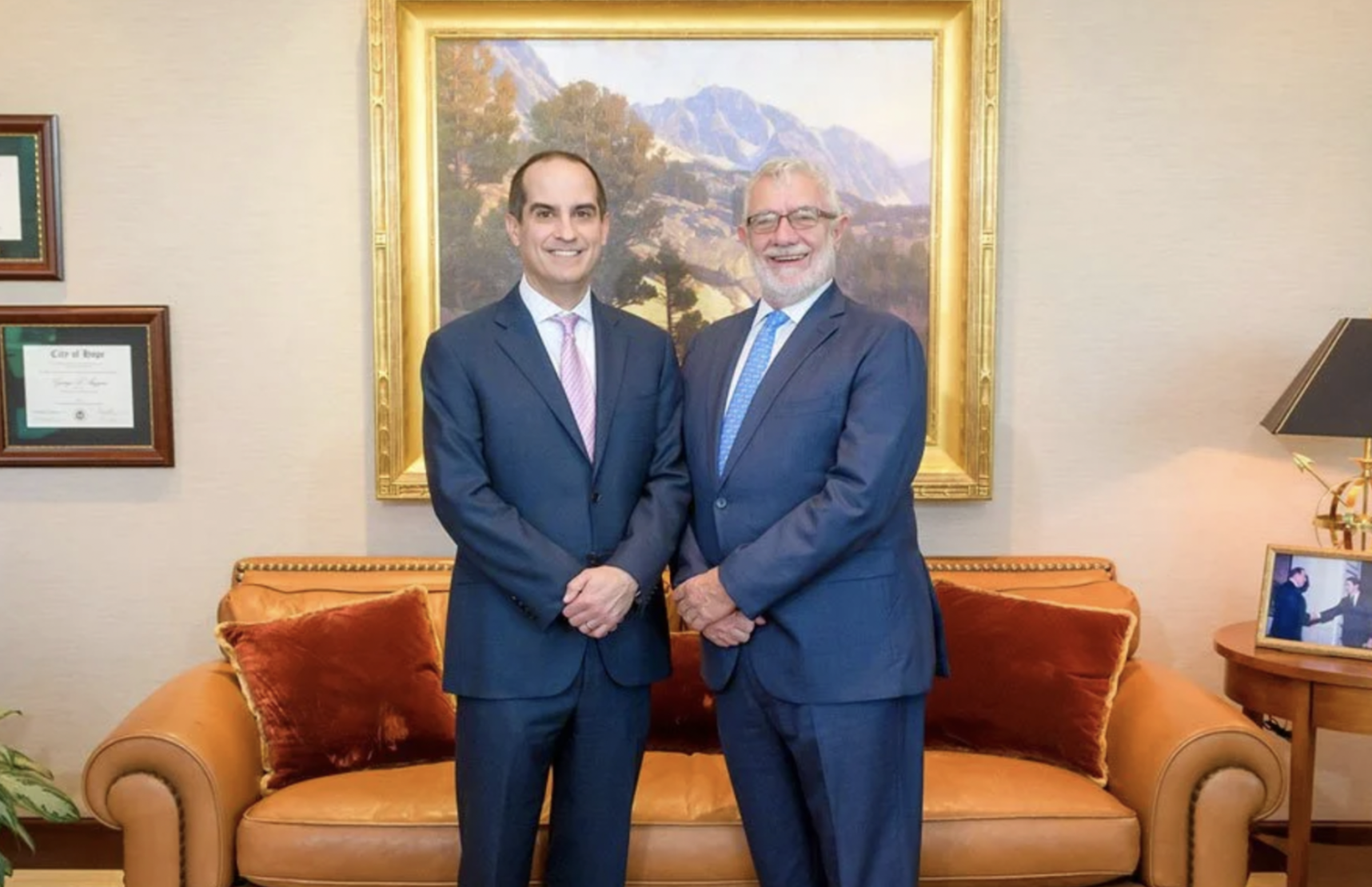
Photo courtesy of Chapman University
Struppa’s last year as president did not offer him an easy ending. He initially announced his intentions to vacate the presidency and go back to teaching math at the school at the start of the year. By the end of the first semester, his replacement, Parlow, had been elected by the board as the 14th president of Chapman.
All of these issues and controversies weave a web that you cannot easily untangle. These events are all connected; a budget shortfall, coupled with funding cuts, left the university in a tough spot regarding DEI and campus protests. Each issue added something new to the last, and that web is being passed down to Parlow, starting in September.
Struppa was not given an entirely loving goodbye, as his final state of the university address was interrupted by protestors shouting that the university was funding genocide. But as he ends nearly a decade at the helm, there are both good and controversial things that stick out from his tenure.
He helped make Chapman an R2 research institution, creating the Fowler School of Engineering and overseeing the opening of the Keck Center for Science and Engineering. He also introduced the Sandi Simon Center for Dance, as well as the development and purchase of three new dorm buildings. Even at the end of his era, he helped fix the budget shortfall.
However, Struppa’s presidency also saw the John Eastman controversy, the dismantling of DEI and all of the international-related news previously discussed. It was not a perfect time.
But now it’s Parlow’s turn.
Parlow brings experience as a Southern California native and alumnus of both Loyola Marymount University and Yale University’s law school. At his town hall meeting with students and faculty in November 2024, he outlined his goals to continue supporting research at Chapman.
Whether or not he can stick to his promise, due to the grant cuts, could be an important topic to follow as his tenure begins.
Parlow has spent 12 years working at Chapman as a professor and dean of the Fowler School of Law. In an interview with The Panther from February, he said that engaging with students who disagree with him is something he’d welcome — and that it is key in an era of division.
Many of the issues facing Chapman are not likely to go away soon, and Parlow will have a lot to take on as he assumes the role of president this fall.