
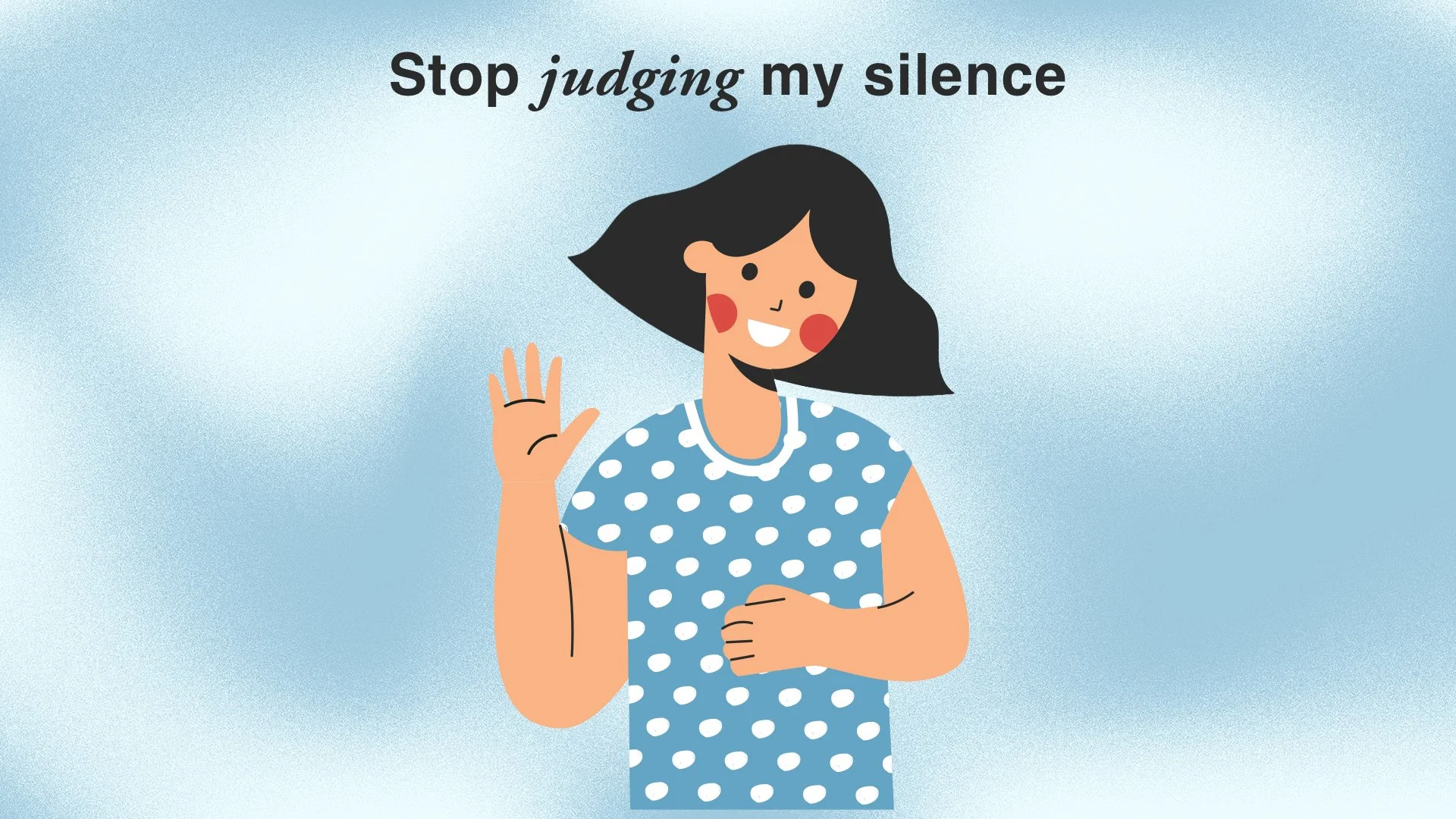
Graphic by Easton Clark, Photo Editor
I often feel invisible. In a large crowd, with loud laughter and conversations, you’ll find me in the corner, watching.
But I like it that way.
I’m an introvert — not to be confused with shy, although to be fair, I am also shy. And at times, those two parts of me make it difficult to thrive in a college environment. I make it work for me, but should I really have to?
I’m an English major with an emphasis in journalism and a public relations minor. Two fields not generally thought of for the shy, introverted girl standing in the corner — or so I’ve heard.
To get a good grade, many of my classes have this mandate that every student should participate fully in every class by speaking up, contributing ideas and actively adding to discussions as a way to demonstrate learning and engagement.
Here’s the problem: speaking up in class continuously, having to brainstorm each new idea on the spot and share it publicly without having the time to think it through, and then raising my hand to lead a discussion are all activities that are deeply challenging. It goes against my natural and preferred style of operating and processing information.
Now, it’s not that I don’t like a challenge or being challenged; it’s that society isn’t recognizing the bias against introverts.
I’ve been told that I am “so quiet it hurts,” “that you must not have an opinion then” or, my personal favorite, “you're scary because I never know what you're thinking.”
These reactions highlight a common misunderstanding: being an introvert doesn’t mean being disengaged, opinionless or unfriendly.
So what is introversion?
The terms introvert and extrovert were first introduced by Carl Jung in 1921 to distinguish between people who feel more connected to their inward thoughts and feelings and those who focus more on the external world. Today, the basics of research say that being an introvert is to prefer time alone to recharge, less stimulation, to think before speaking and to guard their social energy.
To be very clear, it’s not that introverts can’t publicly speak, network or work with others; it’s just not where we feel our most authentic selves.
This misconception — or bias — against introverts is prevalent across communities, but in the classroom, it is particularly evident in participation policies. Policies made for extroverts that professors will never tell to stop raising their hands so much.
I won’t say that professors are wrong to require participation, but I will suggest that the definition of participation be broadened to offer different avenues. Consider discussion boards, allowing students time to think before asking for a response, or smaller group activities as opposed to whole-class discussions. Some professors already do this, and it has made a difference in my learning experience, alleviating my classroom anxiety.
Recognizing and accommodating introversion doesn’t lower academic standards; it acknowledges that learning isn’t one-size-fits-all. By embracing diverse participation styles, educators can ensure that all students have the opportunity to shine, not just the one student who is always ready to speak.