
Trump is the Western leader that China has been waiting for.
by Ashe Estep
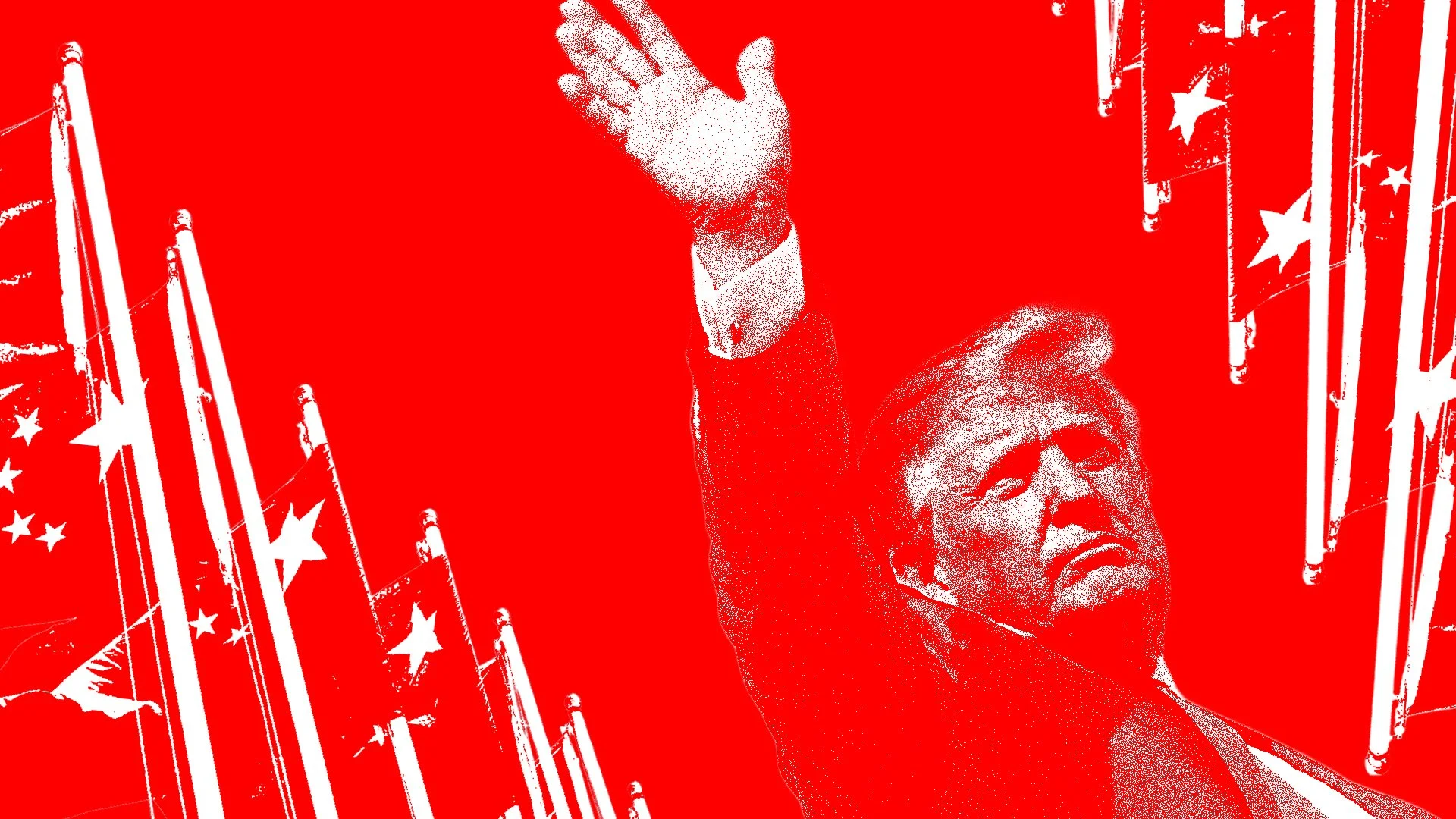
Collage by Easton Clark, Photo Editor
Over the past few decades, China has been repositioning itself from a strictly communist state, focused on seizing the reins of the socialist world, to a hybrid market economy focused on global influence. Chinese President Xi Jinping, unlike Mao Zedong or Deng Xiaoping, inherited a nation developed and ready for a seat on the global stage.
The Belt and Road Initiative (BRI), in many ways, is Xi's ticket to global superpower status. BRI focuses on international development, building highways and infrastructure projects in the global south, offering an alternative to more standard global northern financial aid that many countries in Africa have grown jaded with.
Xi offers a truly bipolar world: presenting Africa and the Middle East with financial incentives to choose China over staying with the U.S. and the liberal world order, and to come into the fold, recognizing China as the leader of the global south.
Many countries did not initially choose China; however, Trump's second term provided the change in American foreign policy that China had been waiting for. With Trump ending the U.S. Agency for International Development (USAID), the liberal order lost much of its financial aid power in developing countries where BRI had been working, and lost the battle for financial influence.
This was overshadowed by the tariffs, forcing the global south to choose between more expensive American goods and much more affordable Chinese goods, which have been rapidly improving in quality.
Operation Epic Fury robbed the U.S. of one of its best weapons — a sense of moral superiority. Global South nations, specifically in the Middle East, now saw the U.S. continuing its interventionist policies in the region, something China very notably does not do. This allows China to appeal to morally ambiguous countries that would not have to worry about interventions on human rights or personal liberty. Epic Fury also damaged the countries that believe they are, in fact, upholding democratic principles because of the sharp dogma that Trump has utilized.
Trump's invasion of Iran to overturn a regime while bombing civilian infrastructure is a terrifying precedent for international order, especially considering his wide-reaching ambitions, such as Greenland and Cuba. Democratic-oriented countries may worry about the implications of imperialism and humanitarian concerns; non-democratic countries may worry about their own national security and that of their allies.
This leaves the question of who the U.S. would ally with. Especially if we leave NATO, which is something Trump has floated, betraying our long-standing principles, it allows Xi’s long-term goals to compound, growing stronger with every diplomatic blunder.
Xi is something of a glacier. He moves slowly and loves the waiting game. It has paid off to some extent, allowing him to shape the financial future of large swaths of Africa and to control the economic future of the world.
Trump has sabotaged America's global standing with the nations Xi yearned to win over, as many countries chose China as their main trading partner after the tariffs, and Chinese soft power is rapidly growing.
Trump must realign himself with internationalism because any time the U.S. leaves a project, the Chinese are eager to take over. He is slowly helping them rise to be the world's No. 1 global power, a title the U.S. is desperate to defend, yet has been acting in the opposite manner.
If we wish to maintain our status as a global power, we must embrace it. We cannot abandon our allies and wage war against countries acting while expecting China not to capitalize on it. We cannot complain about the responsibility of being the world's power while pining to maintain that status.
We must either find a successor to the British Empire as the U.S. did, or double down on our efforts to maintain power. If not, China’s rise is guaranteed.