
Weathered emotions: Being informed about climate change is important even when it comes with a cost
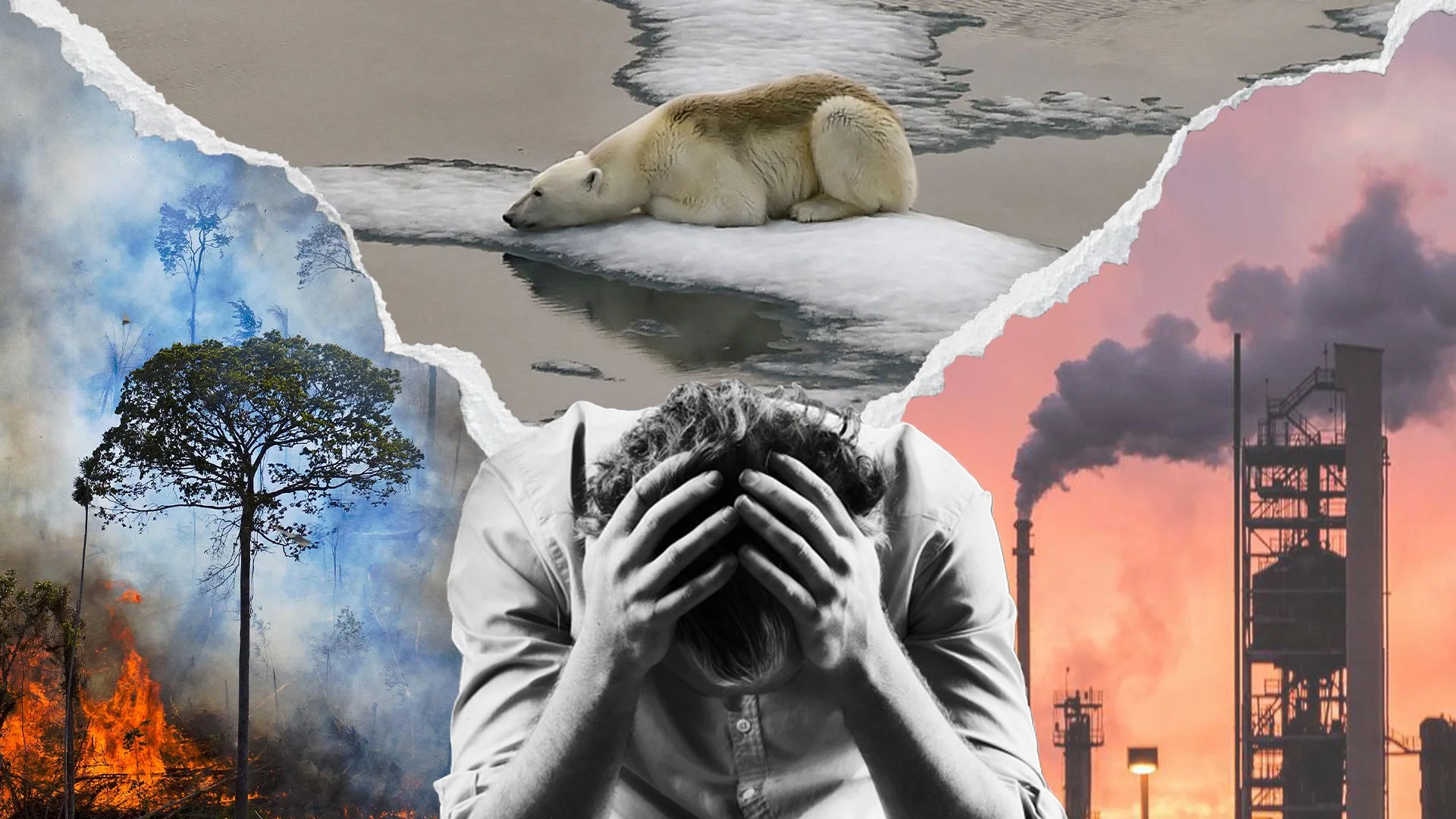
Collage by Trinity Johnson, Photographer
Can, or should, mental health join the climate crisis conversation?
Polluted air, lack of food or nutrients and rising temperatures are all signs of climate change that can result in long-term mental health effects. But what about eco-anxieties felt in the moment?
A study from Quinnipiac University found 95% of the 305 students surveyed acknowledged that climate change is real and were more likely to think about how they are, or will be, affected in their lifetimes. These concerns can translate into feelings of helplessness in the present and for the future as well as a lack of control over environmental change.
In addition to academic stress, career uncertainty and other worldly fears, the study emphasises undergraduates’ vulnerabilities to eco-anxieties — and I, for one, feel I have fallen victim.
I worry that when I go back home to Oregon, I will find more natural lands taken over by housing developments. I worry that with every sweltering summer, more wildfires are to follow. I worry I’m contributing more to the fossil fuel problem by living in Southern California than by living in nearly any other region. The list goes on.
I do my part to help prevent the worsening of the climate crisis. I limit my single-use plastics in all capacities possible, minimize food waste, properly dispose of materials and buy from small businesses or secondhand.
But no matter how many lifestyle changes I make, I feel like I’m fighting an endless battle. Even though I know others are out there doing the same, it feels rather isolating because in the public sphere, all I see is the opposite.
The current political administration continues to increase my stress with environmental policies that are exactly the opposite of what we need.
Early into President Donald Trump’s second term, he attacked state laws addressing “climate change,” “environmental justice” or efforts to combat fossil fuel usage. Then, even more aggressively, the Department of Government Efficiency (DOGE) gutted the National Park Service, the U.S. Forest Service, the Bureau of Land Management and the U.S. Fish and Wildlife Service.
Luckily, mere days ago — rather unexpectedly — Republican leaders in the House of Representatives doubled back on their vote to reduce federal protections for endangered species. Nonetheless, the bill threatening the Endangered Species Act is expected to return to the House floor after unspecified changes are made.
It is also common to lose environmental concerns in the extensive list of anxiety-inducing world events. Death tolls from conflicts in the Middle East and new abuse accusations are in my inbox each morning from various news outlets, and it feels unfair to compare anything next to the health, safety and importance of human life. But that is exactly what the climate crisis is about.
In 2023, around 124 million people were moderately or severely food insecure as a result of droughts and heatwaves, an estimated 546,000 heat-related deaths occur each year, and natural disasters claiming lives or pushing people out of their homes are becoming more frequent.
This isn’t to scare you more, but to spark action because good things have also happened in the past year, and it is important to recognize whether you have done your part.
For the first time, a renewable energy source, solar power, was recorded as the largest contributor to global energy, accounting for 25%. California’s first wildlife crossing bridge is expected to be open by the end of the year, aiming to reduce animal-vehicle accidents. And collective action is happening in communities across the country.
There is no one-size-fits-all solution to climate change, but giving in to worries, anxiety or other feelings of despair does little to address the problem. Instead, it is important to recognize you feel that way and continue your individual action, which does have an impact.
We should be conscious about our impact on the Earth more than one day a year. So I am simply asking you to acknowledge the worry, stress or discomfort that a future on a polluted planet induces, and to grow healthy habits anyway, because that is our best chance at keeping these fears fictional rather than a reality.