
Chapman swimmers conquer the Catalina Channel
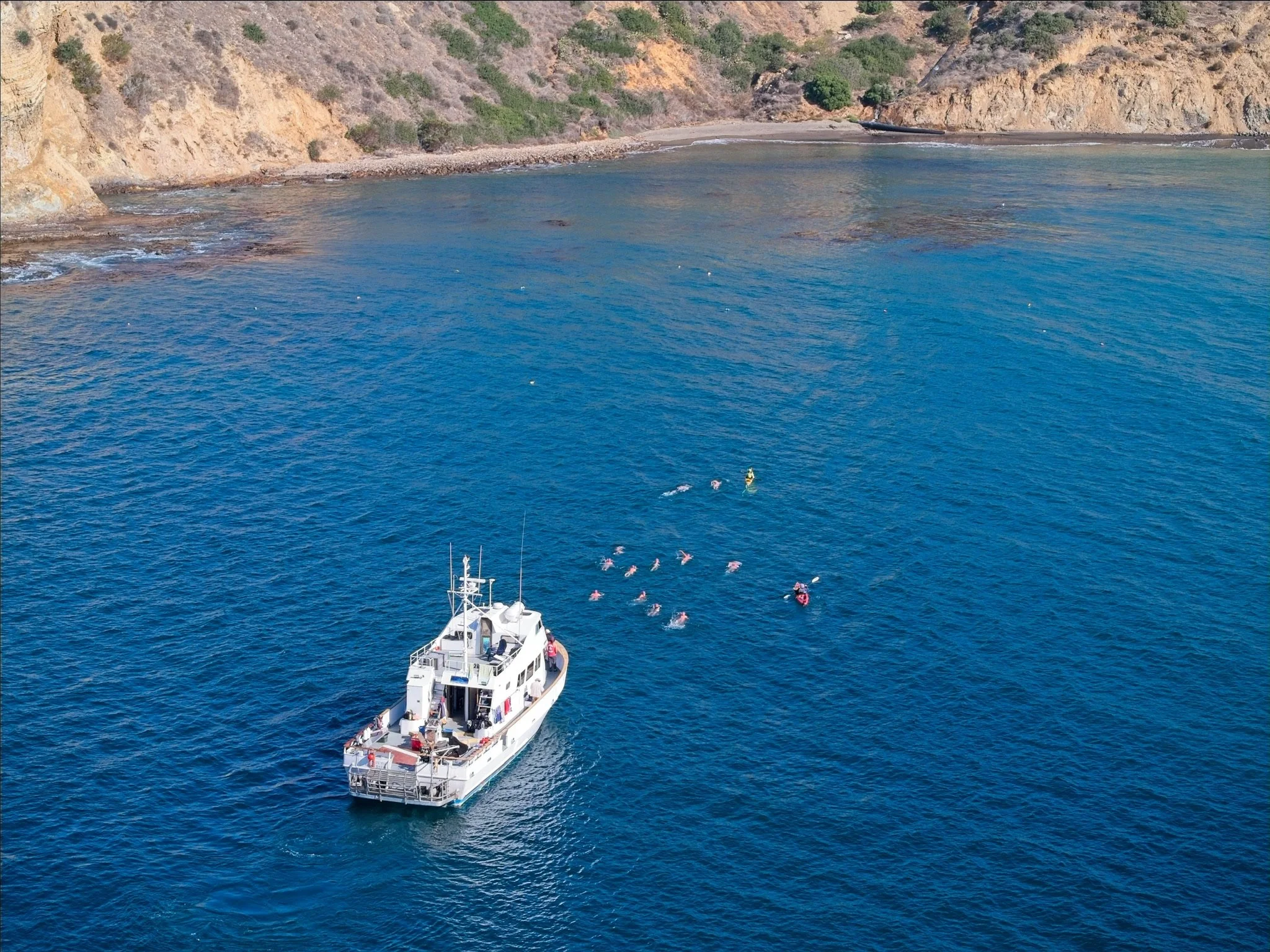
Photo courtesy of Chapman Swim and Dive
On the night of Sept. 24, a group of Chapman swimmers looked into the darkness of the open ocean as their boat crept closer to Catalina Island. With nerves heightened and adrenaline pumping, they prepared to dive into an extraordinarily daunting task — the Catalina Channel swim.
With the swim stretching roughly 21 miles from Doctor’s Cove, Two Harbors, Catalina, to Smuggler’s Cove, Palos Verdes, the relay consisted of two teams with six swimmers each, and pairs swam for an hour at a time, with a kayaker by their side for support. The team’s cumulative time was 11 hours and 21 minutes.
The group included seniors Alexis Anderson, Annika Mittelsteadt, Caroline Kundahl, Clara Van Note, Kylee Edwards, Miles Duncan and Tatum Chambers, junior Brody Perkins and sophomores CJ Smith and Walker Slay. They were joined by Aiden Geffros, a 2024 Chapman graduate, and Kai Mittelsteadt, a non-Chapman swimmer.
The Catalina Channel swim is a part of the Triple Crown of Open Water Swims — a list that also includes the English Channel from England to France and the Manhattan Island Marathon Swim that circumnavigates Manhattan. Only around a few hundred people have conquered the Catalina Channel, placing these swimmers among a rare and elite group of athletes.
When Chapman assistant swim coach Carly Miller first suggested the feat to her swimmers, there was some initial hesitancy. But Miller has completed countless open water swims, and was able to give advice and comfort to those that were interested.
“Coaching these athletes through this experience was 100 times more rewarding than my own solo,” Miller said. “Watching how it impacted their lives and changed them as people and who they became in the process… I get emotional when I talk about it.”
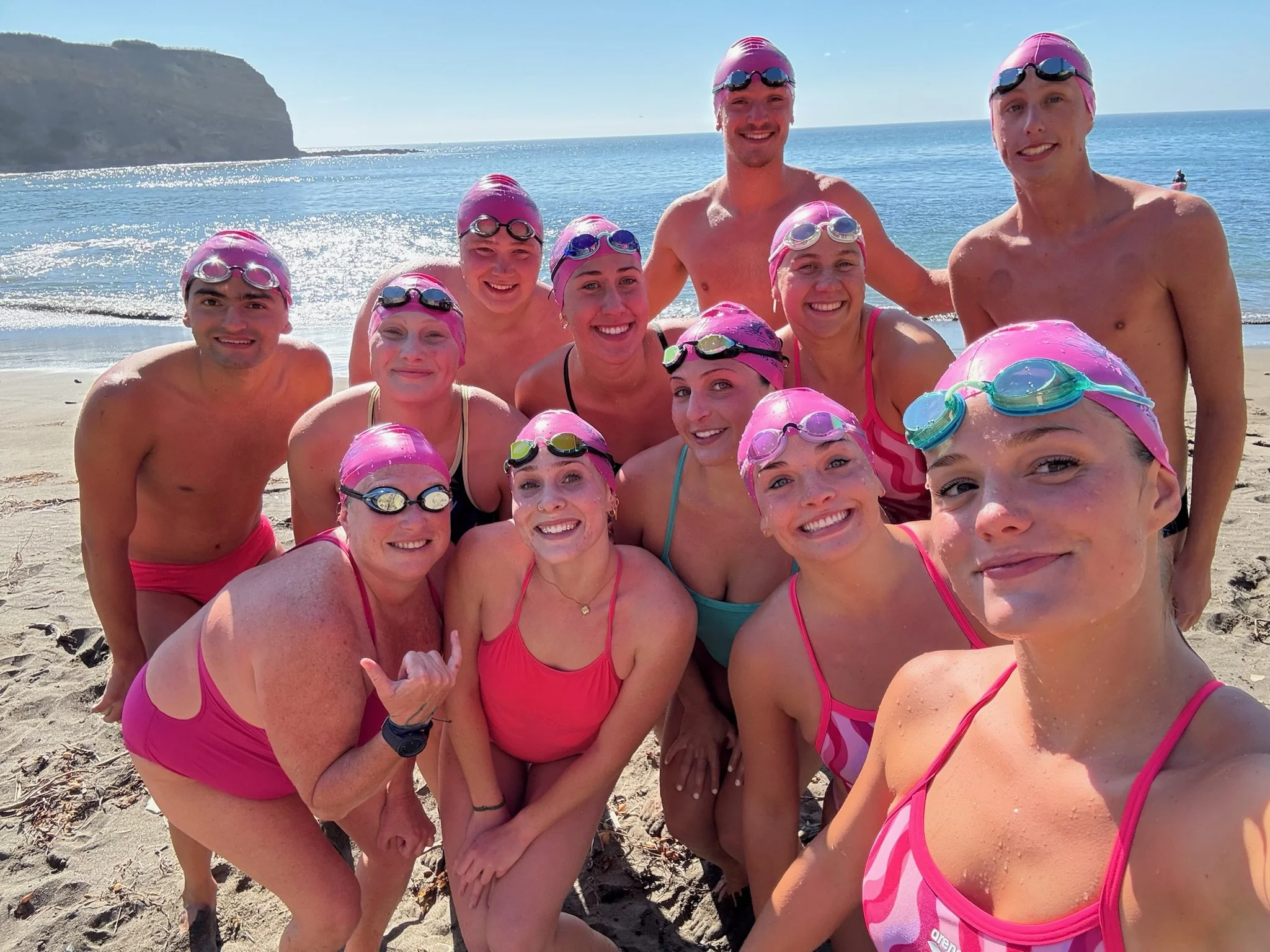
Photo courtesy of Tatum Chambers
While the 12 swimmers made their way out to Catalina Island to begin their long journey back to mainland, they were welcomed by a group of dolphins — as if they were sending off the athletes and wishing them good luck.
“These dolphins swam under the boat right in front of us for 30 minutes while we were getting out to the island,” Smith, a broadcast journalism and documentary major, said. “Previous to that, everybody was on the quieter side, a little bit nervous about what was happening.”
With the nerves shaken off and a picture-perfect sendoff from some dolphins, it was time to begin the trek. Smith, who swam in the second leg alongside strategic and corporate communications major Perkins, talked about the simultaneous beauty and horror of their surroundings.
“If I turned around, I couldn't see anything. It was pitch black. You couldn't even see the outline of Catalina. So that was freaky,” Smith said. “Also, there's some bioluminescence in the water. So you could see the bubbles lighting up and everything, which is really cool. You could also see the outlines of things under you, which was not as cool.”
Slay, an environmental science major, similarly mentioned the intimidation of the dark ocean waters.
“You looked down and you could only see your hands in front of you. It was definitely nerve-racking. But I was focusing on bioluminescence and how my hands were lighting up,” Slay said. “I was trying to look more at the kayaker and focus on my breath rather than staring down into the black.
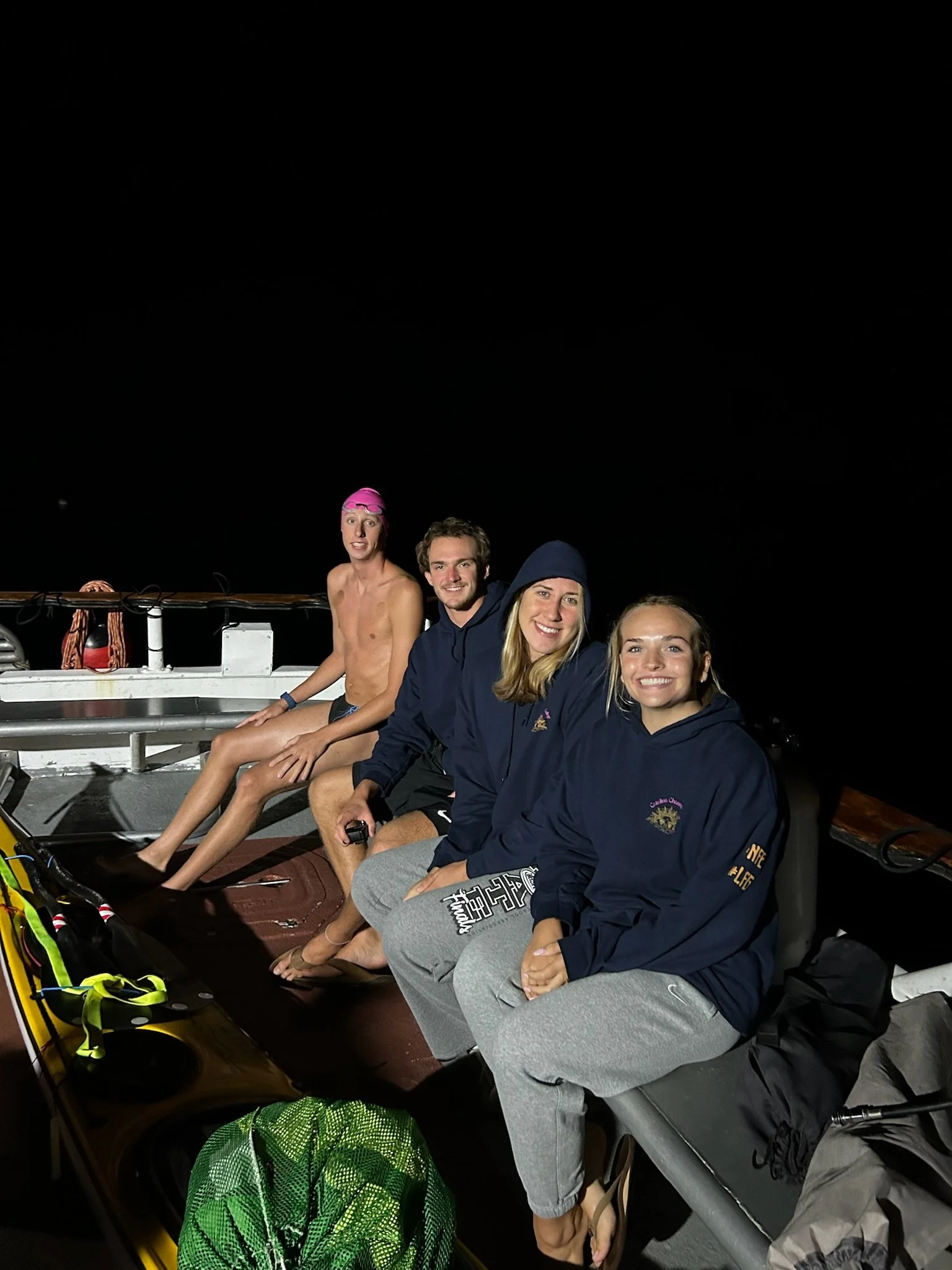
Photo courtesy of Chapman Swim and Dive
During Smith’s second leg of the relay, she was able to hear the clicks and whistles of dolphins communicating. As she swam in the darkness, she suddenly saw a “ginormous black mass” moving under her. Smith quickly realized it was a dolphin when it popped up out of the water and began jumping alongside the swimmers.
Gliding through the pitch black ocean with fish and wildlife surrounding them, the swimmers stayed focused on the task at hand. Chambers, a health sciences major, expanded on the mental aspect of being in the cold, dark water for so long.
“An hour of swimming feels like the longest hour of your life. The first leg that we did, when it's just pitch black, you forget where you are for parts of it and you just let your mind wander,” Chambers said. “Then you come back to it, and you're like, ‘Oh my god, I'm literally in the middle of the ocean. I have no idea where I am. It's pitch black.’”
The water temperature in the beginning of the swim sat in the high 60s, though it slowly crept down throughout the night until it reached the high 50s in the early morning. This became a struggle for those in the last few legs, but Smith reflected on the team's unwillingness to quit.
“If one person stopped, we were done, the relays were done. They would have been disqualified, and they wouldn’t have counted towards anything. So that thought didn't even come into play at all,” Smith said.
Stroke after stroke, spanning miles of open water, the team finally began closing in on the finish. The sun inched up the horizon as teammates gathered on the main boat deck to take in the view and embrace the final moments of the swim. Chambers, who was in the water as the sun was rising, said it was the most special moment of the experience.
“It was so calm. It was beautiful. It was like swimming in glass. And I thought that I could have done that forever,” Chambers said.
As the team was finally nearing the shore, they all jumped out of the boat and swam to the beach to celebrate. Hours of swimming, months of preparation — all culminating at a beach at 9:30 a.m. on a random Friday in September. Slay described how he felt when they finally reached their long awaited destination.
“We put so much time and effort into it,” Slay said. “Just being on the beach with everyone was such a surreal feeling.”
Chambers shared a similar sentiment, describing the mixed feelings that came with finishing the swim.
“The most happy you can possibly be. We trained for six months for this,” Chambers said. “It's almost a weird, sad feeling — we've all been training for this together and waking up at 4 a.m. And now it's just over. That's it.”
The months of preparation had finally come to an end, leaving the swimmers with a great sense of both accomplishment and disbelief. Miller talked about the bravery of the group and the idea of setting ambitious goals.
“They took this challenge on,” Miller said. “And even though it's scary … if a goal that we set is so easy that we're not a little bit afraid of it, maybe it's time to set a more challenging goal.”
For the swimmers, that lesson — facing what once felt impossible — might be their most important takeaway from the swim.
“You're capable of doing scary things, and honestly, scary things are definitely going to be the most rewarding,” Chambers said. “This stuff seems bigger than life, but it's way more achievable than you think.”