
Commercial-free no more: “RedZone’s” big change and what it says about the NFL
Collage by Samantha Rosinski, Staff Photographer
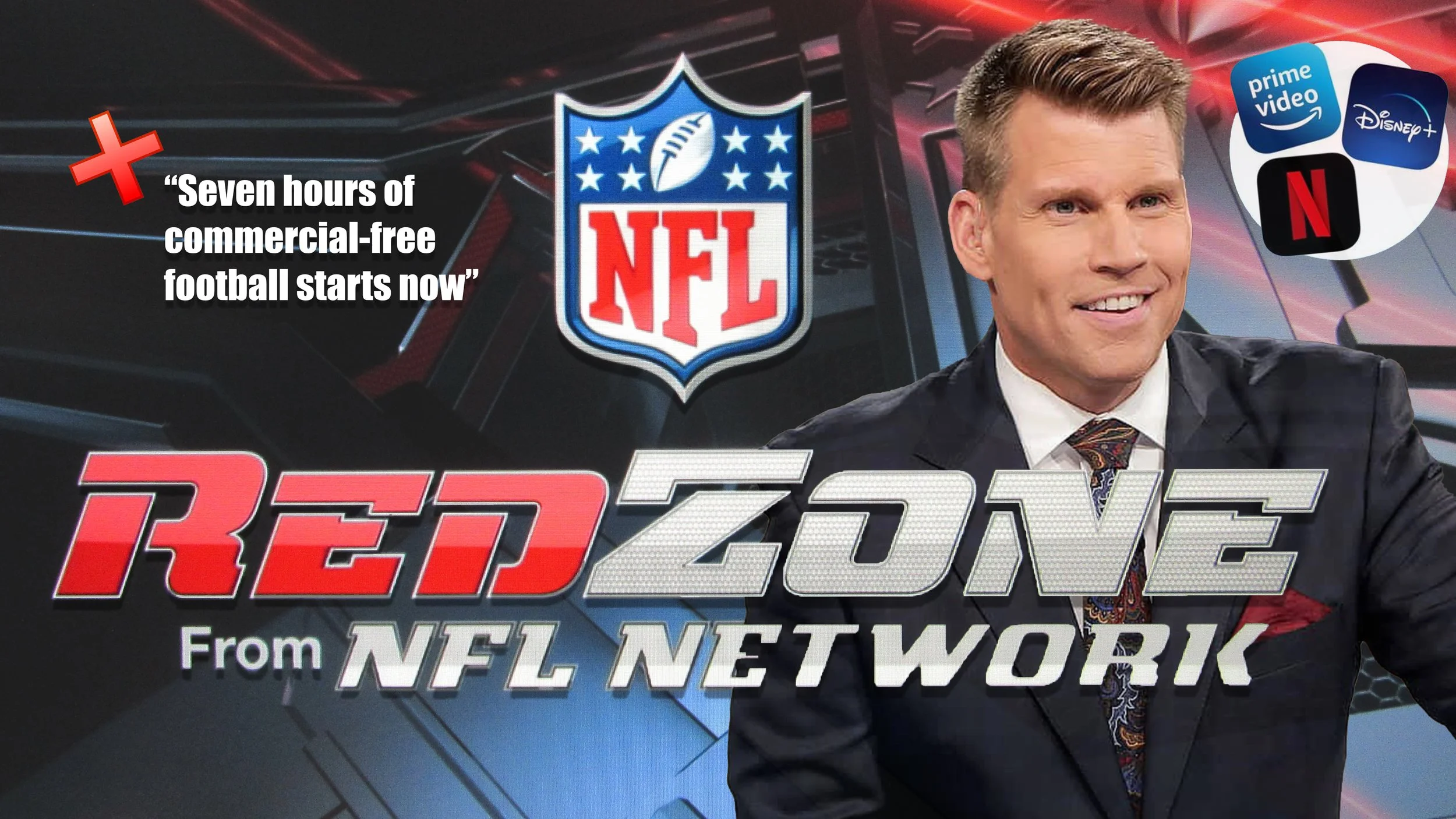
The phrase “seven hours of commercial-free football starts now” has always been more than just the kickoff to a day of sacks, tackles and touchdowns. It was a symbol of commitment to NFL fans. It showed that, amid the constant commercialization and monetization that overwhelms much of the league, one pillar remained untouched.
NFL RedZone is a television program that delivers every scoring play and every big highlight to subscribers in real time on Sundays. The name “RedZone” refers to the area of the football field inside the opponent’s 20-yard line, when a team is nearing the end zone. The program, with its beloved host Scott Hanson, is designed to cut to different NFL games based on their proximity to that area of the field.
RedZone gained instant popularity when it was launched in 2009. With anywhere from eight to fourteen games played every Sunday during the season, it allows fans to never miss a key moment.
The show prioritizes the fan experience, and has long been defined by its exclusion of commercials. Seven hours of nonstop football. No distractions, no noise, no cash-grabs.
But this season, for the first time in RedZone’s 17 years, commercials will be included in the broadcast. Hanson’s iconic opening line has been replaced with, “seven hours of RedZone football start now.
There has been speculation about RedZone adding commercials since the NFL tested split screen ads in late December 2024, shown in a box next to the main broadcast. This speculation was made official when Hanson appeared on “The Pat McAfee Show” on Sept. 3 and revealed that RedZone would in fact include commercials. A few days later, Hanson took to X to explain the details — there would be four ads throughout the broadcast, each 15 seconds long and shown in a double box during breaks between plays. He ensured that neither he, ESPN nor Disney had any say in the decision.
On Aug. 6, ESPN and the NFL reached a non-binding agreement for ESPN to acquire NFL Network, which includes the rights to RedZone. In return, the NFL will get a 10% equity stake in ESPN. Once the deal goes through, ESPN will have the broadcasting rights to RedZone, but the NFL will retain core decision-making power.
So, it was ultimately the decision of the NFL to add commercials. While the number of ads is small and doesn’t change the viewer experience all that much, their implementation is a part of a larger issue within the NFL and other sports leagues.
In recent years, the NFL has made many efforts to further make money off its fans. One of the main ways has been broadcasting and streaming rights.
Amazon Prime now has the streaming rights to Thursday Night Football; Paramount+ streams your live local CBS broadcast; Netflix just gained the rights to air Christmas Day games. Each requires its own subscription. Fans also have the option of purchasing NFL Sunday Ticket on YouTube, which gives streaming access to all out-of-market Sunday afternoon regular season games, and costs hundreds of dollars per season.
The NFL and commissioner Roger Goodell have also recently considered adding an extra game to the season. An extra game would mean more revenue from TV and streaming deals, bigger ad inventory for sponsors and a hope for increased engagement. NFL players have been outspoken in their disapproval of the effort, over worries of fatigue and injury.
One game was already cut from the preseason when the NFL increased the number of regular season games from 16 to 17 in 2021, leaving players less time to train and rehab properly. Players are concerned that expanding the number of games will only decrease the quality of play, as the wear and tear on their bodies becomes more considerable.
International games have also become increasingly prevalent, as the NFL looks to extend its reach beyond the United States. In 2024, three regular season games took place in London, one in Munich and another in São Paulo. This season, they will expand to a record seven games abroad, with additional matchups in Dublin and Madrid.
International games lead to less opportunities for local fans to see their teams play in person, and the start times of these games are often in the early morning. Players are also subjected to long flights and jet lag that can disrupt training routines and recovery times.
While it’s understandable for the league to see potential in bringing the NFL abroad, and it gives international fans the unique opportunity to experience American football, it’s yet another example of prioritizing money and market expansion over diehard fans.
Through all of this change, RedZone stayed intact. But that pillar has now fallen. For fans, the issue is not solely how long the commercials run or how much they affect the viewing experience. It’s equally about what RedZone represented — the core values and principles that made it different from any other show on TV.
It’s hard to know what will happen next with RedZone. In every corner of the sport where there’s money to be made, the NFL is keeping its foot on the gas, maximizing every possible revenue stream. RedZone fans, at Chapman and elsewhere, can only hope that the NFL doesn’t forget what made the program special in the first place.