
Look out below
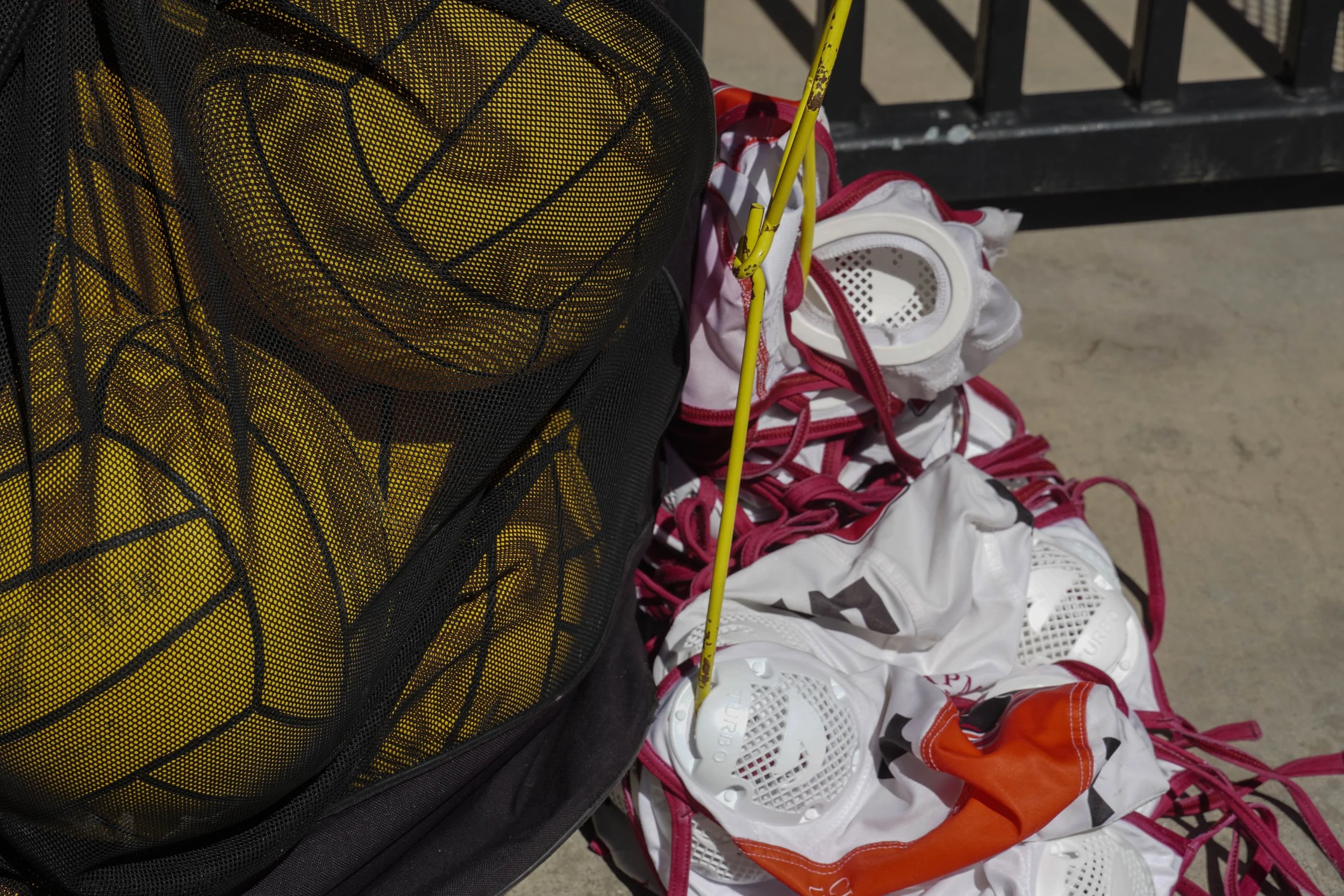
Photo by Trinity Johnson.
Every sport has its challenges, but few are as hidden as those in water polo, where half of the game happens beneath the surface.
Because of this, referees can only call things they see above the water, making it easy for players to commit penalties without consequence.
Many tales have been told of players sharpening their toenails, grabbing the front of other players' suits and trying to pull opponents under the water, all to gain advantage in the game.
Kosta Radoman, a senior on Chapman’s men's water polo team and an applied human physiology major, noticed some differences between growing up and playing water polo in St. Louis, Missouri, versus in California.
“With the toenail thing, it’s funny, I played in a really niche state, Missouri. I had barely heard of water polo and a lot of other people had barely heard of water polo, but when I used to live in LA, there was this kid that played water polo and he talked about how people would sharpen their toenails and stuff like that.”
For Radoman, he’s been lucky enough to have never experienced something like that in his career, but knows anything could happen.
As for suit grabbing, Radoman says that, although it’s annoying, it’s just part of the game.
“It is very hated on throughout the levels because it’s aggravating; it’s the same thing as getting your jersey tugged, it’s not fun. But that’s a part of the game because it’s such a high-contact sport, you have to have leverage,” Radoman said. “When you’re moving someone around, you have to try and maneuver your way around things, and it’s kind of the only thing you can grab.”
Although in some circumstances suit grabbing may be deemed fair by players and referees alike, there are times when a line is crossed, and the ref simply can’t see.
“Anything under the water, the ref isn’t going to see… suit grabbing is one of those things, at least for guys, it really depends on where we’re being grabbed. I would say the side or the back is the most normal place to grab, all of it is uncomfortable, but obviously when people start grabbing in the front it’s one of those terrible things where it's like, ‘Why are you doing this?’”
In terms of the dirtiest playing that can happen in water polo, Radoman says it’s simply any unnecessary contact that the ref can’t see.
“There will be a lot of moments where you’ll just be under the water and someone will just give you a good knee to the face, back of the head or just a full on punch.”
Radoman specifically remembers a time when he was playing water polo on the East Coast, a place he says is notorious for its contact and physicality in the water.
“I remember it so vividly, I was going back on defense and I tried to slip under a guy so I could continue slowing down their counter,” Radoman said. “He just pushed me down and punched me fully in the face, and it was one of those things where it shocked me, because that’s something you don’t really see.”
Because it’s a niche sport, many people may not realize how physically demanding and high-contact water polo is. Even Radoman himself agreed that, while people don’t look down on water polo, they simply don’t understand how much is happening underwater.
“I don’t think people fully see how much there is, especially because everything's underwater. It’s one of those things where you’re never having space to yourself, there’s always someone holding you, grabbing you or trying to figure out what your next move is. Every second you’re being grabbed and kicked.”
The physicality of water polo isn’t exclusive to the men’s game. Kendall Pappan, a junior on the water polo team and double major in business administration and communication, said players face many of the same challenges, with the added complication of a full one-piece swimsuit.
“I would say it's almost crazy the difference between men’s and women's water polo, like people don’t realize the difference between them,” Pappan said. “I feel like for women's water polo, you have to learn when you develop the fundamentals, you need to learn how to grab and utilize the other player in order to gain advantages within the game.”
While Radoman described suit-grabbing as an almost unavoidable part of the physicality of men’s water polo, Pappan says things can look a little different on the women’s side due to the difference in swimsuits.
“For men's water polo, it's more like you grab the wrist or the arm or around the back and for women, you can literally just grab straight suit and use that,” Pappan said. "It's definitely to our advantage. I think it helps us.”
While suit-grabbing may be a part of the game, Pappan, like Radoman, has seen this escalate too far. During her freshman year, Pappan traveled with the team to Pennsylvania to play Long Island University. Right before she jumped in the pool, something caught her eye.
“When we got into the game we realized they all had these red nails on. They had been glueing acrylic nails onto their fingers on the sidelines before we all jumped in. So after we jumped in and started playing, one of our girls came out of the pool with gashes up her thigh bleeding.”
The difference between physicality is something that even the referees notice.
“Sometimes even when I’ve asked refs on deck, ‘Do you prefer reffing men’s or women’s water polo more?’ Some of them will be like, ‘Well, women's water polo is almost more physical and aggressive because there’s so much more that you can grab onto.’”
If you want to see a game in action, the men's water polo team takes on Occidental College on Oct. 10th.