What’s the toughest job in sports? We asked Chapman athletes
Illustration by Kamaal Samuel, Illustrator
Quickly, what’s harder: saving a slapshot with enough pace to break your face, or sprinting for 400-meters straight when your legs have no desire to keep moving?
How about learning hundreds of plays and needing the poise to execute them against a bunch of 200 to 300-pound men, versus the challenge of catching fastballs, calling pitches and watching out for base runners?
These are aspects of the toughest positions or events in all of sports. Deciding which is the most difficult is like splitting hairs. Thankfully, that’s one of my favorite activities.
Oftentimes, rankings such as this are based on one person’s opinion or the compilation of many different lists. But The Panther set out to hear directly from those who compete to understand what truly makes these athletes’ jobs so hard.
Through talks with Chapman athletes — and past anecdotes from professionals — The Panther has compiled a list of the 10 hardest positions to play in all of sports.
10: Football center
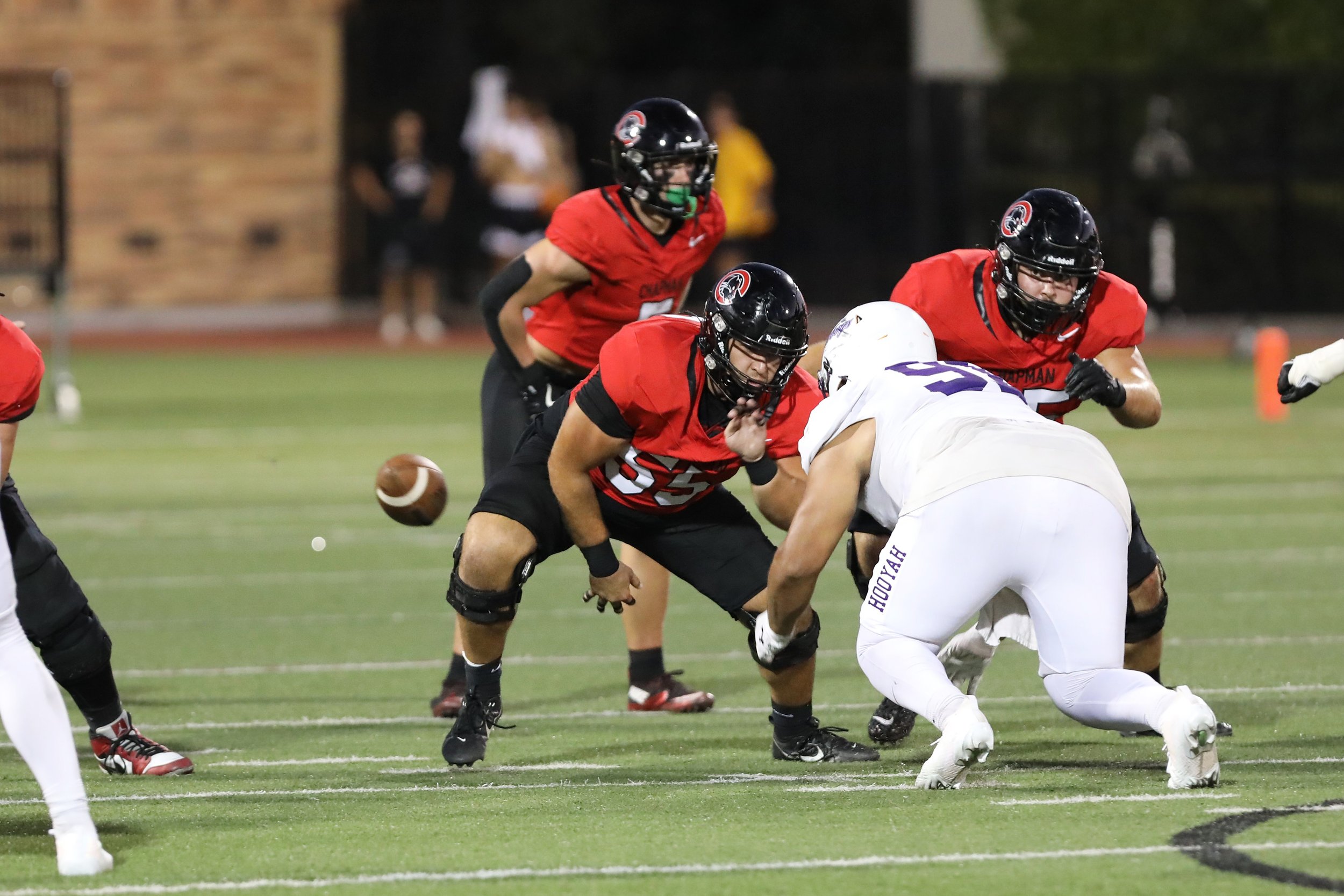
Photo courtesy of Chapman Athletics
Everything happens in a split second for centers. There is no moment of rest from the second the huddle breaks, and any minor errors can be majorly costly for the offense.
“Each footstep matters. Each hand placement matters. If you miss a punch, you lose a block,” said Luke Jones, Chapman football’s center. “Most people don't understand that.”
Centers’ also have to time everything correctly with the QB so the snap goes off smoothly. Any minor mistake in that moment can lead to a turnover. Pre-snap, they also have to read the defense — whether a linebacker will blitz or how the safeties are set up.
And, once the center snaps the ball, their job is far from over. Jones, a junior business administration major, said that he often faces opponents who weigh over 300 pounds and are breathing right in his face before the play begins.
Many football fans think that quarterbacks are the only players extensively studying the game, but centers may be the second biggest film junkies in the sport.
“Part of being (the) center is you got to lead the O-line,” Jones said. “You got to know what everyone else does. You know their footwork (and) their block. You kind of have to know all five positions in one.”
9: Point guard
Watching Chapman’s starting point guard Cruz Billings zip around the court, you’d think the position was easy. If a 5’8” guy can dominate the game, then so can anybody right? However, through basketball history we’ve seen that the ball carrier — whether a traditional point guard or not — will always be the most important player in basketball and therefore tasked with the toughest job.
Back in December, Chapman upset Redlands University, who was ranked as a top-five team in the nation. And they did so mainly because Billings, a senior business administration major, was the best player on the court. Redlands put a high press on Chapman every possession, and Billings was able to break through and create scoring opportunities for the Panthers.
If Billings had been off his game, Redlands would have won easily. That is why point guard is the hardest position in basketball: they lead the offense and need to have a high basketball IQ. And often being the shortest player on the court, their quick movements on and off the ball have to make up for that disadvantage.
In modern basketball, sometimes forwards or big men run the point. But even with less traditional point guards, the ball carrier is the toughest role in the sport because they dictate how each offensive possession will run. The level of responsibility is one of the highest in all of sports.
8: Distance swimmer
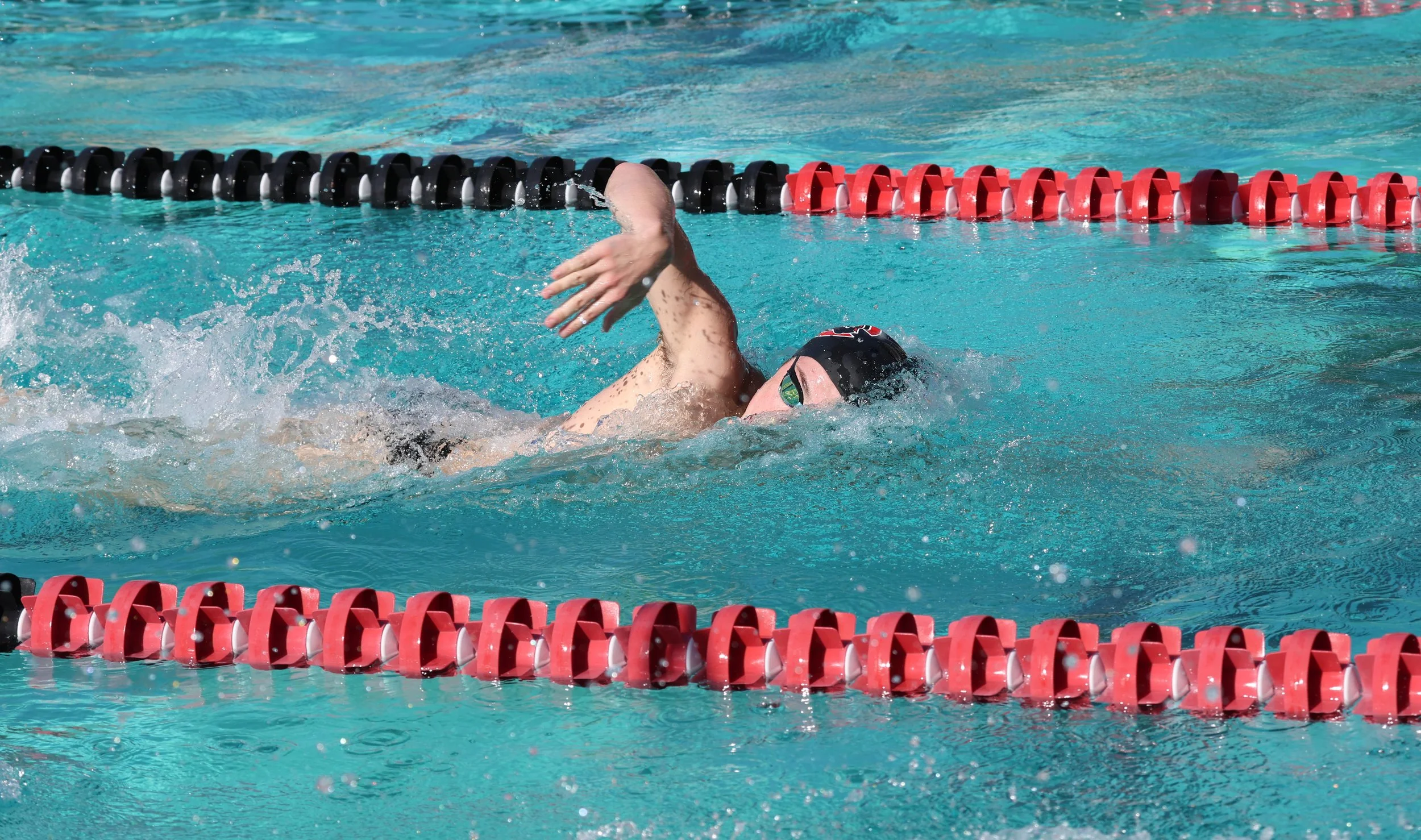
Photo courtesy of Chapman Athletics
Swimming for 16-plus minutes straight is as tiring as it is repetitive. Swim, swim, swim, flip. Swim, swim, swim, flip. It’s just the swimmer and their thoughts, with lactic acid building up each lap.
Hell, when you watch distance swimmers you realize how much of a feat it is to even finish the race. I challenge anybody to go to a Chapman meet and not feel tired by just imagining being in the pool, swimming anywhere from 500 meters to a full mile.
Katie Ledecky, who holds the world record and 24 of the top 25 times for the women’s 1500-meter long course event, makes distance swimming look easy. But even Ledecky has talked about how her success has come while constantly reaching physical breaking points.
“There are times where I push myself and die,” she told Forbes in 2021. “I die on the back half of a swim and just fall off.”
There is so much training and preparation that goes into being a distance swimmer. Staying longer at practice than teammates and doing more yardage on every set. There is no rest for the weary. Just swimming.
7: Softball/baseball catcher
Most people duck out of the way when a fastball comes at them. But catchers must stand, or rather squat, strong to finish out a strike. And there’s a massive metal bat swinging right in front of their face as it happens. And they need to brace themselves for contact when an opponent is sliding for home plate. And they need to help make pitch calls based on who is at bat.
Aleena Helms, an applied physiology junior who had previously played catcher for Chapman’s softball team, said that the position catchers’ take up makes their role invaluable to the team — bringing pressure with it.
“You are the only one with a view of the whole entire field, giving you lots of additional responsibility,” she said. “You have to be heads up 100% of the time, or things will start to fall apart.”
Just having the stones to be a catcher isn’t enough. These players are tasked with just about everything on the defensive side of the game.
“Trying to call pitches in high stress situations is pretty difficult and daunting,” Helms said. “Once runners are (on) base, your focus has to shift from receiving pitches and trying to get extra strikes called to worrying about what that runner is going to do. Especially with bases loaded and a good batter at the plate, you need to be very careful with what pitch you call to prevent runs from scoring and giving the other team momentum.”
6: 400-meter track sprinter
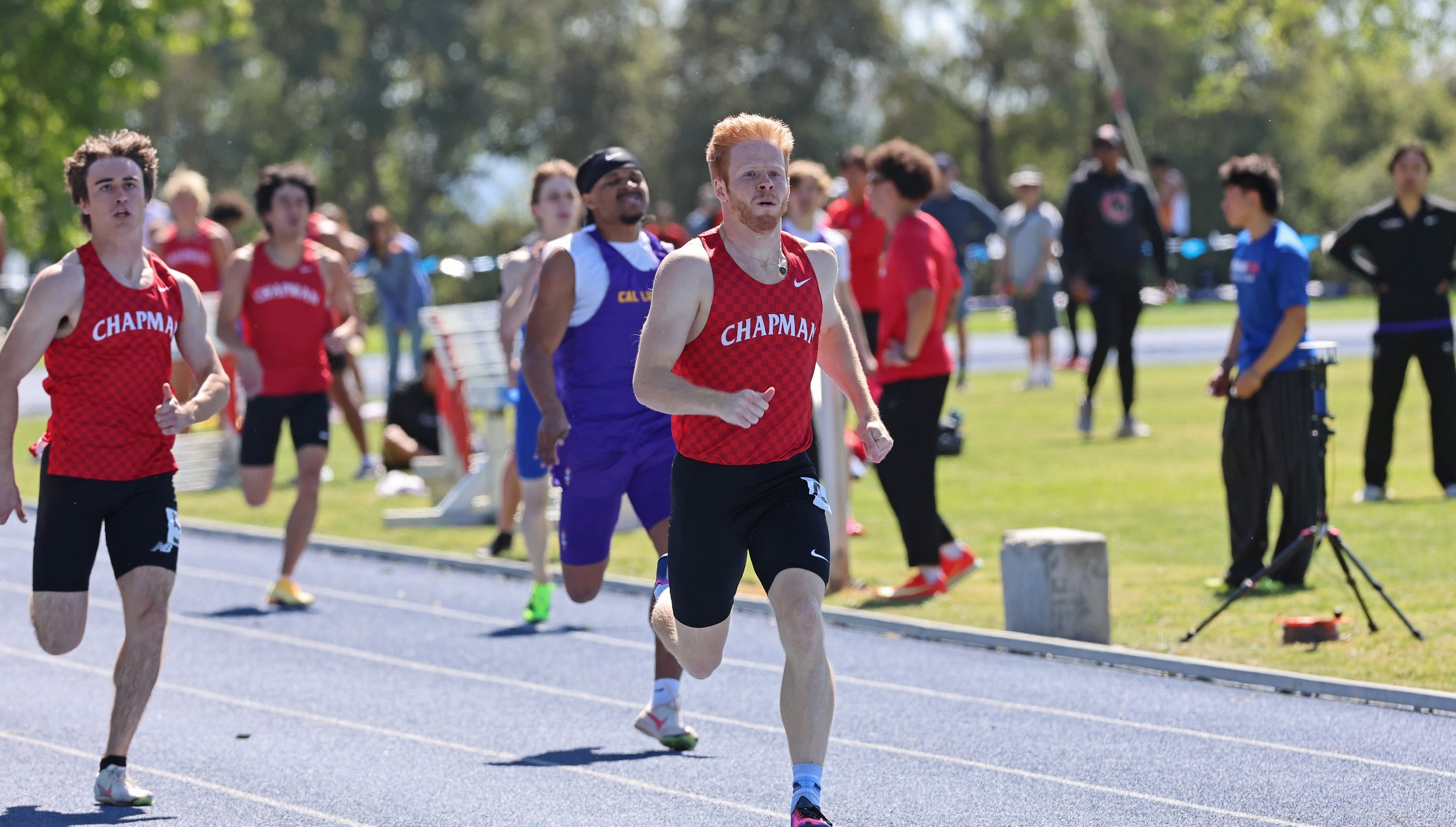
Photo courtesy of Chapman Athletics
Ask Chapman senior sprinter Mason Fara what it’s like to run the 400-meter dash, and by the end you’ll have images of war in your mind. The body giving out. Runners dropping to the ground. The days long pain afterward. It’s almost unimaginable.
“After (one) race, everyone completely died,” Fara, an environmental science and policy major, said. “I was severely unwell for a solid 48 hours. I couldn’t get out of bed the next morning.”
Fara also said that track is viewed as the punishment that other athletes endure. Running for no reason whatsoever. And if that’s the case, then the 400-meter is the punishment within the punishment.
“Your body’s not allowed to sprint (for) that long,” he said. “You just start shutting down midway through the race.”
400-meter sprinters push their body to its peak. There are few other athletes out there who give that much in such a short period of time. It takes everything to finish.
“A lot of the time, when I’m in the last 50-meters, my eyes will be closed and I’ll be praying.”
5: 400-IM swimmer
Many swimmers are masters of one stroke: freestyle, breaststroke, backstroke or butterfly. When those are put all together — and athletes swim 400-meters — you get the toughest event in the sport.
Everybody we talked to on the Chapman swim team mentioned the 400 individual medley (IM) when talking about the most physically demanding and the most mentally demanding events. There was a consensus that this takes a massive toll on a swimmer. It also takes a lot of focus and perfect technique. Having to perfect four different strokes can leave major room for error.
The structure of the race adds to the difficulty. It starts off with the butterfly, which is considered the toughest stroke in the sport. Butterfly is extremely different from the rest of the strokes, and can take an entire career to master the technique even if that’s a swimmers’ only event. But once swimmers are done, there’s still three more strokes to go — no matter how tired they already are.
After doing the backstroke and breaststroke, the race concludes with a freestyle sprint to the finish. The world record holder in the men’s long course 400-IM, Léon Marchand, has said that during the final lap of freestyle he is dying in the water. It’s no joke out there.
4: Quarterback
Throwing an interception as a quarterback is embarrassing. It just is. When all the eyes are on you, and all the pressure to succeed, giving the ball away to the other team feels almost inexcusable. But there’s no time to dwell on the mistake.
Quarterbacks must have an incredibly strong memory, and also be able to wipe the slate clean immediately. They have to know the whole playbook, be able to read different defenses each week and adapt to the changes that happen from play to play.
For sophomore psychology major and Chapman quarterback Brady McKelheer, the speed of the game is one of the hardest aspects. Timing is everything, and if he’s off by half a second then the play is ruined.
“When you take a snap, everyone is trying to get you,” McKelheer said. “You still have to find an angle to make a throw that has to be on time, so you have to make sure your feet are right. And then you have to worry about people trying to get the ball from you.”
But even when the timing is right, quarterbacks must be able to process the play quickly and read what the defense is giving them. The decision between throwing to a receiver, tossing the ball away or taking off and running must be made before the defense has a chance to react properly.
There is also a constant threat of physical harm. Quarterbacks can’t forever avoid being hit by the 250-pound men on the other side of the ball. Even if they get their pass off in time, there’s a good chance a crunch is waiting right after.
While having the ball in your hands every play is a lot of pressure, it also allows you to shape and mold the game the way you want. Everybody is focusing on what the quarterback does so they can make a play. There’s a harder position group who have little control over what comes their way, making their job more unpredictable.
3: Water polo goalkeeper
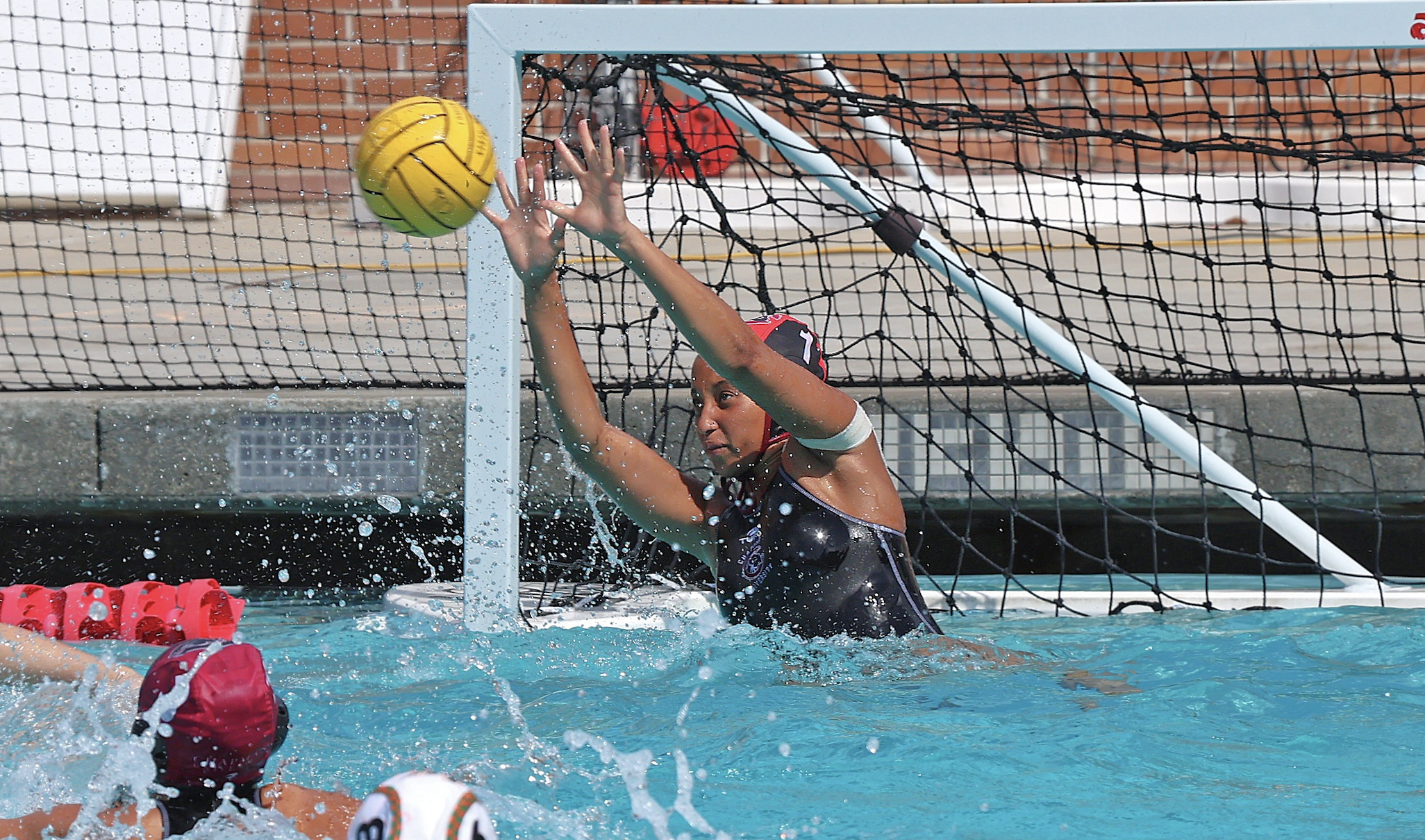
Photo courtesy of Chapman Athletics
Rising three feet out of the water like a majestic dolphin, the water polo goalkeeper must often have nearly physics-defying levels of hangtime to make saves. And sometimes that still isn’t enough.
Treading water is already an immense challenge, especially while kicking and clawing at opponents. But the goalkeeper is under far more pressure than the rest of their teammates.
“Every mistake is a goal, and this can make or break a game,” Zoey Francis, Chapman women’s water polo goalkeeper and senior accounting major, said. “I am a very important part of defense and have to constantly be multitasking to communicate to my teammates, while also being able to follow and block the ball.”
Offensive players are often in control when facing the goalkeeper. They decide when to shoot, and where the ball will go. They can fake, move and put extra spin when they let it go. Goalkeepers are at their mercy, so quick reaction times are everything.
“People always think being a goalie is so easy because when (they’re) just watching the game, I'm not swimming up and down the pool,” Francis said.
But that lonely life makes the position even harder. Goalies need to stay switched on even when nothing is happening in front of them. They see the whole game, and can help direct the offense. And once the ball is turned over, goalies need to be fully prepared to make game-winning stops.
2: Soccer goalkeeper
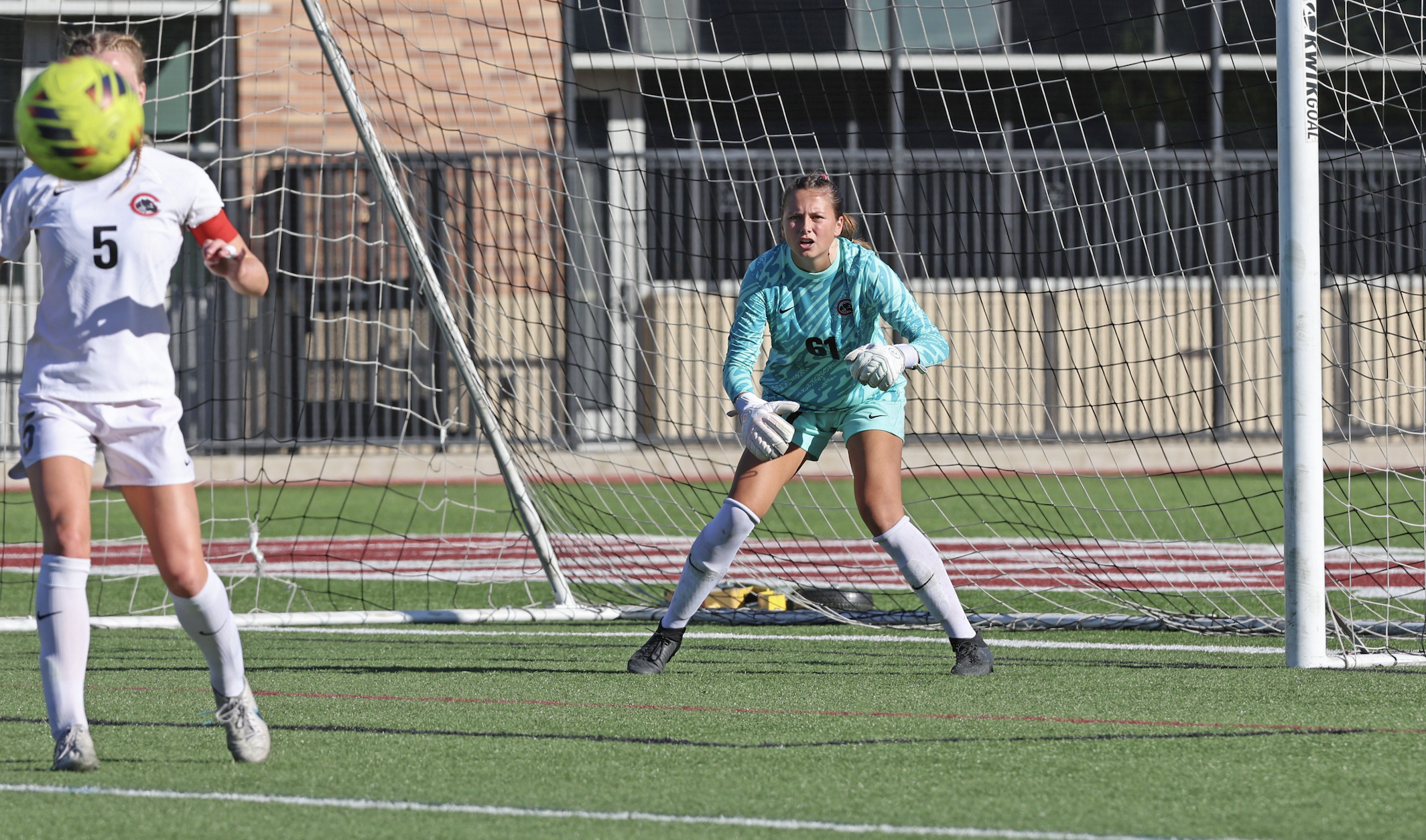
Photo courtesy of Chapman Athletics
There are a few aspects of goalkeeping in soccer that make it markedly harder from being a water polo goalkeeper. While the same mental challenges persist, alongside the need for a quick reaction time, soccer goalkeepers have added responsibilities.
They must be a part of the passing build-up and direct the tactical formation of the team. Not only must the goalies make saves, they need to be brave enough to claim crosses over the head of both defenders and attackers and to come out of the box to clear the ball if it makes it past the defense.
Sophomore psychology major Bella Barretto, Chapman women’s soccer’s goalkeeper, said that another difficult aspect is the size of the goal. Most goalies, even at the professional level, only cover 24% of the goal with their body size.
“I am 5-foot-9 but the average size of a collegiate goal is 24 feet long and 8 feet high,” Barretto said. “To put this into perspective, a lacrosse goal is 6 feet wide and 6 feet high. It also can feel hard when the space I have is crowded and I have to locate the ball.”
This size differential brings an acrobatic element to the position, forcing players like Barretto to leave their feet to stop a shot. But the toughest part of goalkeeping, according to Barretto, comes when it’s just her and the forward one-on-one.
“There is such a unique way that I have to approach the situation in terms of how I come out, which way I dive (and) my hand placement on the ball,” she said. “Those moments can feel so scary but saving a (one-on-one) is one of the greatest strengths a goalkeeper can have.”
There’s a reason that people say you need to be a little crazy to be a successful goalkeeper. Spill a ball or let in an easy shot and goalies won’t hear the end of it. They are expected to make every save, even when the odds are clearly against them.
1: Hockey goalkeeper
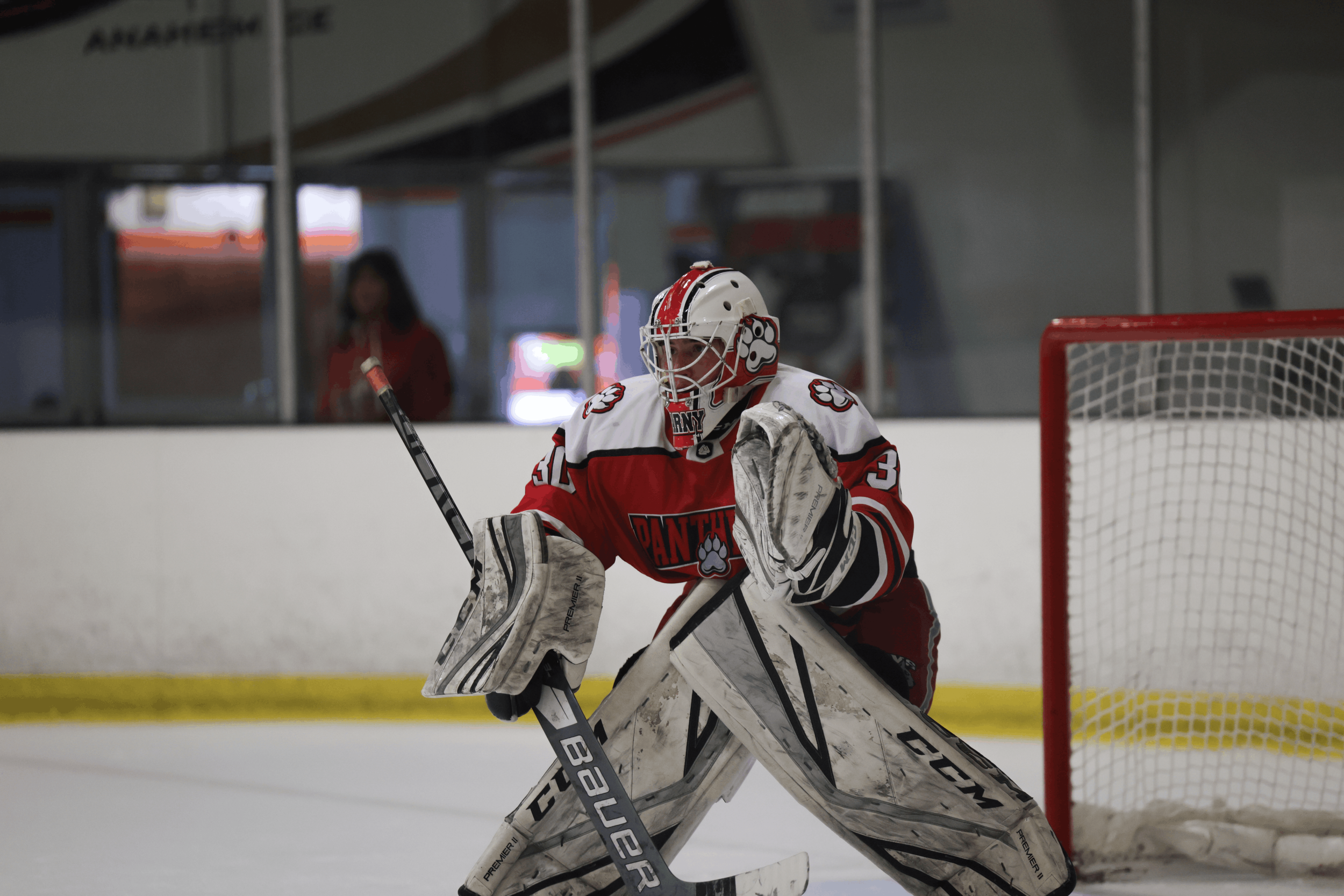
Photo courtesy of Dana Sullivan
Being the last line of defense, with the pressure that every mistake leads to a goal for the other team, makes goalkeeping undoubtedly challenging in any sport. But the king of kings goes to hockey goaltenders.
For one, they face more shots. A good night for a hockey goalkeeper is when their opponents have 20 shots on target. That would be an onslaught in soccer or water polo. While they do cover a smaller goal, they also face a smaller and faster moving object. Making a save often comes down to instinct rather than actually seeing the puck.
For senior psychology major Cooper Barnett, Chapman club hockey’s goalkeeper, he faced 60-plus shots multiple times this season. And he said that there’s nowhere to hide when he makes a mistake. He can’t skate off to the bench and wait it out.
“There’s so many eyes on you and so much relying on it,” Barnett said. “You just feel like there’s such high expectations. It’s hard to play well with that anxiety.”
Goaltenders in hockey also have to be incredibly flexible, maybe more so than any other position on this list. They spend much of the game in a unique crouched position which can leave them susceptible to long-term injuries.
“I had double hip surgery my senior year of high school,” Barnett said. “I got to the point where I couldn’t step over a 6-inch curb. I had to lift my legs up to get over one.”
I doubt that any goalkeeper wants to play quarterback, and vice versa. Ask a swimmer to sprint 400-meters or a sprinter to swim a mile, and they’ll call you insane. One cannot place a catcher on a basketball court and expect them to be a superstar — it doesn’t happen. Ultimately, there may be mass disagreements over this ranking. Perhaps internet fights that last for days. But through talking to Chapman athletes, one thing remains clear: nobody can argue how demanding each position is.