
The WNBA’s long-overdue payday
Collage by Riley LeBlanc, Photographer
In the 1979 NCAA National Championship basketball game, Magic Johnson and the Michigan State Spartans faced off against Larry Bird and the Indiana State Sycamores. The game’s Nielsen ratings, an audience measurement system for television viewership, were the highest for any basketball game in the United States up until 2017. It was the first of many matchups between the two Hall of Fame NBA legends.
The NBA grew significantly in this era of basketball, but it wasn’t solely due to this rivalry. The NBA-ABA (American Basketball Association) merger and the expansion of teams from 18 to 22 in 1976 played large roles. Labor wins, free agency battles and more contributed to the average salary rising from about $35,000 in 1970 to $180,000 in 1980. By 1990, the average salary was just under $1 million.
Johnson and Bird helped accelerate an already talented league into must watch television, paving the way for Chicago Bulls star Michael Jordan to elevate it even further into a global cultural powerhouse later in the ‘90s.
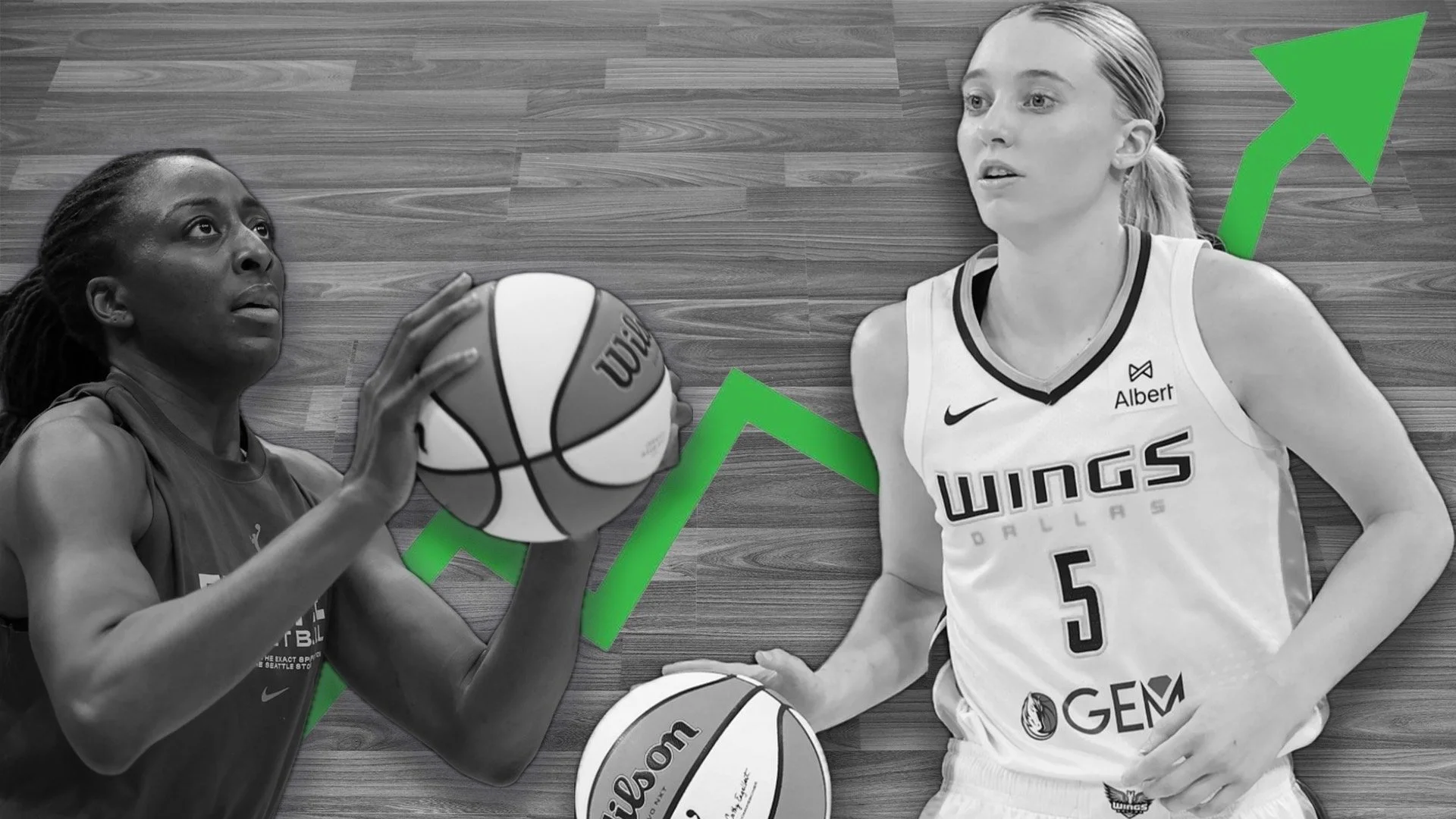
The WNBA is now entering a similar era. In April, the WNBA and its players union agreed to a new seven-year collective bargaining agreement that dramatically raises salaries, expands benefits and implements revenue sharing starting in 2026 and running through 2032.
The deal raises the team salary cap from about $1.5 million in 2025 to $7 million in 2026. Average salaries are expected to rise about $583,000 in 2026 and surpass $1 million by 2032. Maximum salaries will rise to $1.4 million in 2026 and over $2.4 million by the end of the deal
The pay raise was overdue. The talent in the WNBA has been there long before its recent viewership boom. But the league’s growing popularity finally gave them the leverage to be able to demand a larger share of the value they create.
And behind much of this growing popularity is Caitlin Clark of the Indiana Fever.
There are many other reasons the league is gaining traction, and plenty of other players have played a large part in this boom. A’ja Wilson, Sabrina Ionescu, Angel Reese, Paige Bueckers, Breanna Stewart and so many more have been central to the league’s growth.
But just like Johnson and Bird did for the NBA, Clark’s media attention and cultural dominance is helping turn a growing league into a mainstream product.
2024, Clark’s rookie season, was the most viewed regular season across ESPN platforms with an average of 1.19 million viewers, up 170% from the prior season. Additionally, total attendance at games increased by 48%, merchandise sales went up a total of 601% and social media engagement across all platforms grew by over 1.6 billion video views. It was truly a cultural explosion.
All of this to say that this moment of growth feels familiar. The NBA was in its 34th season when Johnson and Bird came along in 1979. The WNBA is currently beginning its 30th season. And in both cases, star-driven viewership and cultural relevance helped give the players a path to fair compensation.
Still, though, the WNBA pay debate does not end here. The league will very likely continue to grow, and if the NBA is any example, it could be fast. The new deal is a historic milestone, but this is only the first step in ensuring fair pay within a rapidly expanding league.