
‘Men On Boats’ rewrites the voices behind history
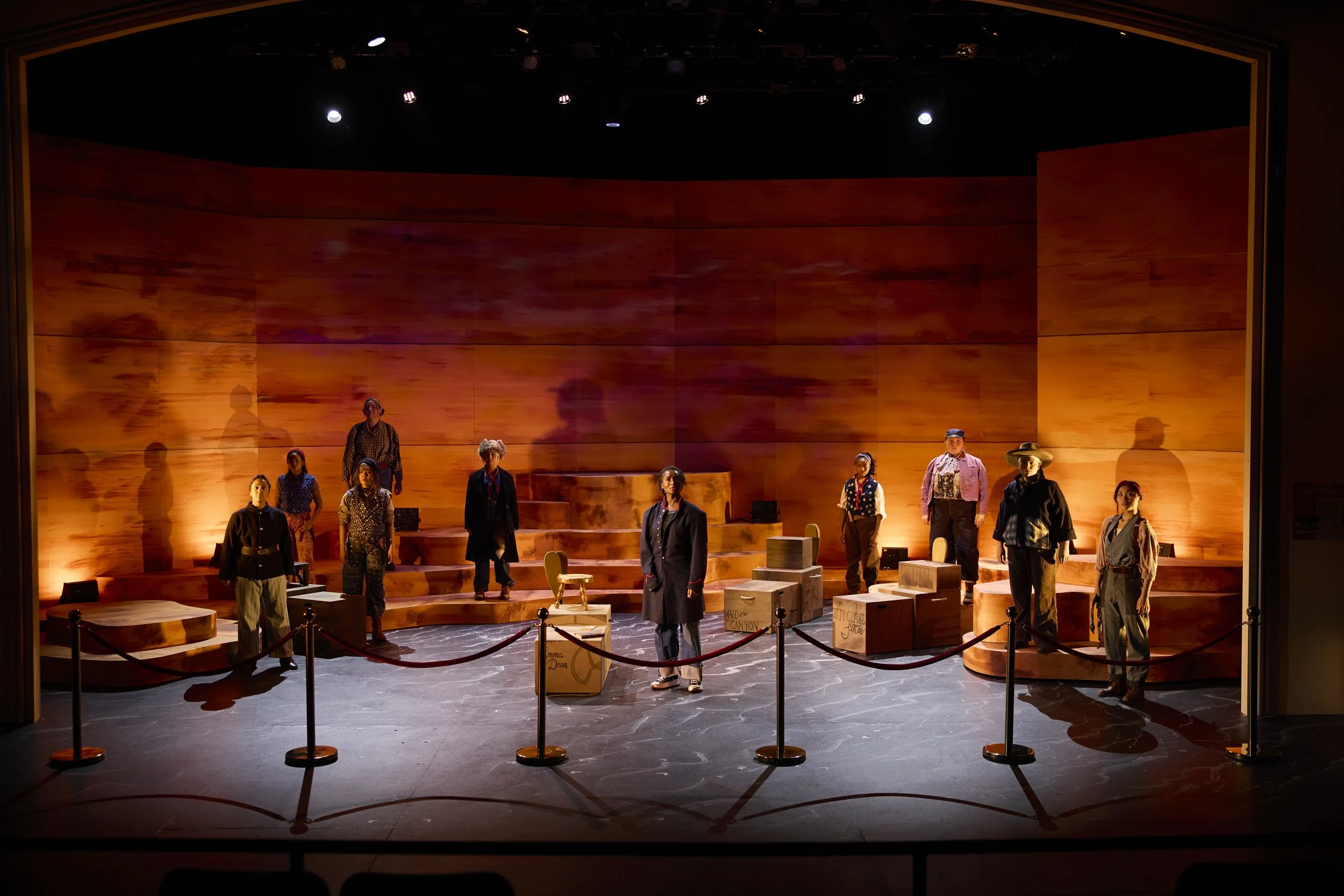
Photo courtesy of Alissa Roseborough
“Men on Boats” tackles a story of men conquering the American West — just not exactly in the way history would tell it.
On May 2, Waltmar Theatre and the College of Performing Arts (COPA) hosted Jaclyn Backhaus’ “Men on Boats,” a play that follows John Wesley Powell’s 1869 Grand Canyon voyage — with a twist.
The play is performed by a diverse cast, identifying as female, transgender, gender-fluid or gender nonconforming. Backhaus’ casting take on this story was purposefully meant to represent the opposite of historical narratives written by cisgender white men.
Recasting a male conquest narrative with a gender-bent cast forces the audience to question the stories that history left behind.
“Anyone who watches the show, no matter their gender or identity, can resonate with the characters and how we all need a team to work together — this play shows that in a way many others don’t,” said production stage manager Olivia Lehnert, a senior theatre technology major.
The play begins with the main character, played by junior theatre performance major Karma Carr, as she steps into the history of a journey on the river to discover the Grand Canyon. Playing Powell, Carr leads the group on boats through rough waters, hunting, camping and naming historical landmarks.
As the journey unfolds, the production leans into both humor and chaos, allowing the characters to feel less like historical figures and more like a relatable group of people today, figuring out their conflicts in real time.
The moments of comedy contrasted the raw expedition, grounding the play in both satire and sincerity.
While the action plays out onstage, much of the work that goes unseen in maintaining the production happens behind the scenes.
The intentions behind storytelling and casting choices extended beyond just the actors and into the production team. Kaitlyn Fuller, a junior theatre technology major, was one of the assistant set managers for this performance.
“I appreciate a story told by voices who wouldn't have had the opportunity to tell those stories before,” said Fuller.
Lehnert appreciated the story for similar reasons.
“A message that women can do anything — and it is not just the white male story — is something I resonate with,” Lehnert said.
The Grand Canyon set, with boats and rocks amongst many other pieces, were created in part by junior theatre technology major Emily Lawson.
“Seeing everything come together in this space is really important,” Lawson said. “I have been over at the shop for the past three months building things for this show, and seeing the space transformed into a canyon is breathtaking.”
This show would not have been possible without constant coordination between the cast and the crew. Stage managers call cues for sounds and lighting while crew members track props as they move quickly on and off the stage, all while everyone ensures actors have what they need in each moment.
As the play progressed, Powell and his men pushed forward through unpredictable currents of the Colorado River, facing failed navigation, clashing friendships, lost boats, low food remains and even run-ins with snakes.
Their journey is marked by moments of frustration, punchlines and uncertainty as they argue over leadership and make questionable decisions, struggling to remain a unified team. They do eventually make it out of the Grand Canyon, despite losing some of their shipmates along the way.
By the end, the expedition feels less like a heroic conquest and more like a collective effort to make it through as one.
“Getting to create and to see these people step into their roles and really discover who they want to be has been so enjoyable,” said Lehnert.
Both the performance and the production reflect the play’s central idea that history is not fixed, but shaped by who gets to tell it.
In “Men on Boats,” the journey may be rooted in history, but the voices telling it push that story somewhere entirely new.