
How do you keep creating when you aren’t required to anymore?
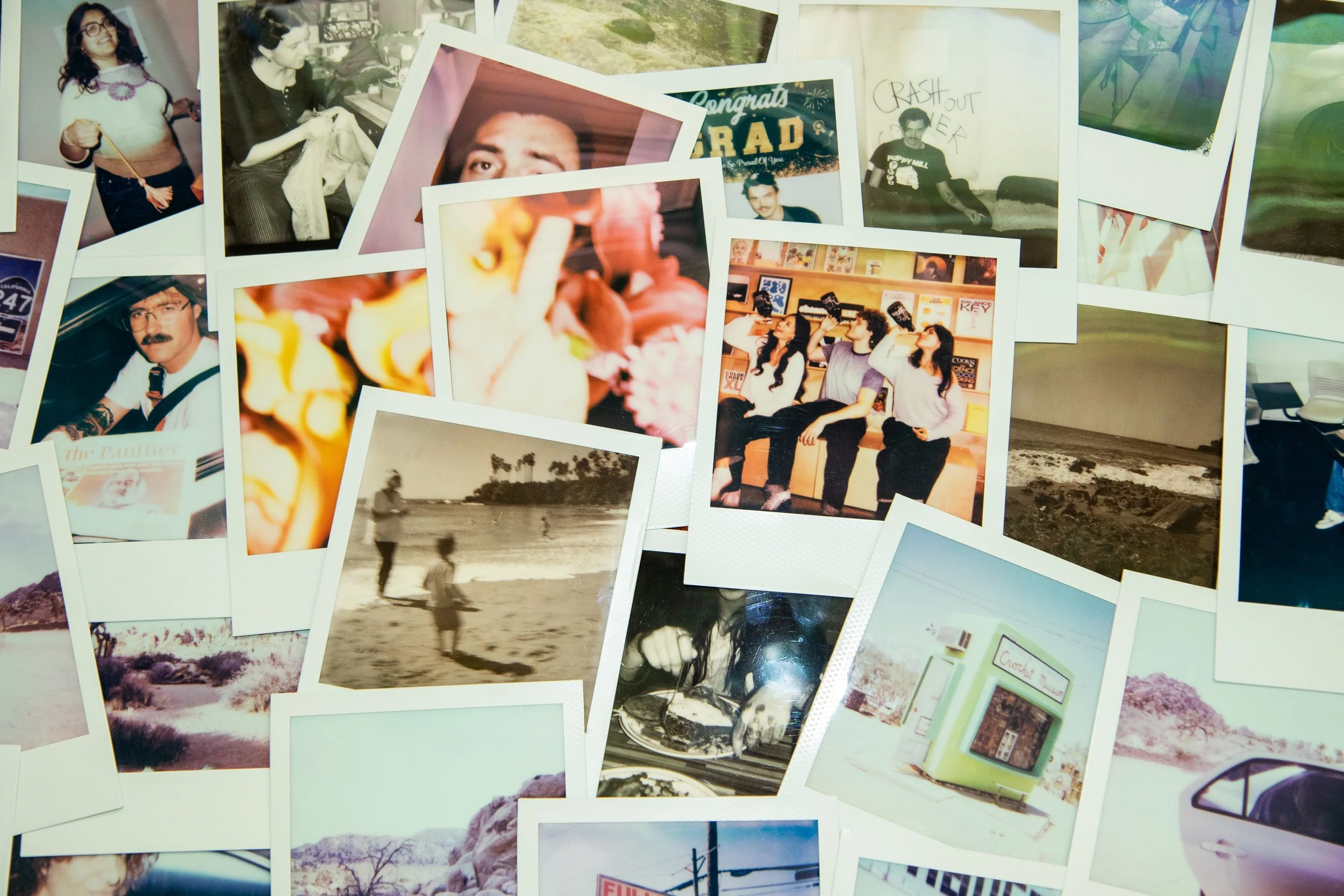
Collage by Easton Clark, Photo Editor
With graduation approaching, senior creatives will have to motivate themselves to create without a structure that has kept their art in motion.
For seniors at Chapman in graphic design, theatre or even creative writing, creativity came with structure: assignments, deadlines and grades.
There always seemed to be an art portfolio, script or writing assignment to complete. Graduating will remove that framework, leaving these students wondering what their art will look like when no one is assigning it.
Senior strategic and corporate communication major and graphic design minor Gillian Johnson has spent her time in college already applying creative work beyond the classroom. Johnson began the coursework for graphic design with no prior experience or portfolio, but found that the large workload and technical challenges deepened her investment in the craft of design.
“A lot of people end up dropping the graphic design minor,” Johnson said. “You just have to be very passionate about it to continue, because it is a lot of hours and more coursework.”
As she gets closer to walking the stage, Johnson hopes to carry this passion into a career — whether that be marketing or advertising — specifically in design aspects.
Rather than seeing postgrad life as a complete break from the syllabus structure, she views freelance work as a familiar extension of what she has already been doing in school: creating projects for clients, balancing deadlines and adapting to expectations.
“The coursework has definitely shaped the way I will continue to design in my future jobs,” Johnson said.
In the future, Johnson will continue her craft through internships in marketing and social media as well as anticipated freelance work.
“Until I find my full-time position, I will be working at my part-time internship with Orange County Transportation Authority and still doing social media marketing work for Sunshine Staging & Design,” Johnson said. “Both jobs will be my outlet to continue to create.”
Karli Jean Lonnquist, a senior theatre major, has spent much of her time at Chapman focused on playwriting and finds new work development — a collaborative process of creating and refining original pieces of theatre — to be her artistic craft.
Lonnquist found her passion for theatre from a young age, finding interest at just age 5 after her mom had her participate in an acting class. During COVID, she took it upon herself to enroll in a playwriting class.
“Through that process, I really fell in love with writing plays and all the different processes and all the collaboration that went into it,” said Lonnquist.
Much of Lonnquist’s creative work was self-driven, an independence that is shaping how she approaches life after graduation, with a mapped out long-term plan to keep creating.
“My goal for each year is to write at least two new, full-length plays,” she said.
At the same time, she hopes to work in theatre administration, a path she believes will allow her to stay connected to the industry while still supporting her own creative ambitions.
“I personally would like to work a job within theatre and I know that will fill a lot of my artistic impulses,” Lonnquist said.
She is also in the early stages of launching a nonprofit aimed at creating more accessible opportunities in the arts for disabled individuals, an effort that reflects how her artistic identity extends beyond personal creation and class structure.
Kate McNeil, a senior creative writing major, considers fiction writing and poetry to be her artistic craft. She’s always had a creative mind, growing up with reading and elaborately creating stories.
“I found a lot of satisfaction in writing stories for myself or for my classmates,” she said. “I had the sudden realization in the seventh grade that there was actually a job for that: an author.”
She noted much of her growth as a writer has come from the demands of her courseload, deadlines and expectations.
“One of the best parts about my time here has been the sheer amount of work I’ve been forced to generate in order to be accountable to my classes and peers,” said McNeil. “Too much free time makes me listless and unmotivated.”
That dependence on structure is what makes postgrad artistic craft uncertain.
“It’s up to me now to establish the structure I need to keep writing in my daily life, alongside whatever else is in store for me in the upcoming years,” she said. “In an ideal world, I would just write all the time because creating work is my one true passion.”
Though these students’ paths differ, each one is stepping into inevitable uncertainty with the structure of their artistry everchanging.
After years of having these students’ creativity built into a syllabus, that responsibility now falls on themselves to keep their art alive. It is not just about finding a job, but about redefining what it means to be an artist without the structure that may have once sustained them.