
‘Rusalka’ proves opera is alive and well at Chapman
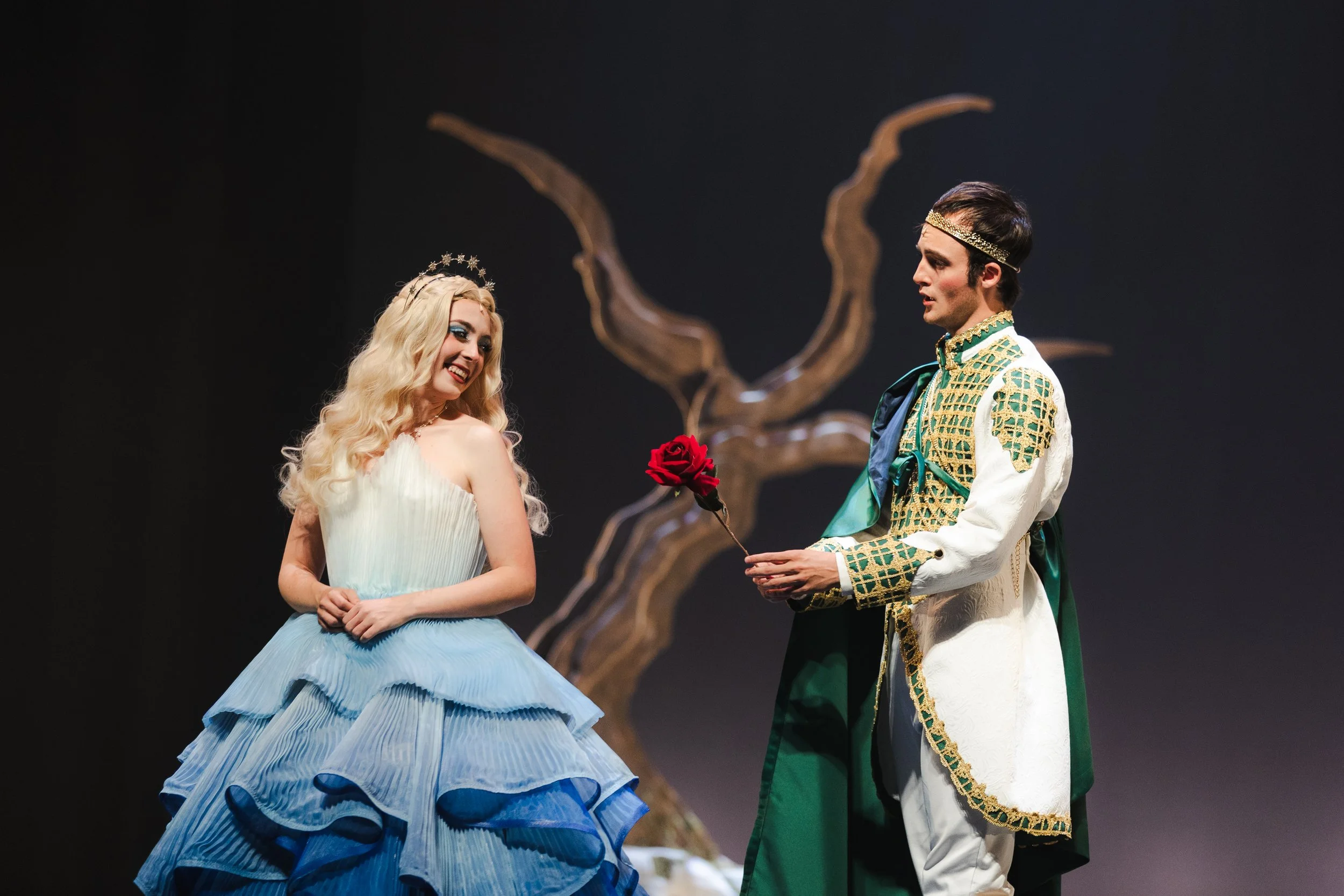
Photo Courtesy of Jazley Faith
The future of opera at Chapman is thriving, and on April 24 and 26 it graced the Musco Center stage with Chapman Opera’s production of Antonín Dvořák’s 1901 “Rusalka,” the “Little Mermaid.”
An opera in three acts, “Rusalka” was a feat of vocal skill and a display of complete artistry with no detail left unnoticed. The show started with a dreamlike overture by The Chapman Orchestra (TCO), who didn't merely accompany the show musically — they told the story alongside it.
First rooted in the story’s lakeside scene through character projections against a watery backdrop, the audience was then welcomed into the world of act one via six ensemble members playing woodsprites.
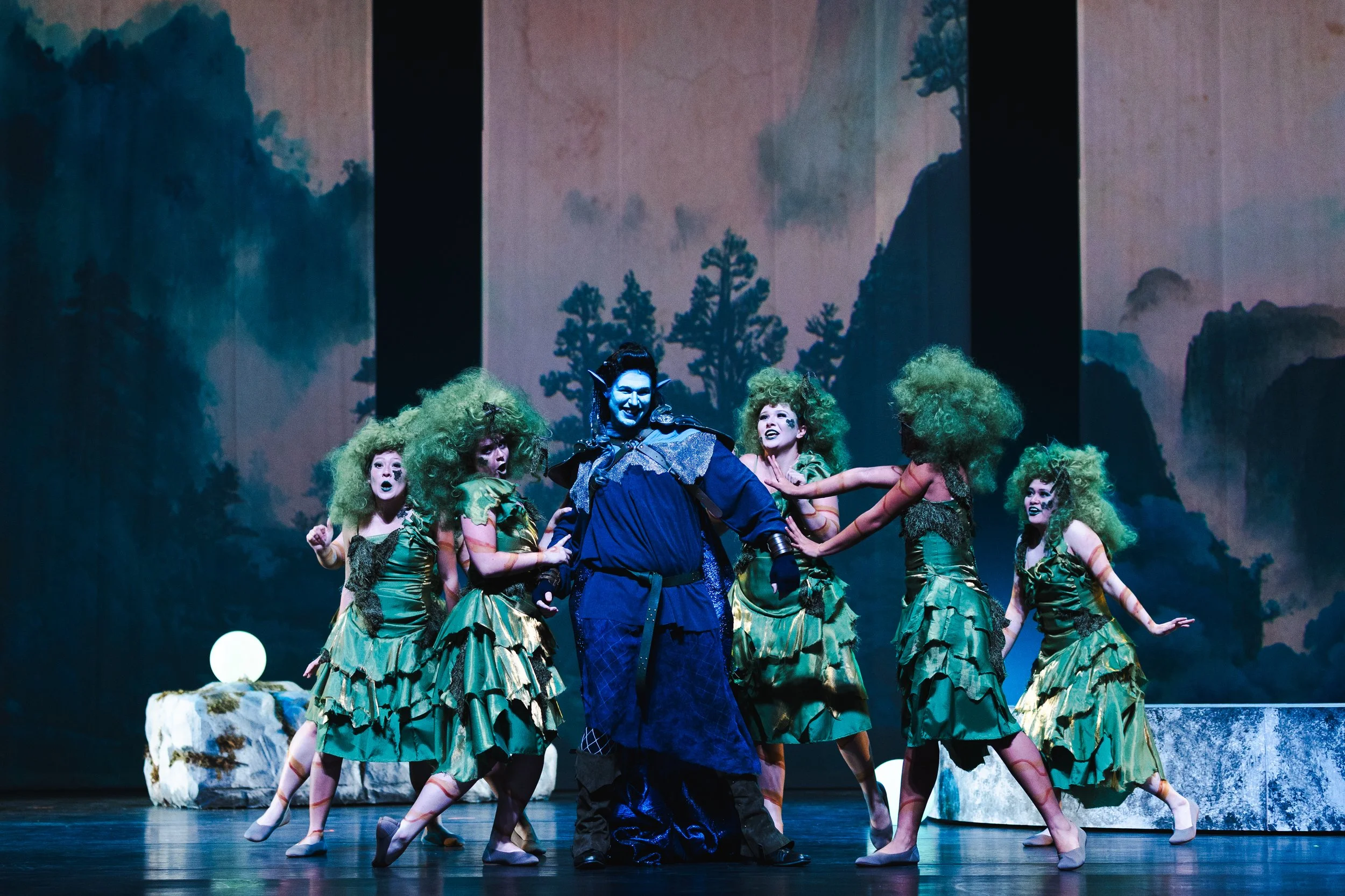
Photo Courtesy of Jazley Faith
With hair like moss and holding glowing green orbs, the six jumped and chattered around the stage before Vodnik, Rusalka’s all-powerful water spirit father played by freshman vocal performance major Austin Elkins, entered through the audience. Elkins’ face was painted bright blue, with prosthetic ears and a long-haired wig to match, and he donned a bewitching costume almost similar to “Shrek”’s swamp-kingdom garb, with an added twist of dark magic.
After the initial shock of the intense costuming wore off, viewers could zero in on Elkins’ undeniable talent; with his ability to project a baritone resonance, his stage presence was almost overpowering. Vodnik’s interplay with the physical space in Musco Center — from multiple passes from the orchestra level onto the stage to singing from the balcony — furthered the audience’s immersion into the world, filling it with an unparalleled musical depth.
Enter Rusalka, played by senior vocal performance and music education double major Abby Olson, with a plea for Vodnik to make her human in order to pursue true love in the form of the prince. In denying her humanity, the ensuing fight between father and daughter grappled with themes of mortality, boundaries and the depth of human emotion. Vodnik points his daughter to the witch Ježibaba, singing repeatedly, “She’ll teach you sorrow.”
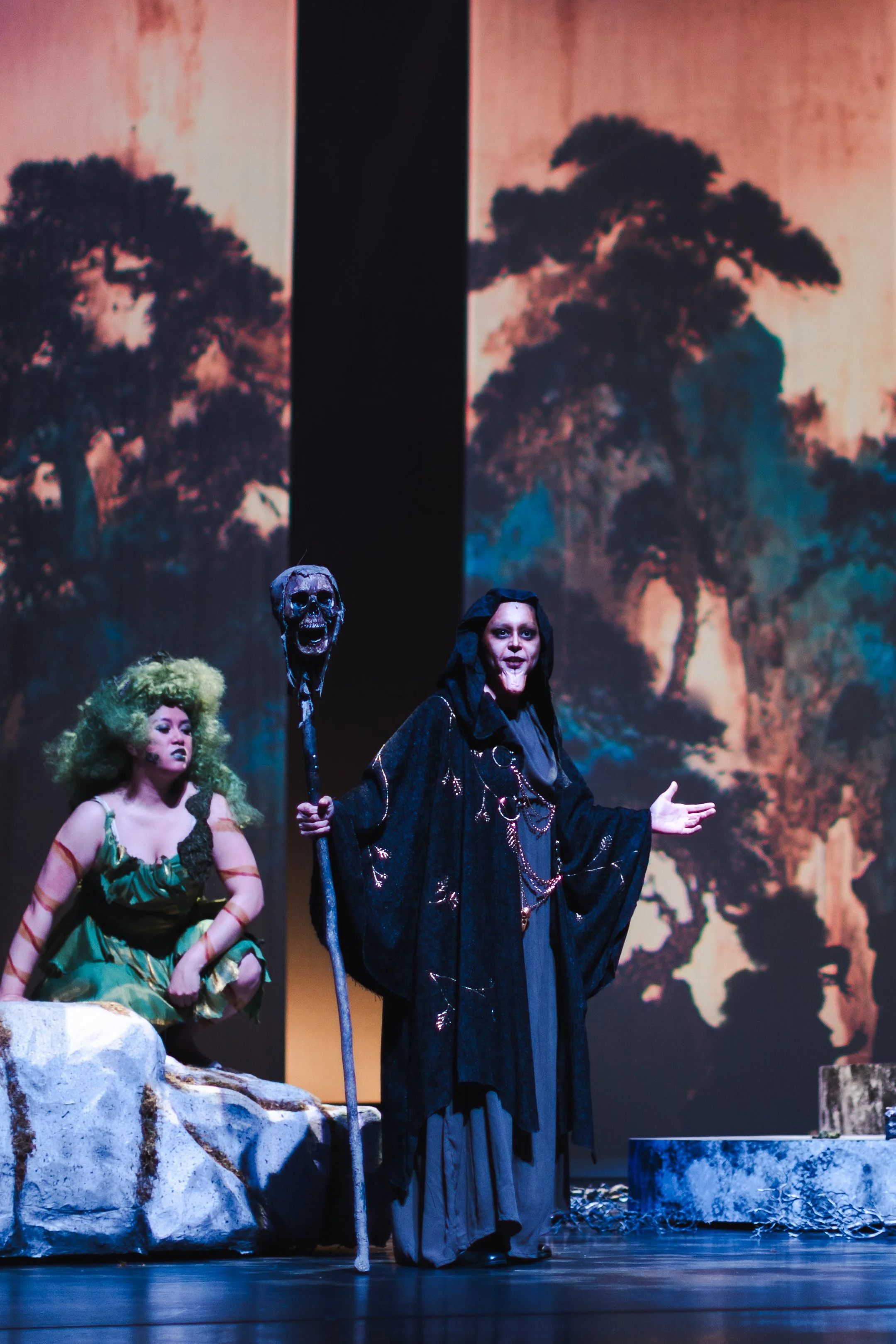
Photo Courtesy of Jazley Faith
Teach Rusalka sorrow Ježibaba did, turning her from water sprite into human all in one of the most impressive feats of costuming and makeup of the show; a chin prosthetic, a cape draping down to the floor and a staff topped with a skull truly made the witch a vision of dark magic.
Given the choice between pursuing love or her stunning voice, Rusalka made a choice many of us know too well — whether from the classic tale of “The Little Mermaid” or choices of personal betrayal in our real lives.
The end of act one saw the first encounter between the prince, played by junior vocal performance major Edgardo Lopez Yañez, and Rusalka — in which his vocal talent shined, especially since she could no longer speak — and ended with the pair heading back to his castle, together at last.
After a 15-minute intermission, an entr’acte by TCO brought the audience back into the world of music — or, in Rusalka’s case, a lack thereof. The orchestra, which acted as an equal storyteller to the vocal performance, helped bring the story to life and give it musical dimension.
The second act introduces the foreign princess — played by freshman vocal performance major Eliza Tait — whose arrival shifted the score into something sharper and more treacherous, her betrayal of the prince landing like a dissonant chord. In act three, Rusalka's own betrayal transforms her into a spirit of death, banished beneath the lake, whose melancholic musicality paired with the orchestra made the audience feel every facet of the descent. When the prince returns to her, the music knows what he doesn't: it's already too late. Rusalka has lost not only the love she so sought but her place in any world, now condemned to an isolated in-between, and the music lingers there with her. The opera closes on a haunting confluence of sound and a final lethal kiss — an act of forgiveness that the performers and TCO render as both devastating and transcendent.
Ultimately, the opera’s dark twist on Hans Christian Andersen’s 1837 “The Little Mermaid” was brought to life through powerhouse performances by Chapman’s vocal performance students, stunning costuming, makeup and resplendent orchestral arrangement. Subtitles, though at times not 100% accurate, helped make the show more palatable for audiences not familiar with opera.
As the opera’s director, Marc Callahan said: “Rusalka’s journey reflects a deeply human impulse: to change oneself for love, even at great personal risk.”
In a story full of sacrifice, the 13-person cast of “Rusalka” brought themes of love, loss and belonging to the stage. Talent and vocal skill emanated through every performer, from the leads to each member of the ensemble, and the power of transformation was apparent not only in the storyline, but in the world they built on stage.