Review | ‘After the Hunt’: A thought-provoking slow burn
by Jack Foutch
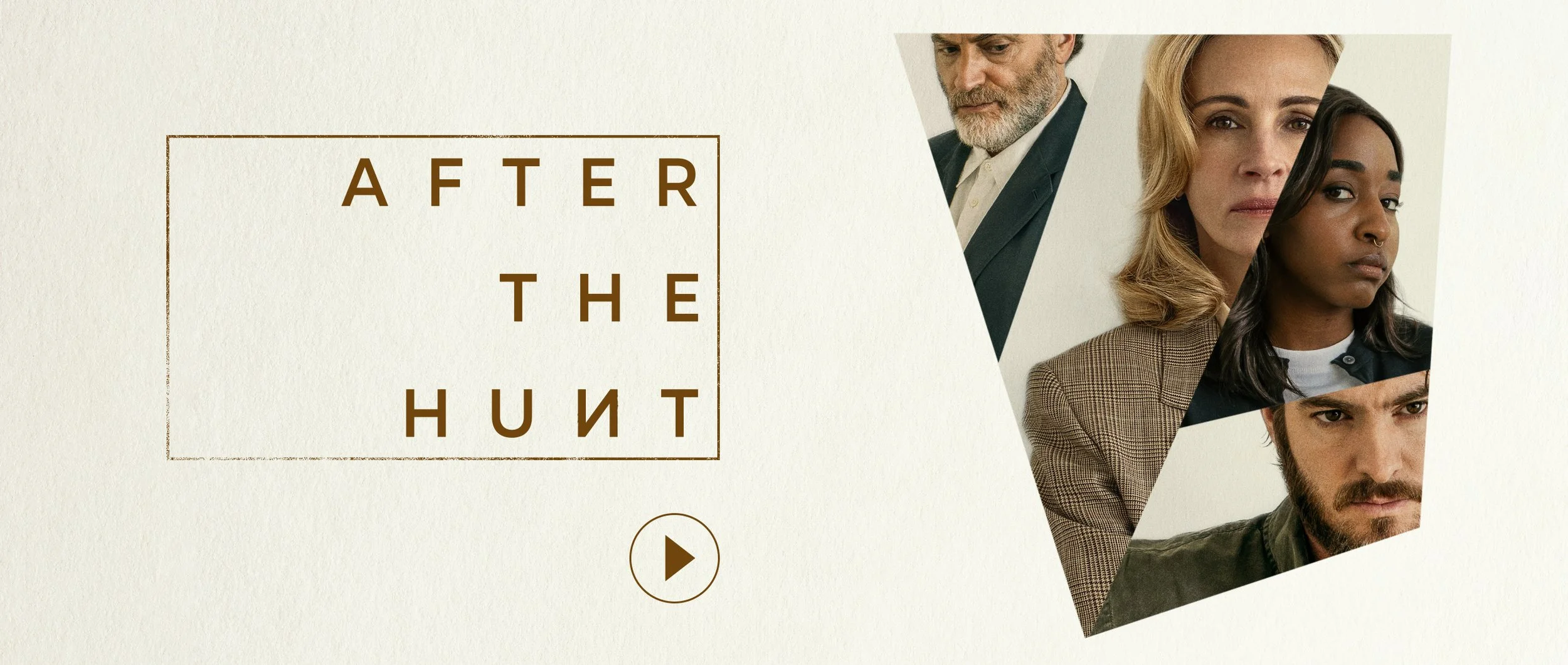
Graphic by Sienna Lewis, Staff Photographer
“After The Hunt” is a slow-burn drama with a haunting score, excellent performances and a suffocating atmosphere. In a masterstroke from director Luca Guadagnino, the entire film is a hunt. In stark contrast to the usual drama, or even his own previous retellings of abuse, Guadagnino focuses on the aftermath of the hunt (duh).
The protagonist, a professor named Alma (Julia Roberts) hunts for her tenure at Yale, as does her colleague Hank (Andrew Garfield) as well as literally turning Maggie (Ayo Edebiri) into his prey. Even Maggie is on the hunt, for success, for revenge and for public acclaim. The film depicts the aftermath of Hank’s alleged assault of Maggie (his student) after a party. Maggie claims she was sexually assaulted, Hank claims nothing happened and she made it all up. Either way, Maggie was Hank’s prey, and the film depicts the aftermath of his hunt, as well as other characters' hunt for success, retribution, or exoneration.
Through boardroom meetings, arguments, and classroom discussions, showing each individual character’s perspective of each moment, as well as diving into the bias influencing their responses. The hunt itself looms in every scene of the film, as each conversation and action are a response, this consistent focus on a single act of abuse creates a depth of character for each scene, as the only difference between characters is the bias towards the abuse.
Composers Trent Reznor and Atticus Ross create a score reminiscent of their work on “The Social Network,” with simple but well-placed notes on a piano or a ticking clock, while each track seems to punctuate the dialogue and arguments in the film. The score forces discomfort from the audience and an understanding of each character’s personal mental standing. The audience feels the tension of waiting behind a ticking clock as Alma waits for a decision and the score peaks and crescendoes as arguments intensify and relationships crumble.
In contrast to a traditional score with distinct character themes, rising and falling with the narrative, the score is restrained and contemplative, forcing an analysis of the deeper meaning beneath the conversations wrapped around the film.
Julia Roberts, Andrew Garfield and Ayo Edebiri deliver a three-punch knockout of dramatic performances, each with completely different styles. Julia Roberts is reserved, furious and mysterious, standing out from her usual roles. Her performance is tortured and intellectual, constantly grappling with her unfeeling demeanor pushing others away while she tries to climb the academic ladder.
Andrew Garfield is a satirical, mean-spirited and guiltless man, another stereotype-breaking role. Hank seeks salvation for his wrongdoing, and hopes to prove himself innocent of crime even the audience is unsure of.
Meanwhile, Ayo Edebiri provides dramatics through a conflicted billionaire's daughter, a pivot from her comedic background. Her performance is nuanced and fiery, with impulsive emotion and a layered attempt at maturity. Guadagnino’s destruction of the mold is evident, from his casting, to his pacing, to his score, and “After The Hunt” proves his bold hunch correct.
Guadagnino’s tension never lets up as he dives headfirst into Roberts and Edebiri’s characters, and the depth of the story is backed up beautifully through performance. This character study is nothing short of a scathing indictment of wealth, elitism and the abuse of power both literal and metaphorical.
The audience is introduced firsthand to the history of Alma and Maggie, piecing together a psychological puzzle, which the audience are then further encouraged to cross-reference with an underlying discourse on ethical philosophy, with each character's opinions viewed through the lens of their pasts. The film slowly and methodically dismantles its characters, as well as the system that built them, and then hunts the audience down to confront them with a chilling introspection.
The film’s depictions of abuse vary immensely, from the singular abuse of power, the swiftly following aftermath, and the lasting effects of abuse. Alma’s past traumatizes her and directly damages her marriage, as well as her personal and professional life. By showing the complete depth of Alma, the audience sees a possible future for Maggie, tormented by her past and still suffering decades later.
Alma’s past directly influences her interactions with Maggie after the abuse, and shows a startling new take on abuse, and its lifelong damage, far past the justice any short-lived cancel-culture could provide. It is precisely in its depiction of not only one example of abuse, but the aftermath spanning years and entire lifetimes that After The Hunt excels at.