Review | ‘The History of Concrete’ makes the mundane mesmerizing
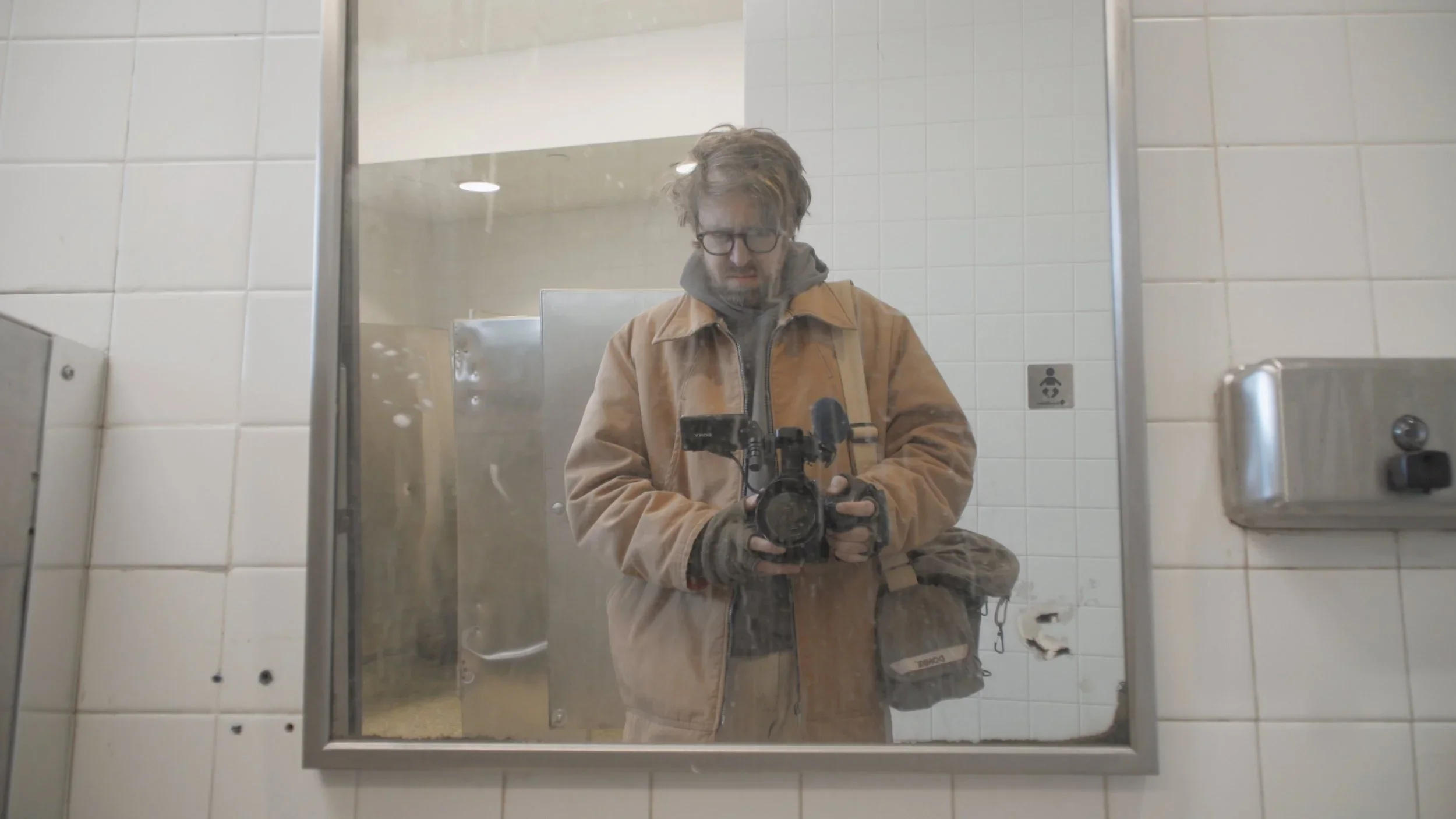
Courtesy of Magnolia Pictures.
When walking into the theater for a film titled “The History of Concrete,” perhaps the last thing you’d expect to find is a room full of young adults buzzing with excitement and persistent giggling. Yet, that’s the exact environment John Wilson cultivates in his new documentary. Despite the title’s bland connotations, “The History of Concrete” couldn’t be further from the boredom associated with watching concrete dry. Rather, the film is infused with all the whimsy of an educational kid’s show, building an enthralling collection of visual gags and absurd characters that add new dimensions to the neglected infrastructure surrounding us.
To anyone that isn’t familiar with Wilson’s 2020-2023 HBO series, “How To with John Wilson,” it’s difficult to describe its anarchic style. Shot entirely by Wilson with a small handheld camera, he turns the most minuscule and unassuming corners of New York City into grand pieces of observational humor. While concrete remains the documentary’s focus, John Wilson thrives in a free-associative structure, delving into the most unexpected territory. As little details interest him, the film is sent spiraling on tangents of increasing absurdity.
While this anarchic narrative system works great for a half-hour episode of television, I was hesitant about how this would translate into a feature-length film.
It seems like John Wilson was in a similar boat, as a significant portion of the film follows Wilson’s difficulties obtaining funding without clear plans for the film. After all, 100 minutes of beige concrete may not be the easiest pitch for production companies looking to grab viewers’ attention.
Wilson finally cements his plans after attending a seminar on how to write a Hallmark movie. Utilizing the formula of these cheap made-for-TV romances, Wilson sets forth in narrativizing trivial topics like an off-color block of cement outside his apartment and small cracks on the sidewalk.
Along the way, Wilson encounters a plethora of people working in the world of concrete. From the eccentric CEO of a gum removal company to construction workers who suspiciously pronounce “cement” like “semen,” Wilson’s interviews are wonderfully entertaining. Profiling an amateur musician playing for bars and a 3100 mile race around the same block in New York, the spread of topics is a jumble of eclectic ideas stitched together by Wilson’s unique talent for finding delightfully poignant conclusions.
Finding himself at a concrete industry convention’s brick-laying competition with an impassioned performance of the national anthem, Wilson builds to broader themes of what concrete communicates about modern American life. With concrete being the second most utilized material on the planet (only behind water), it only makes sense that it would communicate so much about the world around us.
Utilizing concrete to communicate cultural obsessions with permanence and fears of change, this portrait of pavement surprisingly becomes just as substantially a portrait of America’s constant reconstruction in this transitional moment.
Despite my adoration for this free-form style of guerrilla filmmaking, I’d be lying if I said the messiness worked 100 percent of the time. For every crowning achievement of visual comedy Wilson finds in New York, some pieces were noticeably more relevant than others. Within this loose approach, some interesting ideas go nowhere and the flow can at times become disorienting in the countless parallel topics.
Yet, perhaps the highlight of “The History of Concrete” for me came after the credits rolled. My favorite kinds of movies leave me seeing the world a little differently stepping out of the theater, and this is one of the best examples in recent memory. Thanks to John Wilson’s bizarre tendencies, driving back home on the LA freeways through the concrete jungle was more whimsical than ever.
Even when “The History of Concrete” lacks clear focus, its use of observational humor is some of the best I’ve seen in ages. Wilson’s free associative style makes for an unexpected ride, but this is absolutely worth seeking out in a theater near you for anyone ready to brave the concrete path.