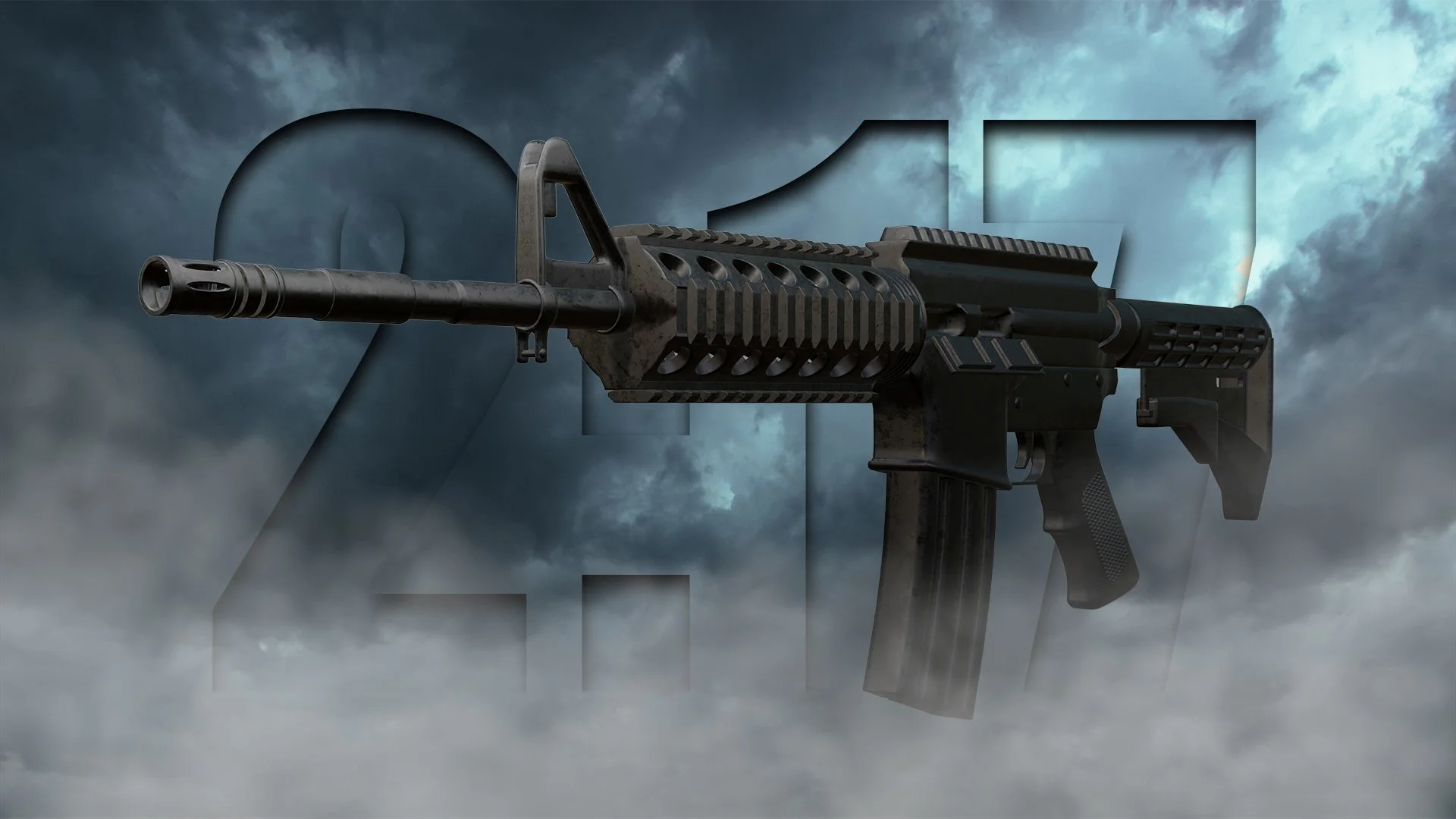
Graphic by Easton Clark, Photography Editor
Spoiler alert! This review contains spoilers for “Weapons”
“Weapons,” the latest horror film directed by Zach Cregger, has received quite a bit of buzz since its release. However, my anticipation and excitement during the build-up before watching the film was a much greater experience than actually watching it.
“Weapons” follows a whole class of children who, one night, all get out of bed, run out of their house, and vanish at exactly 2:17 a.m.. The next day, the teacher, Justine (Julia Garner), finds that only one kid shows up, Alex (Cary Christopher). He supposedly has no idea where his classmates went. The rest of the movie is about the search for the children and where they disappeared to.
Cregger’s comedic roots translated into horror film street cred after his movie “Barbarian,” a movie that is a reflection of every woman's worst travel nightmare. Knowing this, I sat down ready to indulge in a movie I was told had incredible twists and a deep plot.
My first thoughts were positive. The movie begins with a child narrating about the disappearance of these children, a device that was so clever to set the tone of the film. Paired with the camerawork by Larkin Seiple, which was smooth and satisfying, I had high hopes.
The cinematography reflected the fluidity and teamwork in the duo of Cregger and Seiple, and that did not go unnoticed. And of course, it is always a pleasure to see Julia Garner on the big screen, playing the teacher confounded by the mass disappearance and searching for the truth behind it.
However, story-wise, I was waiting for a bang that never happened. Throughout the film, I held on to symbols I was sure would return later. I was holding on to the way the kids were running suspiciously all the same way, and the repeated 2:17 a.m. on every alarm clock, which didn't result in anything later.
Finally, there’s a scene where a rifle appears in the sky during one of the grieving father's (Josh Brolin) dreams. I thought my moment had arrived. A commentary on gun legislation and the threat it poses to children? The discussion of having weapons in the house? I just wanted something… yet again, I got nothing.
Walking out of the film, I was scrolling through every article trying to find the hidden meaning in the film. Around me, people only spoke positively, describing the movie as a "fun watch." I was confused, just a “fun watch?” This made me think about a broader question: do all horror films need to have deeper meanings, or can they just be a story that is fun to tell?
Personally, when I watch horror films, the thrill and sleepless nights that follow are justified by the political and social commentary that the movie alludes to and engages in. Even if it's not something all that deep, I want an explanation. I want to know why the fearsome antagonist did what they did, and why my protagonist dealt with it the way they did. I want to know the social and cultural undercurrents that influenced both.
There is a vulnerable moment where Gladys (Amy Madigan), the antagonist, is shriveled on the floor in her room and asks Alex, the only boy who doesn't go missing, to bring all his classmates to her so she can get better. I kept waiting for a payoff or reveal to explain why. Instead, the kids just end up sitting in the basement.
To me, in such a pivotal scene where Gladys says she indulges in this magic as it helps her feel better, I was assuming we'd get into a deeper twist into what she's really doing. What was the point? I can’t be the only one left wondering about her motives.
When you look at a movie like “Get Out” and its commentary on racism in America, and “Fair Play” highlighting the dark side of a woman's corporate experience, there are twists that shock, but also explain the entire film that has preceded it. It's an uncomfortable couple of hours to sit through, but all the plans have a payoff. The journey you went on is explained to a certain extent, even if it's revealed in the last minute of the movie.
“Weapons” activated my deeper fears towards child abuse, loneliness and school shootings, but the movie forces you to put all the blame on a witch and move on.
After repeatedly stating that “Weapons” has an ambiguous meaning and is left for people to decipher, Cregger did give some clues to certain scenes.
He stated in an interview done by The Hollywood Reporter: "I've been sober for 10 years …The idea that this foreign entity comes into your home, and it changes your parent, and you have to deal with this new behavioral pattern that you don't understand and don't have the equipment to deal with. But I don't care if any of this stuff comes through — the alcoholic metaphor is not important to me."
This quote helped scratch the itch in my brain, but it also highlighted how such a small thread, within a film overloaded with ideas, could resonate so much more if the movie had both planted and paid off themes like that.
The movie spends so much unnecessary time on moments like Justine’s relationship with a local cop (Alden Ehrenreich), the point of view of a drug addict drawn into the mystery (Austin Abrams), and the principal of the school where the class went missing (Benedict Wong). I want to understand the story behind this being a metaphor for alcoholism, but now I'm stuck watching a dad trying to find his son, who is sitting in a creepy old woman's basement. It just honestly felt like two hours of nothing when there was a profoundly personal story Cregger could and should have told.
The movie “Weapons” is for the adrenaline junkie, waiting for the next jump scare, not the audience that searches for the why behind it all.