
Review | ‘Wuthering Whites’ is Fennell’s failure
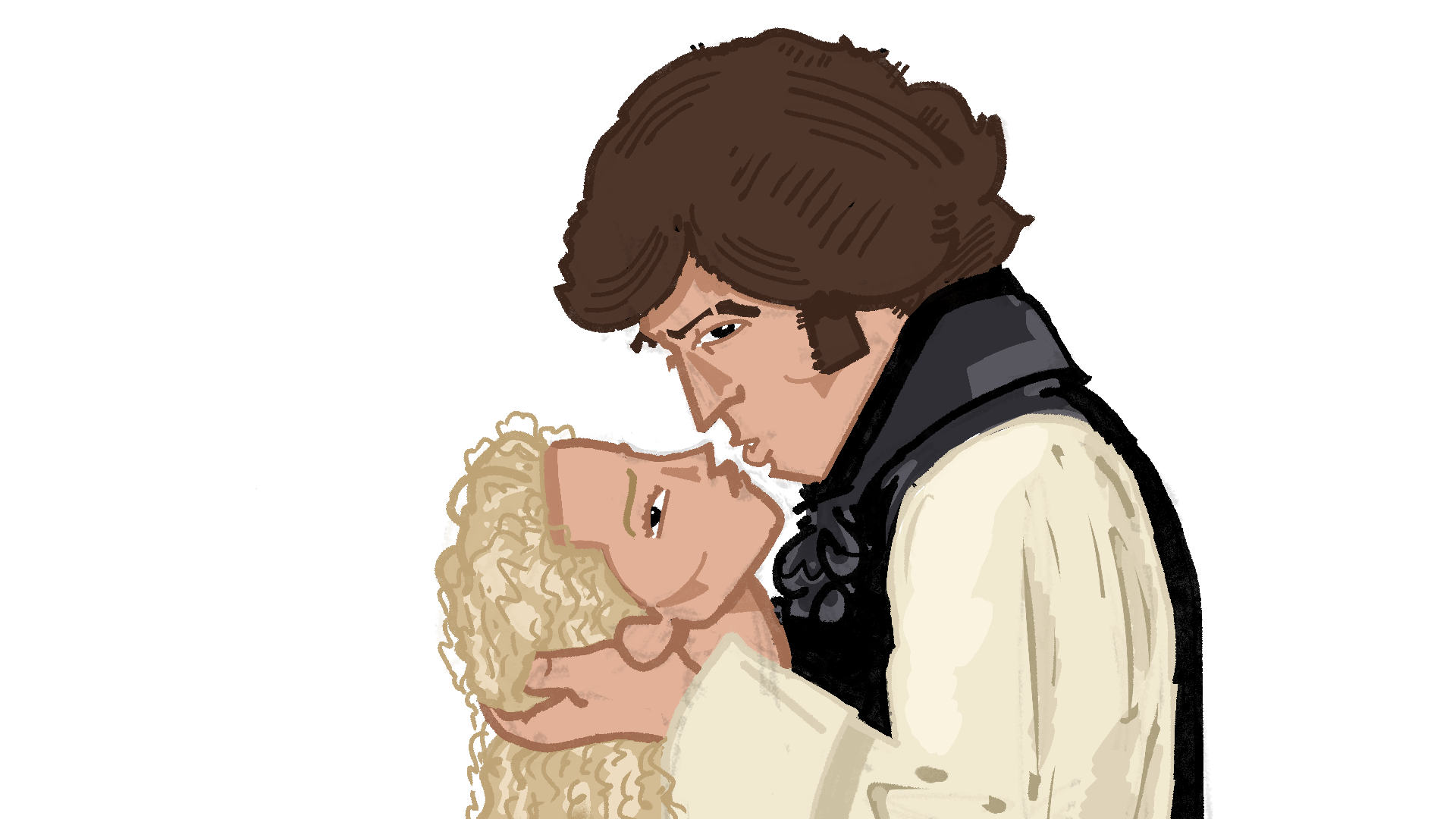
Illustration by Kamaal Samuel, Illustrator
When it comes to remaking intellectual property, especially classic literature, most auteurs would carefully consider what aspects to keep and what aspects to omit. Emerald Fennell, in her rendition of “Wuthering Heights,” consistently and seemingly deliberately made the wrong decisions over and over again.
It seems Fennell was searching for an outlet to create a movie characterized by her signature blend of stylized eroticism and angst, and simply slapped on a classic literature title to ride the novel’s notoriety. While the film can be judged as a standalone piece of cinema and still fall short of expectations set by the trailer, it pales even further in comparison to the original book. It lacks any nuance.
During the film’s press release, Margot Robbie told Variety, “I love working with Emerald (Fennell) because she always prioritizes an emotional experience over a heady idea,” which fairly accurately summarizes the depth that both the actress and the writer invested into her portrayal of Catherine Earnshaw. Catherine happens to fall into familiar territory for a leading lady of a period piece: a spunky girl in brash defiance of the claustrophobic world around her.
However, the same traits that audiences might find charming in the canonically 16-year-old Catherine come off entirely different when played by the 35-year-old Robbie. The protagonist’s lack of emotional maturity is one of the biggest challenges that every character — including herself — has to surmount. It not only undermines any other plot tension, but also makes her incredibly hard to root for.
Catherine’s favorite hobbies seem to be neglecting both love interests and bullying the women around her. This might be excusable if the movie stayed at least somewhat faithful to her literary age, but it’s not as fun of a cinema experience to watch a 35-year-old white woman repeatedly bully her nearly-adolescent sister-in-law and Asian lady-in-waiting… who happened to be the two more interesting characters in the film.
While the sex scenes between the leads fall painfully short of their upsold advertising, one character who was not afraid to commit was Alison Oliver as Catherine’s sister-in-law, Isabella. Between her homoerotic obsession with Catherine and her vengefully weaponized submissive sexual relationship with Catherine’s lover Heathcliff, she exemplified the novel’s original themes of obsession and revenge better than the tame chemistry between the two leads.
Another wonderfully committed performance was Hong Chau as Nelly, the novel’s unreliable narrator turned into an omniscient, calculating villain. Catherine’s behavior towards Nelly justifies her active role in sabotaging Catherine’s relationship with Heathcliff. It’s interesting to watch Nelly pulling the strings, and her role as the primary antagonist only would’ve been strengthened if Catherine’s own immaturity were not a bigger threat than her conniving lady-in-waiting.
The film would have had yet another chance to build tension in other ways if Fennell had been brave enough to address the very socially relevant topic of race. This review would not be complete without mentioning the big white elephant in the room: Jacob Elordi.
Romance movies are best executed when informed by context outside of the relationship, using external issues to create challenges for the couple. Fennell’s negligence in casting a person of color for the role of Heathcliff not only threw away a rare chance for a talented actor of color to shine in a period piece but also missed one of the biggest opportunities to bring nuance to the love story.
The pacing of the film also made it impossible to pass judgement on leads we barely liked, and supporting characters we barely knew. A big reason most of the romantic scenes fell flat was because we hadn’t spent long enough yearning for them. Heathcliff and Catherine’s chemistry was entirely contingent on the brief performance of two child actors suffering under their abusive, drunken father. That exposition doesn’t offer a whole lot of room for romantic pining.
Fennell’s defense of most of these decisions came down to her deliberate attempts to shift away from the source material. This formula worked well with Fennell’s loose adaptation of the novel “Brideshead Revisited,” because of her commitment to letting it evolve into its own story in “Saltburn.”
“Saltburn” enjoyed the liberties of branching out into wild territory and doubling down on its sexual overtness, without being compared to its source of inspiration. But titling the film “Wuthering Heights” held the movie to a certain standard, making it difficult for Fennell to discern between what was necessary to keep from the original work and where she was allowed to appropriately stray from it.
The one realm that Fennell took appropriate creative liberties with was production design. If all else failed, you could rely on Robbie wearing something dazzling enough that it almost distracted you from everything else going wrong in a scene. She stunned in iridescent midnight blue, plunging necklines, a paper-thin wedding veil and glamorous winter furs. While the costumes might not have been entirely possible for the time period, I can suspend my disbelief to allow the wife of a textile magnate to have a killer wedding dress.
Another point of production design that shone was the Linton estate. Its colorful, yet gaping rooms captured the protagonist’s lavish loneliness. A wall designed by Catherine’s husband to look like her skin was one of the only things that actually made me root for her to leave him. It also gave us one of the most visually interesting shots of the film with the leeches covering Catherine on her sickbead creeping around the skin-wall behind her.
Going into this film, the opening scene only set up audiences to be disappointed. The production design and unique tone were at their height when capturing the local town whipped into a frenzy by a hanged man’s erection. The crowd’s lustful audience members and unnerving set design create an atmosphere of hedonic glory and dark humor.
In a brief moment of hope, I assumed that this scene would have anything to do with the movie I was about to watch, which might explain the sexualized trailer and point a lens towards our society’s morbid fascination with such shallow sexual overtness. Unfortunately, the film quickly diverged into its own shallow sexual overtness, and cast away the potential complexities of this town in favor of a six-person cast.
Maybe “Wuthering Heights”would’ve been better received had it simply been a steamy period piece romance with a female lead the director’s age. But let this film be a cautionary tale for other directors: if you want to direct an erotic self-insert with Jacob Elordi, maybe don’t choose a novel about racial struggles as your starting point.

1 for Catherine’s wedding dress and 1 for the skin wall.