
Seeing double? Hollywood’s obsession with the duplicate
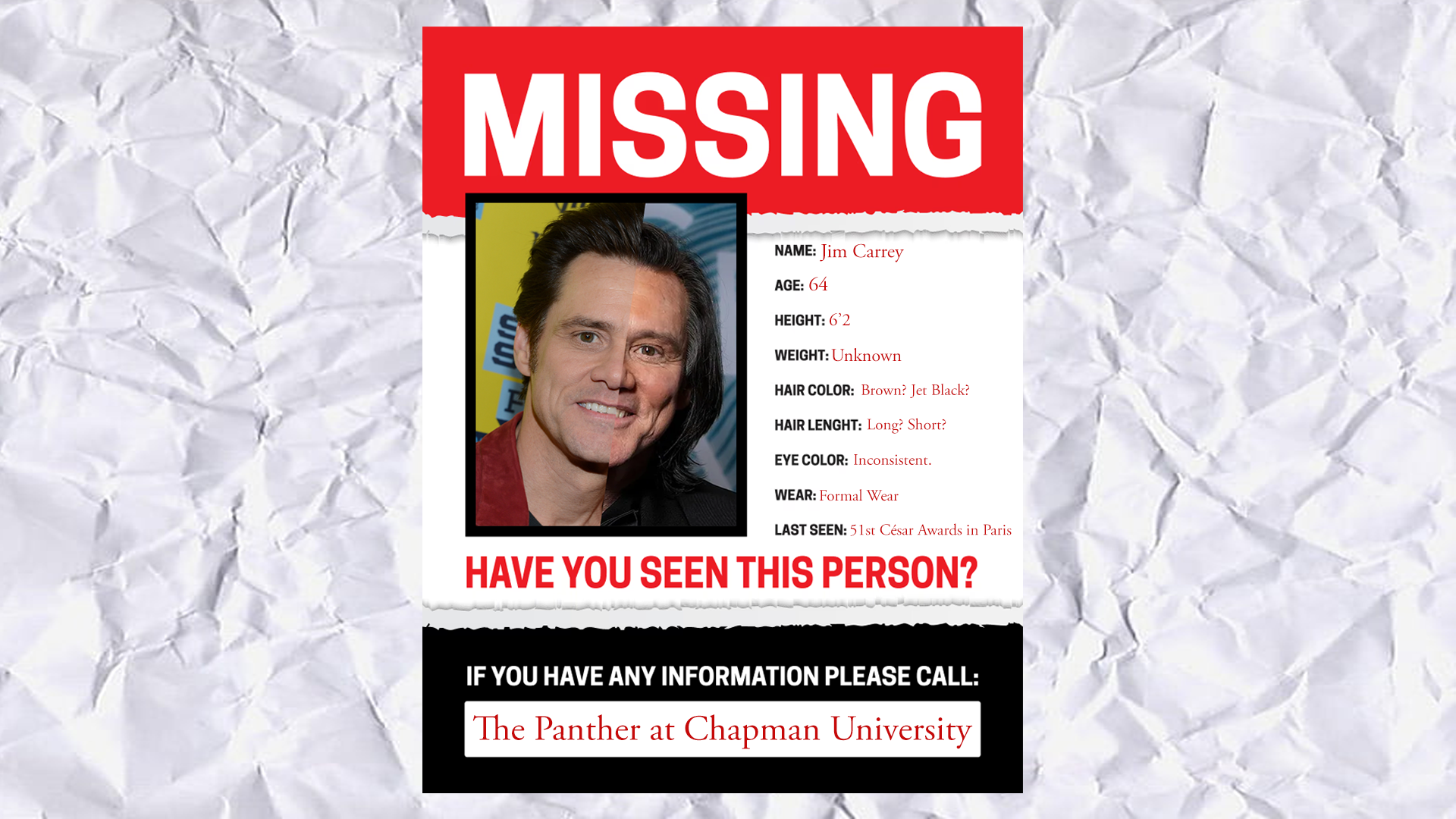
Collage by Matias Pacheco-Ramirez, Staff Photographer
“Ahh hell nah. They cloned Jim Carrey!” is what a user on Instagram said in response to the actor’s recent appearance at the César Awards. “If you think this is really him, I got a bridge in Brooklyn I'd like to sell you about.”
“I'm sorry but I don't really feel like that's him,” said another. “We grew up watching his movies and interviews. This person doesn't seem the same.”
The newest internet conspiracy is that Jim Carrey has been cloned. His publicist and the César Awards had to address the controversy by clarifying that the actor was really at the ceremony.
But the Carrey conspiracies are far from existing in a vacuum. It seems like twins are everywhere you turn in today’s media landscape. From Oscar nominated performances like Michael B. Jordan’s identical twins in “Sinners” to split personas in prestige TV like “Severance” and indie hits like “Twinless,” the notion of the “double” seems to be everywhere.
The mechanisms of the double vary case by case, but the consistency comes in the split of a single identity dispersed through separate bodies or characterizations. While the doppelgänger has a long history in myths and storytelling, the volume of dual characterization over the past year raises the question: Why has this trope become so popular?
“Carving and sculpting the inner lives of two parts of the same person was a wonderful challenge,” Britt Lower said in an interview on her role as Helly R. and Helena Eagan in “Severance.” “Getting to play both sides of the same person has been like playing the inner child and the inner critic in the same person … We all have that. Every character I ever play will have those two sides of themselves in some shape or form.”
“Severance” may be one of the most popular examples of this duality, following a company which splits employee’s personalities between their working selves, “innies,” and their home selves, “outies.” As the series progresses, ethical and moral dilemmas concerning this split take central focus as the “innies” fight for their freedoms, often to the detriment of their “outie” selves.
This presence of a corporate influence on the dual character isn’t exclusive to “Severance.” The splits of Robert Pattinson’s characters in “Mickey 17” and David Corenswet’s dual hero and villain role in “Superman” are a result of evil tech billionaire’s machinations. In a sense, the influence of corporate space over our identities has become an everyday struggle. Projecting a version of our identity on social media and other digital spaces, it’s become easier than ever to meticulously craft how others perceive depictions of ourselves.
Yet, this projection online also leads to a split in our ideas of “self.” Perhaps this is why these stories of dual selves under corporate control have become so prevalent; we are constantly in the process of negotiating our identities within an increasingly corporate and tech-driven world.
Not all of the split personalities make a corporate tie quite so evident. Take Michael B. Jordan’s Oscar-nominated roles as Smoke and Stack. While “Sinners” decisively takes place outside a contemporary corporate context, its confrontation of culturally appropriating Black culture and expression through the vampires’ assimilationist ideals creates a distinct rift between the twins in the film’s third act.
“I worked with twin consultants and identical twins. I got a chance to really pick their brains and understand the nuance of what it’s like to be an identical twin,” said Jordan in an interview. “I did chakra work (and) spiritual work, as far as where Smoke and Stack held their childhood trauma, how that informed their posture and their stance, their cadence of their speech … The connection between identical twins is something that’s really hard to explain.”
After Stack becomes a vampire, the film’s depiction of their twinhood essentially represents a compartmentalization of the unity once shared by Smoke and Stack. Utilizing these themes to confront racially prejudiced systems of appropriation and trauma, the use of twins becomes a vehicle to explore contemporary issues concerning identity. While Smoke and Stack can be read through their literal roles as twins, the connection described by Jordan paints a deeper exploration of the psyche in the face of prejudice
Some films that can be lumped into this “split personality” genre cast different actors for the same part in cases like “The Substance.” With a drug turning Demi Moore into Margaret Qualley, the film reminds viewers at every turn, “you are one.”
While the older Elisabeth and younger Sue share the same consciousness, their varying experiences based on their appearances drive a rift in their characterization. With messaging aiming to critique cosmetic surgeries, the film — once again — uses the double as an allegory for a deeply contemporary issue.
In this sense, the double can be seen as something of an extension from the multiverse obsession from the late-2010s and early-2020s. With films like “Everything Everywhere All at Once” and “Spider-Man: Into the Spider-Verse” becoming cultural staples, these films struggle with the ideas of a split self over multiple universes. Especially in the case of “Everything Everywhere All at Once,” struggles with how each decision we make leaves an impact on our identity drives the film’s anxious approach to Michelle Yeoh’s multitude of identities.
Changes in appearances and personalities has become a clear source of fear and anxiety within contemporary society. The Carrey controversies have only underscored this, with a celebrity’s shift in personality and appearance sending the internet into a rabid frenzy of conspiracies. With drag queen Alexis Stone even claiming to have been Jim Carrey, there’s a pivotal uncertainty surrounding identity prevailing at nearly every level of modern life.
In all likelihood, the real Jim Carrey attended the César Awards and simply underwent cosmetic surgery as a personal preference (after all, Carrey has been notably private in recent years). Yet, these theories in combination with a spread of media confronting the double reveals how cultural understandings of identity are changing. In a country under the control of a regime imparting authoritative command over expressions of gender, race, sexuality and only accentuating the wealth gap, it seems as though these pieces of our identities are at the constant forefront of the cultural imagination.
While media in the 2010s made efforts — albeit imperfect — for forms of diverse inclusion, a pushback to that in the 2020s has made identity something that’s up for debate. Portraying a performed version of ourselves to online spaces and negotiating our identities within external politics and social structures, it makes sense to feel a distinct split in our understanding of self.