

Illustration by Sami Seyedhosseini, Photo Editor.
Have you ever wondered what it would feel like to descend through the nine circles of hell? Picture a tenth circle below that: a pit of despair and suffering beyond any constructs of meaning or understanding. Without hyperbole, that’s the closest I can come to describing my experiences watching four straight hours of Roku TV’s new channel featuring entirely AI generated content.
Last semester, I wrote a story on “AI Fruit Love Island,” a bafflingly popular TikTok series following the serialized structure of “Love Island” with horrifically sexualized AI fruit. At the time, I considered this to be a brief fad, but I couldn’t have been more wrong.
Since then, this kind of media has only become more prevalent on our social media feeds, blending seamlessly with human creations in a confusing and overstimulating mess. While Roku’s partnership with Fairground AI for their 24/7 AI channel would be shocking to me only a few years ago, I could only muster a defeated sigh after its announcement this summer.
Despite being a significant development in the practices of our media ecosystem, not much is known about what’s actually shown on Roku’s AI channel, officially titled “Fairground AI Creator TV.” Bemused by who would bother watching this, or perhaps slightly curious about what I would find, I embarked on a treacherous four-hour binge. Below is an hour-by-hour recount of what happened.
11:00 AM
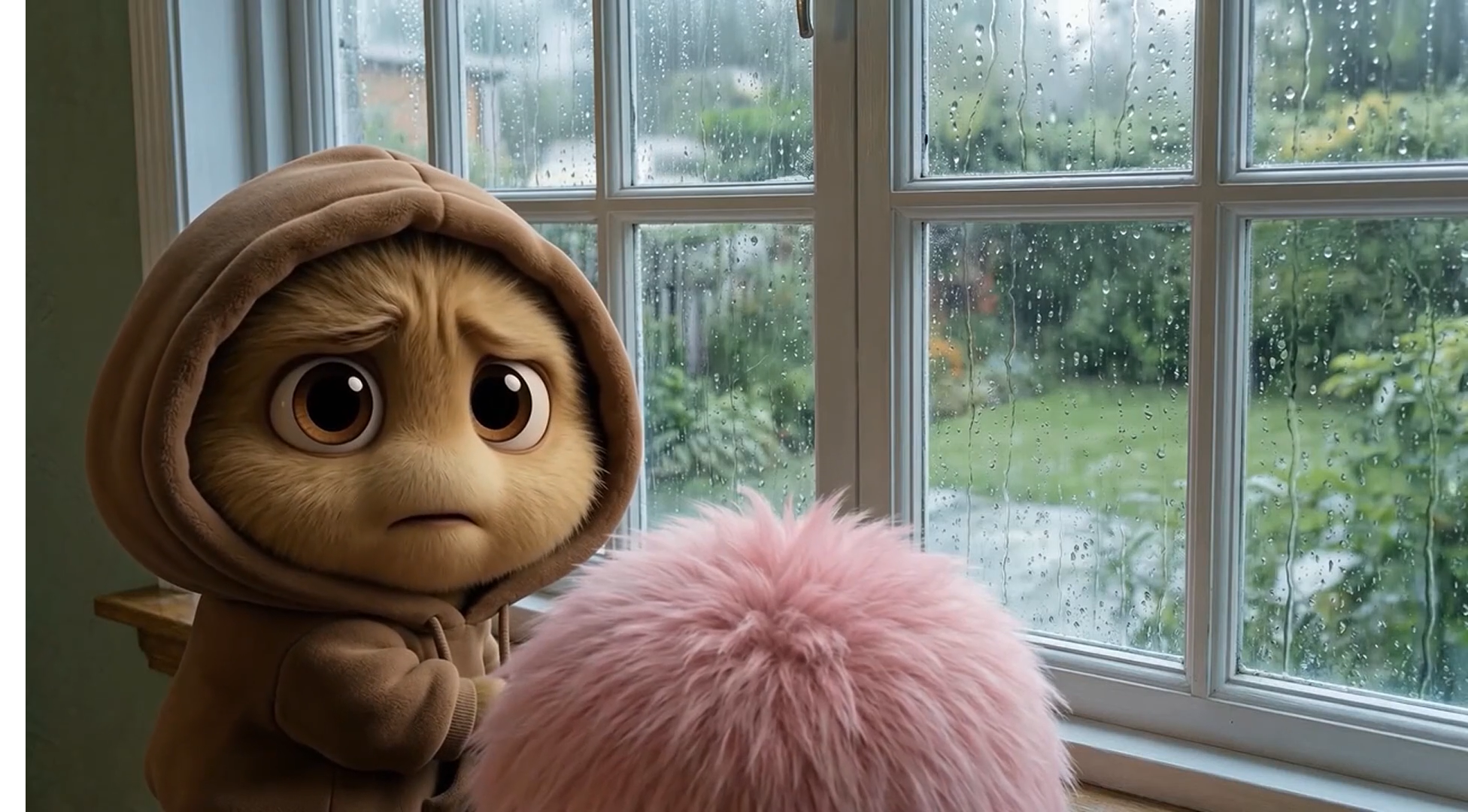
Photo courtesy of Fairground AI Creator TV.
Upon pressing play, my screen lit up with an episode of “The Monster Friends,” a series following fluffy big-eyed creatures going on various adventures. This episode put the monsters on a journey to stop a pattern of worsening weather disasters. While the abrasively monotone voices and stiff movements I had come to expect from AI were ever-present, there was also something oddly comforting about the familiarity in this. Feeling not too distant from something I would watch on Disney Channel or Cartoon Network as a kid, I authentically tried to understand these characters and their relationships.
Before I could find my footing though, Fairground AI’s logo popped on screen for an ad break, something I would quickly learn happens every 5-10 minutes. These ads were mainly for other channels offered by Roku with clips that felt similar to what you might find on broadcast TV. Already, the cracks in the system became apparent when Roku played the same 30-second ad spot for PBS Genealogy four times in a row. As aggressively cute as “The Monster Friends” tried to be, I was reminded that almost no human presence was behind any of what I was watching.
After the ad break, “The Monster Friends” returned, much to my dismay. While they attempted to force an emotional response by putting the monsters in dangerous situations, I only felt increasingly cold and distant. After a dry AI voice read the explicit message of the episode — “when someone needs help, that matters more than being scared” — the monsters fixed the weather pattern and the screen briefly faded to black.
Courtesy of Fairground AI Creator TV.
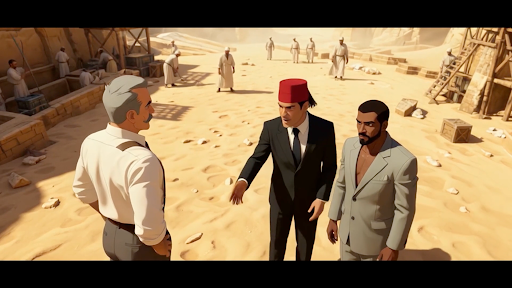
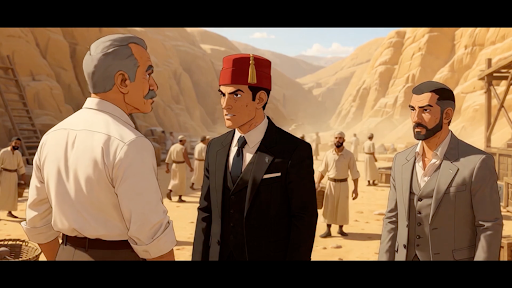
Next up was a short called “Howard Carter: The Sand and the Seal.” Following an “Indiana Jones”-esque archeological site, there was even less coherency as lifeless British voices traded bland dialogue. Whereas “The Monster Friends” at least had consistent characters and animation style, “Howard Carter” threw all this out the window.
Taking screenshots as I marveled at the absurdity on screen, I accidentally caught this blink and you’ll miss it sequence in which a character (the man in the grey suit) swaps clothes and races in between 3D and more 2D generated shots. This was just the first time I would notice race as a problematic aspect of this AI content.
“Howard Carter” also made another element of my torture for the coming hours evident: the music. As everything was AI generated, the music in these shorts (specifically this one) was droning and repetitive. About 90% of these shorts featured the same style of choral music that quickly became a grating piece of an already tumultuous experience.
Courtesy of Fairground AI Creator TV.
Checking my phone, I realized that this wasn’t even 30 minutes into my challenge. With each episode or short generally being 15-20 minutes, there’s never enough time to fully process anything before Fairground AI Creator TV pushes you towards something new.
“Howard Carter” came and went and another commercial break arrived. Hoping for human ads, I was instead met with an ad for more AI content. An AI narrator touted these shorts as “proof the next generation of storytellers isn’t coming, it’s already here… come see what happens when imagination has no ceiling.” As the overstimulating ad faded, I became intrigued. What could possibly come from a medium with “no ceiling?”
Courtesy of Fairground AI Creator TV.
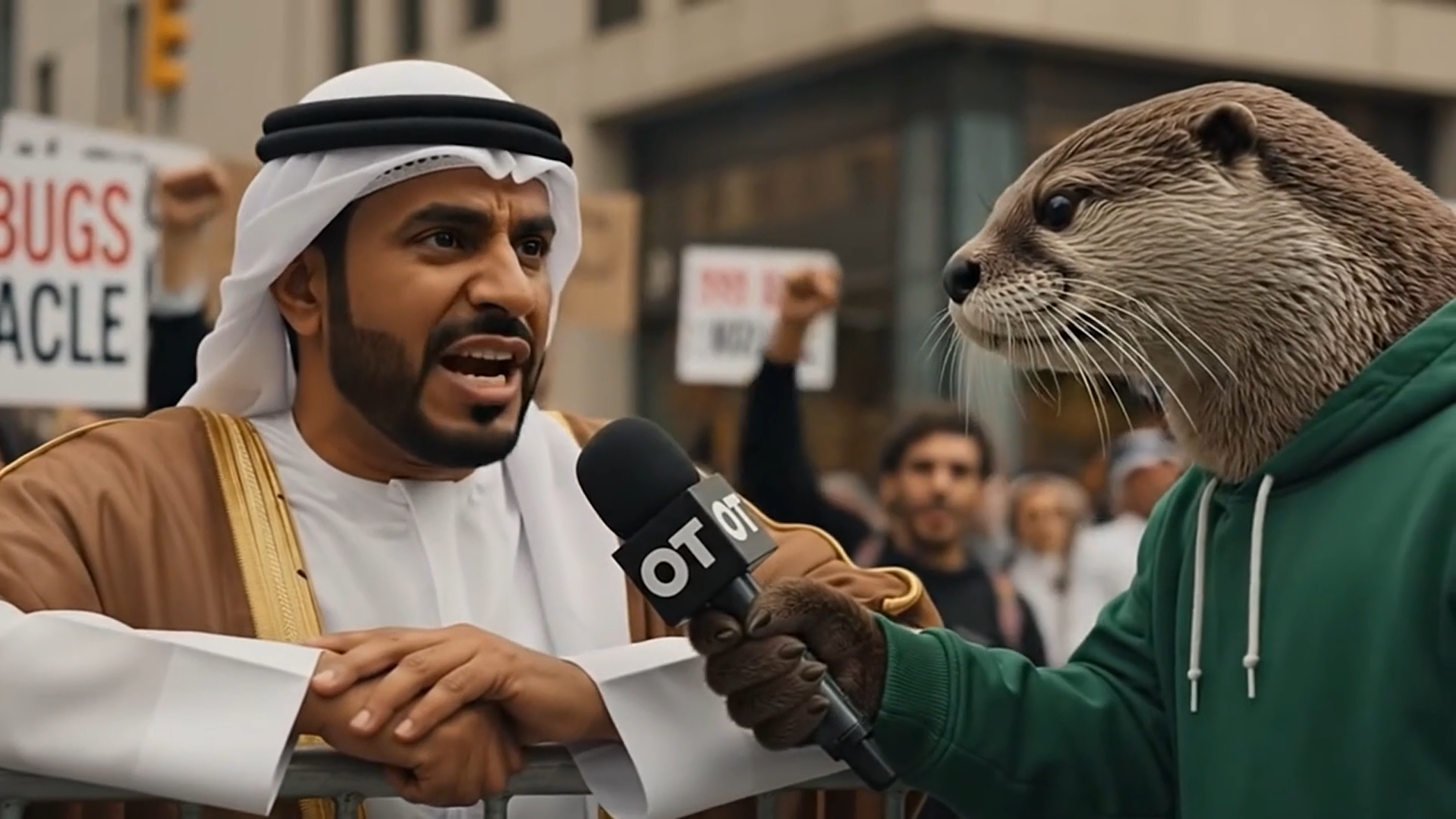
Apparently, a late night talk show with an AI otter who jokes about anti-AI protestors. While I thought the preceding “shows” were bewildering, this easily blew the others out of the water. With several uncomfortable racial stereotypes, I was shocked at how far this went with its “edgy” conservative humor. As much as I hate to admit it, it was working. I was shocked, confused and uncomfortable — and yet I kept watching.
The next few shorts flew by in a blur. A fake Netflix-style documentary about cats accusing each other of pooping outside of the litter box, a remarkably misogynistic short called “Bob the Blow Up Guy” and just like that, I’d realized it had only been an hour.
12:00 PM
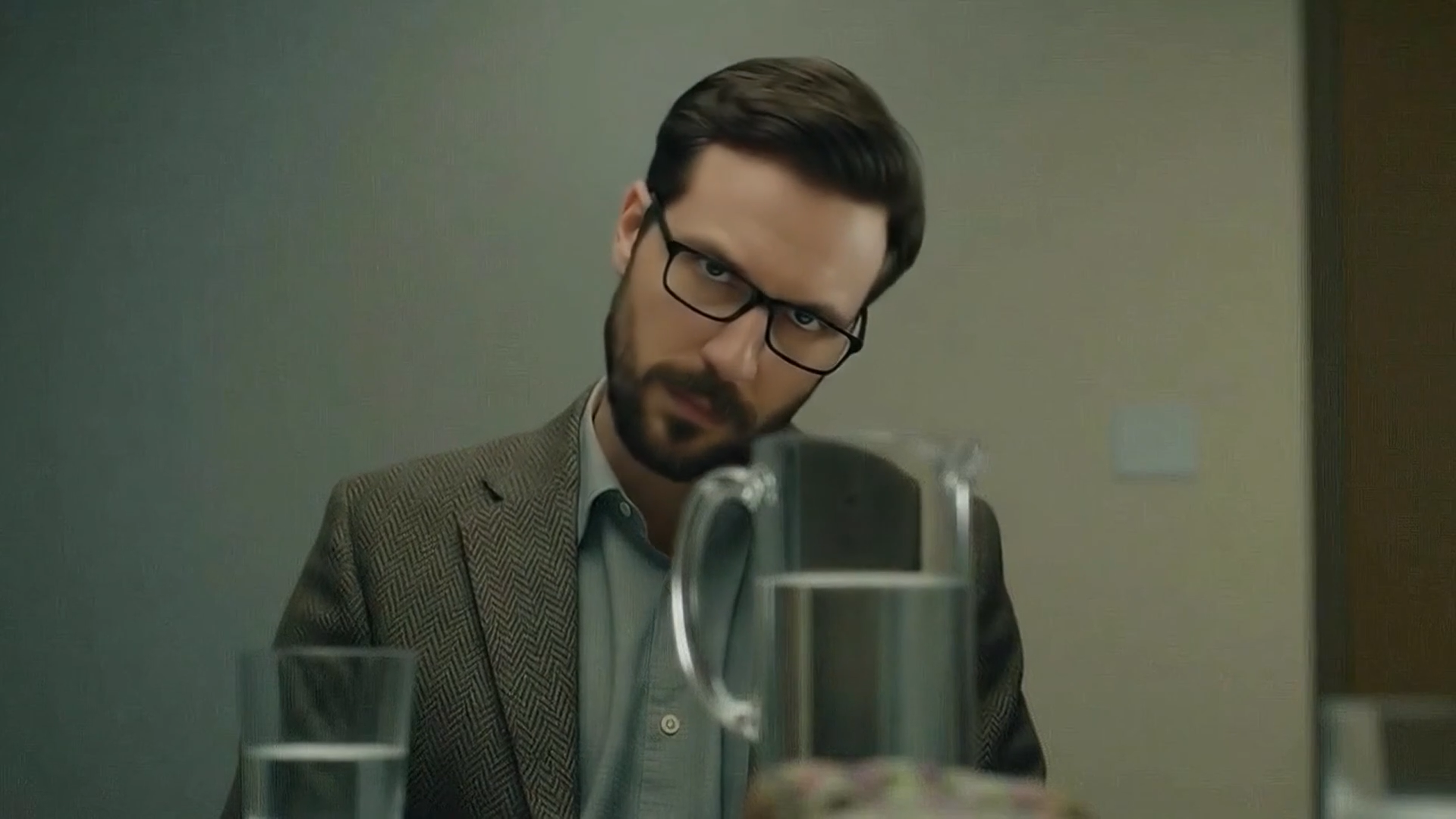
One hour in, the daunting nature of this was becoming increasingly evident. With no discernable pattern in the content, less and less was making sense. The first short of the hour was called “Time Travel Welcome Party,” and while it was mostly just more unremarkable nonsense, every time it cut back to the main character, he was drinking a glass of water.
Courtesy of Fairground AI Creator TV.
This slap in the face made me consider AI’s problematic use of clean water, made worse by the following sitcom about different generations of anthropomorphic batteries. I couldn’t shake the daunting reminders of the harm this content is doing to the planet. While pointing at the shockingly uncanny nature of these shorts can be entertaining, I became a cog in the machine. To the AI behind the screen, I was simply a number, still watching, still engaged, still reacting.
Sometime within the hour — it’s hard to tell, I was losing track of time — a short called “The Capsule” surprised me when it ended with a stylized end credits sequence with a “story by” credit to Duane Than, the person behind the prompts. Did these people really deserve such glorified credit for typing a prompt into a machine?
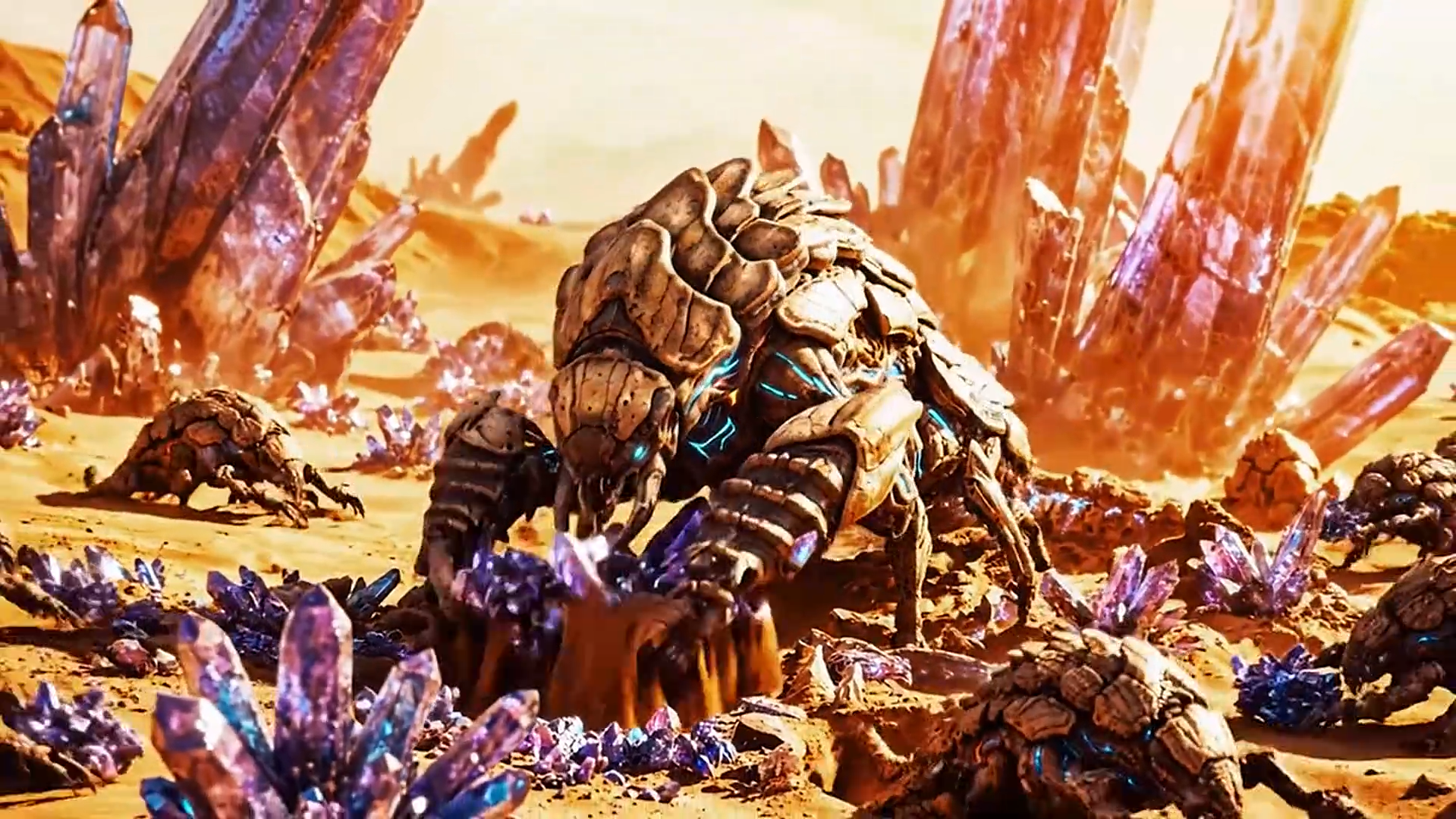
Another short called “Human Behavior” played, following a cyborg woman being ostracized by society for her mechanical parts. When faced with a prompt on her computer reading “Human Behavior; approve or deny” she flees. In a way, the emphasis on “creators” behind the channel’s name Fairground AI Creator TV made this feel like a heavy-handed sentiment from the prompt writer, feeling ostracized for their use of AI.
Courtesy of Fairground AI Creator TV.
At this point, I started to do other things in the background. In the midst of midterms, I read an article for class about the anthropology of queer fan fiction — arguably as deeply human of an antithesis to the AI content as I could find. Every time I looked up at the screen, I began to feel more distant. As a fake nature documentary about an AI-generated planet played in the background, I was losing the understanding of narrative coherence I initially took for granted in “Monster Friends.”
1:00 PM
Another hour in, and I somehow wasn’t even at the worst of things. After yet another AI sci-fi story about a stranded astronaut played — this time entirely in Mandarin without subtitles — a series started called “True Crime Stories of the World’s Dumbest Criminals.” This was the absurd kind of show I would find while channel surfing on cable TV at 5 a.m. However, this is also the AI short that I found to be the most shocking.
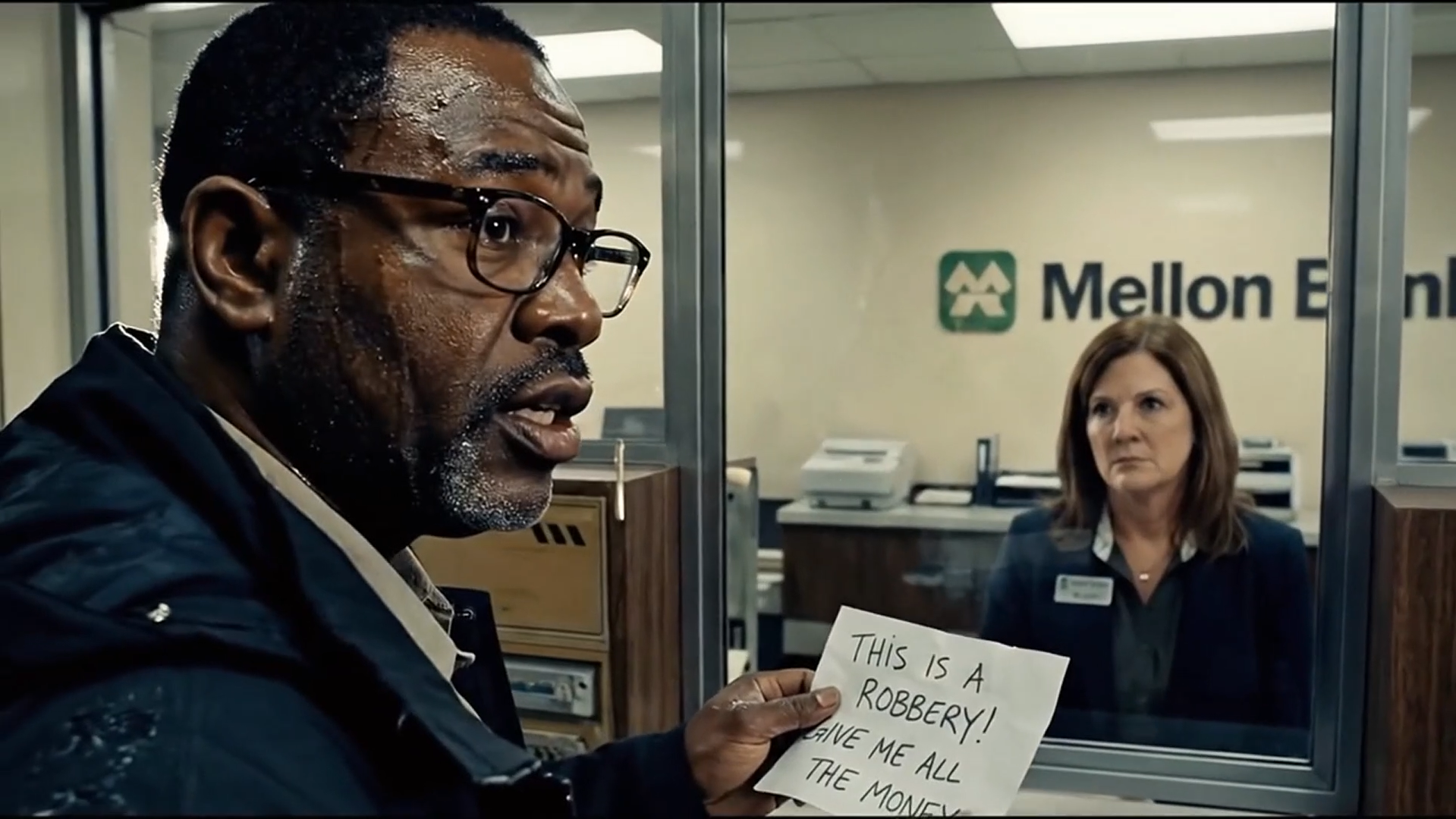
Following the true story of two men who covered themselves in lemon juice, thinking it would make them invisible to security cameras, and robbing a bank, it felt too ridiculous to be true. Naturally, I did my research, finding the story of McCarthur Wheeler robbing a bank in Pittsburgh. Yet, what caught my attention the most was the differences between the real man and the AI generated character.
AI-generated McCarthur Wheeler, courtesy of Fairground AI Creator TV.

The real McCarthur Wheeler, courtesy of Nine News.
While the real-life McCarthur Wheeler was a caucasian man, some piece along the line of the AI-generative process made him Black. It’s unclear whether this was the intention of the prompt writer or AI’s racist biases based on the troves of dated information it mushes together to produce this “slop” content. Regardless, this short, and countless AI-generated content of similar ilk, are promoting dangerous caricatures and stereotypes built on blatant falsehoods.
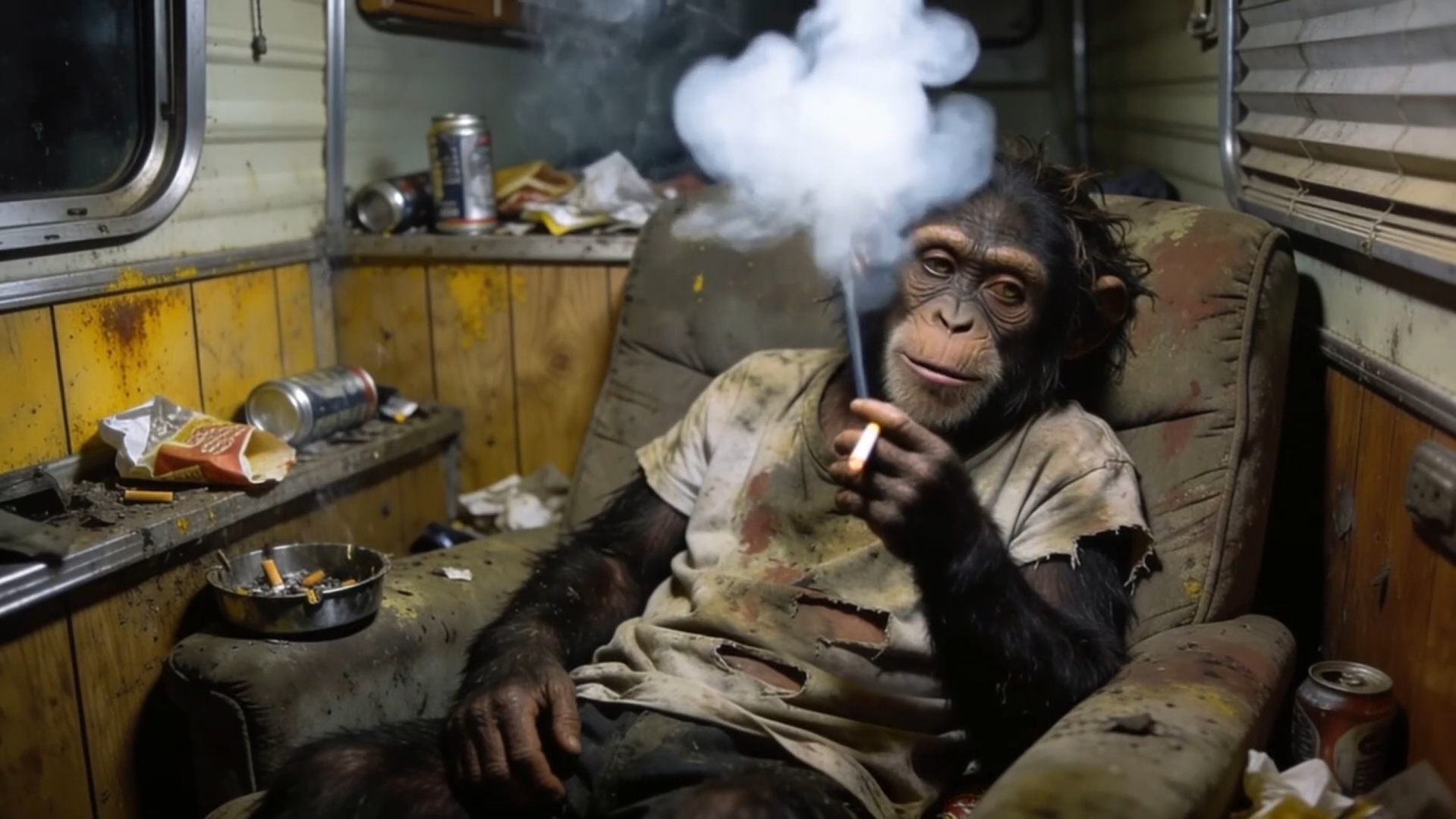
As I tried to process this, more shorts flashed by. I wondered if this was just the AI software toying with me, knowing these choices would provoke a stronger reaction out of me. When a short about chain smoking monkeys played, I stopped caring. Why should I respond in such a visceral way to an algorithm that was feeding on my reactions?
Courtesy of Fairground AI Creator TV.
2:00 PM
I took a breather and muted the TV, relieved by the brief tranquil silence. I made some quick lunch, reflecting on the three hours I had already endured, before clocking back in and pressing play where I found things were more abstract than ever.
A story about virtual wombs and digital humans, a “Star Trek” rip-off replacing the colorful optimism for grey and desolate drama, a short about a Victorian-era woman arguing with a “woke” feminist who gives essentially a word-for-word replication of America Ferrera’s speech from “Barbie”: any of these would individually be enough for me to be shocked and write an angry comment in response, but I was failing to see any point in that anymore.
Courtesy of Fairground AI Creator TV.
Without any grip on reality left, I sat on my sofa, numb, praying that time would pass faster and the hour would end. Then, without warning, the “Monster Friends” episode I had started with played again. I checked my TV to make sure this wasn’t a mistake, but before I knew it, “Howard Carter” repeated, and so on. It appeared that the Fairground AI Creator TV was on a roughly four-hour loop, making me question the appeal of this supposedly randomized content to begin with.
The notion that someone (or something) had curated these four hours of mind-numbing torture made things even more confusing. Nevertheless, my timer at long-last chimed, and with a gleeful sigh, I turned off the TV. My misery was over.
3:00 PM
At the top of the hour, I stepped outside and (literally) touched grass. Relieved as I was, I couldn’t help but return to the shocking images I’d seen. In case the above didn’t make things clear enough: no one is meant to watch four or more hours of Roku TV’s 24/7 AI channel.
Like AI-generated content on any social media platform, this is content that only exists for the sake of engagement. The angrier AI makes us, the more discourse this content provokes, the more it is fed. As funny or shocking or frustrating as this content may be, it’s crucial that we all learn to regulate our relationship with AI-generated media and know when it’s time to turn it off.