
Before the camera rolls
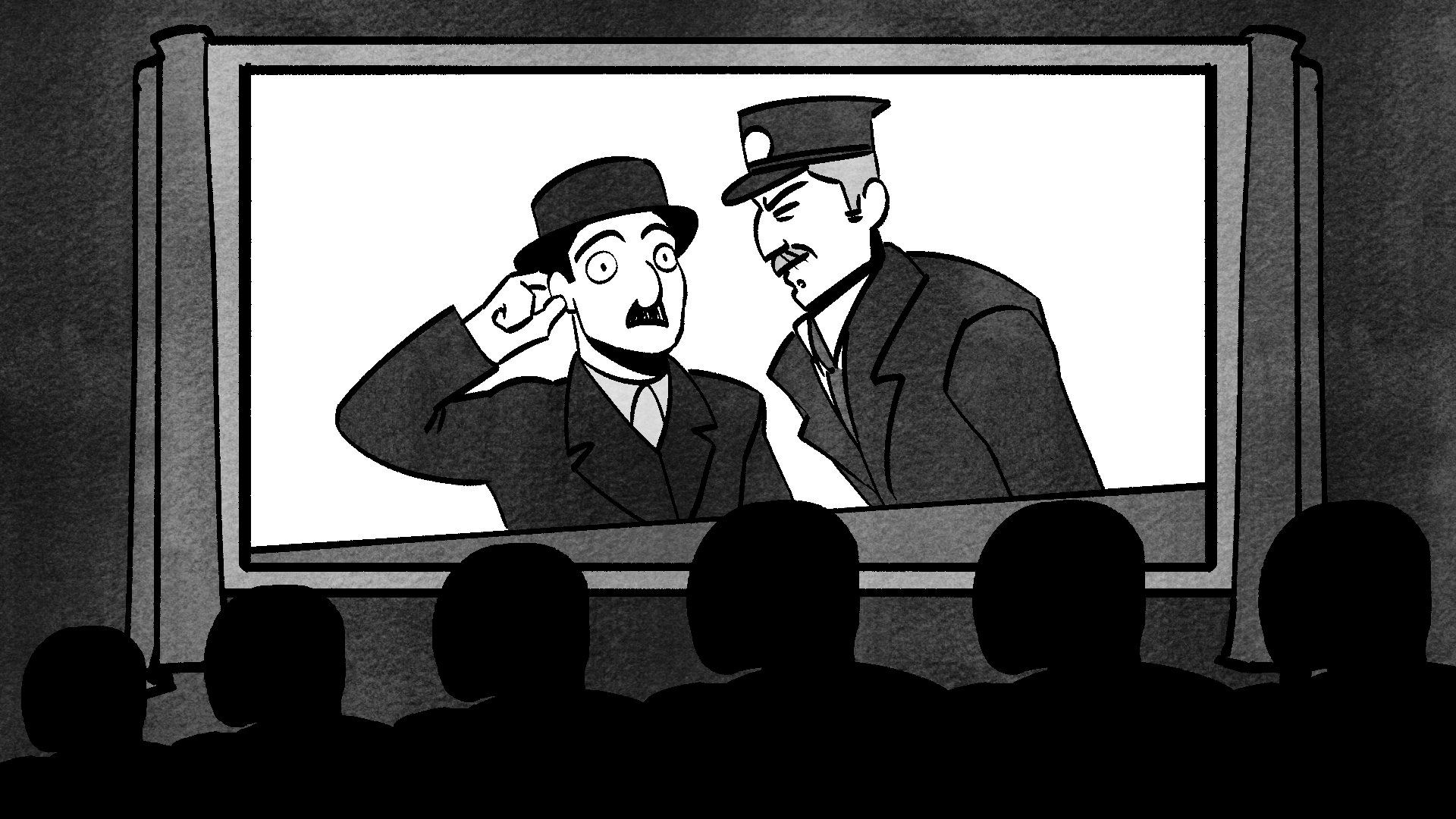
Illustration by Lexi Forman, cartoonist.
When students first enter the mini-industry of film school, there is a common stereotype among film students today: they don’t watch enough movies, especially the classics. In an industry built on over a century of filmmaking and driven by year-to-year advances, understanding the movies that came before can give students a foundation for creating the next cinematic masterpiece.
Film history courses are designed to expose students to the old, but impactful films they might never choose to watch on their own, from silent cinema to cornerstones of Hollywood’s Golden Age. Although that exposure can broaden students' understanding of film across eras, the way film history is taught can also shape whether they leave the classroom inspired by the past or turn the viewings into a chore.
For the film students at Dodge taking the required “History of Film” courses, the question may not simply be if film students are watching old movies, but whether studying them is helping them become better filmmakers or memorization machines for the next test.
“I think the class makes you a better filmmaker from an educational perspective; in any field, you need to know about what came before and how we got to where we are, and the more educated you are on something, and the more you know about it, the more you can take those ideas and form them into your own,” sophomore writing for film and television major Oliver Pardo said. “But on that note, I don’t think dwelling on the small incremental advances in film from silent film to silent film is the most helpful.”
This reflects a broader distinction students think about when learning film history and simply memorizing it. While understanding how film has evolved can provide important information and context to take into their own work, some students benefit from the lessons connecting developments to the filmmaking techniques used today.
“I definitely think that discussing how old techniques could be used today is the most valuable part of watching old films,” sophomore film and television production major Sam Rosenthal said. “Memorizing the facts and the names of a bunch of people and the dates don't really help us, besides being able to answer test questions.”
To study the history of film, students learn about a plethora of subjects, not just the film itself. Film history has an emphasis on history; what technology was available, what social and political movements were going on and who the filmmakers were in relation to their films.
“I try to teach students that they are all interrelated — filmmaking techniques and movements don't emerge from vacuums, they're dependent on the available technology and infrastructure as well as the overall historical, social and economic circumstances, the desire and ability of individuals to push technological or artistic boundaries and the fact that every filmmaker is affected by their unconscious biases,” film history professor Courtney White said.
The interconnectedness raises a natural question for students: Is the goal to focus on the mastering of techniques for present-day use, or to understand the historical situations and past that shaped them?
“From a purely filmmaking perspective, learning about how the techniques could be used today or still work for audiences would be the most helpful,” Pardo said. “I do think however, that historical context is very important and from an intellectual standpoint, it will help you to be a better filmmaker as you think on why things are made and how the final product reflects that.”
This balance can affect students differently; just like in films, meaning is subjective, takeaways and what students grab on to is different as well.
“I think I would be more interested in it if it was directly compared to contemporary films that use similar techniques,” Rosenthal said. “But I think the curriculum needs to focus more on the why instead of the dates and specific facts.”
With film history being so complex and particular to the times, it is a learning experience for students to see what was accepted in the past that would be completely out of the realm now. It wasn’t just pick up the camera and shoot — filmmakers had different jobs and responsibilities to make production a possibility.
“I’m not sure how [it] changed how I think of film, but I do think that learning about the history of film and how it began is important,” Pardo said. “It has made me think more about why modern movies work and what they need, storywise, in order to be engaging and successful for an audience.”
This education on history starts with film, but it doesn’t stop there. Filmmakers can benefit from studying any artistic form for inspiration of the craft.
“The more you've seen, the more you have rattling around in your brain. That's only ever a good thing,” White said. “I will also put in a plug for reading as much as you can, going to museums, going to the theater and generally being interested in the world outside the movies.”
When studying such a complex and intricate art form, sometimes it takes going back into the past to productively consider the future. By studying the history of filmmaking, film students at Chapman are discovering not only who they are as filmmakers, but the influences from the past they never realized helped teach them along the way.