
How ‘Hotel Rwanda’ sparked Don Cheadle’s activism
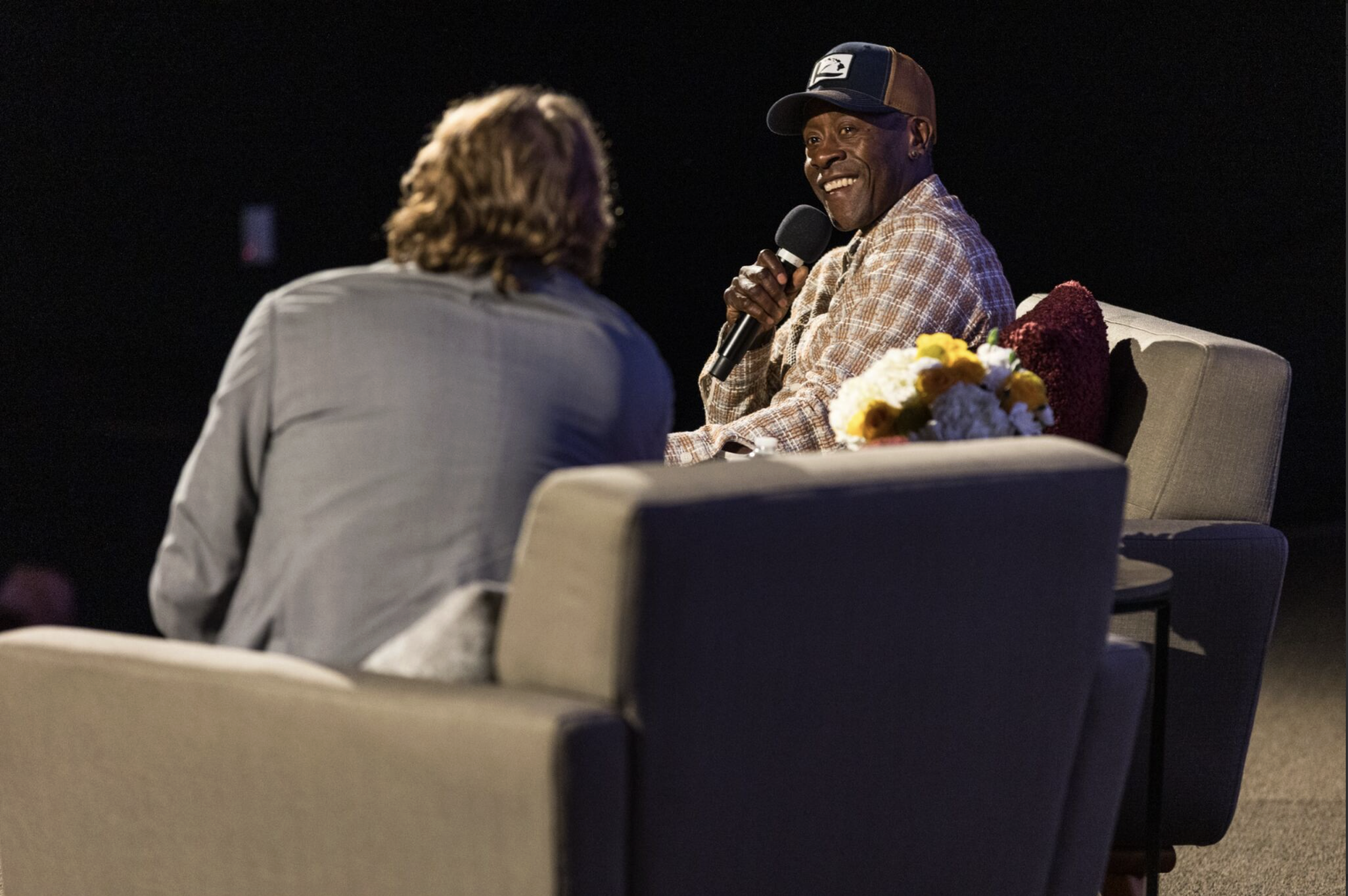
Photo courtesy of Matt Harbicht
“If you guys can have a low expectation for excellence and a high tolerance for crap, you're going to be great.”
Those were Don Cheadle’s words during his masterclass at the Dodge College of Film and Media Arts on Oct. 27. His expectations for excellence led Cheadle to the Oscar-nominated “Hotel Rwanda,” as he told the audience when he visited.
The film tells the true story of Paul Rusesabagina (played by Cheadle), a hotel manager who helped save the lives of thousands of refugees by providing shelter in the midst of the Rwandan genocide, and it opened up Cheadle’s eyes to the substantive change he could enact through his film acting career.
The film was shown to politicians and members of Congress, and as a result, Cheadle was invited to be a part of a congressional delegation to Sudan, where civil war had broken out in Darfur. Cheadle “snuck into” Darfur along with Rusesabagina and an activist, against the recommendations of the U.S government, which opened his eyes to the scope of the conflict.
“Once you ask the world, ‘what can I do about something,’ and you do it honestly, with an open heart, the world will answer. I got pulled in the stream of activism that had already been happening before I got there,” Cheadle said. “I was able to amplify the voices, and thankfully, was able to get a lot of attention.”
Cheadle’s passionate activism led to him testifying before the Senate, and eventually in a meeting with then-Secretary of State Condoleezza Rice, who attempted to downplay the presidential administration’s power to work towards ending the conflict and hassled Cheadle for his advocacy.
“It's not George Bush, that's the problem. It's the United Nations that's the problem, which to me was like saying ‘it's not me, it's my arm,’ but I listened … I wanted to leave,” Cheadle said. “(Rice basically said), ‘You and George Clooney and all you activists out there (saying) that George Bush should do more to stop the genocide in Darfur, George Bush can't do more about that. You guys need to shut up.’”
However, Cheadle was undaunted by this encounter. He would later write a book about his experience in Darfur called “Not On Our Watch,” with a portion of the proceeds going to The Enough Project, a non-profit committed to ending genocide.
“I think when actors have the ability to use (their voice) for something other than getting a good seat in a restaurant or cutting a line, it's good to use it. I don't know that I felt obligated to do it … I don't think everybody's obligated to do it,” Cheadle said. “Any sort of effort that you feel like you would want to be involved in … you guys have power. You have power in organizing, you have power in community.”
A running thread through Cheadle’s remarks was the value in doing your homework, whether it’s script analysis for actors or acting lessons for directors, he emphasized the importance of leveling up your game every way you can throughout the conversation.
“You should be reading the classics, watching classic movies. You should be studying Stanley Kubrick if you’re going to try to do this because it just makes you undeniable in your game, (it) doesn't mean you're going to work, but if you get that shot, you're going to be head and shoulders above people who aren't doing that,” Cheadle said.
This masterclass had a slightly different, more casual tone as Cheadle was interviewed by his longtime agent, Jeremy Barber. Their interaction had a relaxed flow that illustrated their years of working together. Additionally, Barber offered bits of his own wisdom from his years in the industry and working with creatives to complement Cheadle’s remarks.
The night ended on a moving note when the last audience question turned out to be from famed teacher Erin Gruwell, who came to show her support for Cheadle’s activism. Along with several members of the Freedom Writers Foundation, Gruwell informed Cheadle of her close personal relationship to the Rusesabagina family, the central figures in “Hotel Rwanda,” and commended Cheadle for his role in helping Paul Rusesabagina get released, when he was kidnapped and unlawfully tried by the Rwandan government in 2020.
“And we just want to let everybody know in this audience that it was a really difficult two years when Paul was captured, and each and every one of us were activists trying to release him. And once you and George Clooney helped our cause, it made things easier with the State Department and finally (secured) his release,” Gruwell said. “So we just want to say thank you for making a film that matters, participating in the release of Paul and teaching young people how important it is to be an activist … Every time the Rusesabaginas come to California, they stay at my house, and so we just thank you for being a part of our journey.”
