
How Zoë Rose Bryant went from Letterboxd to chart-topping author
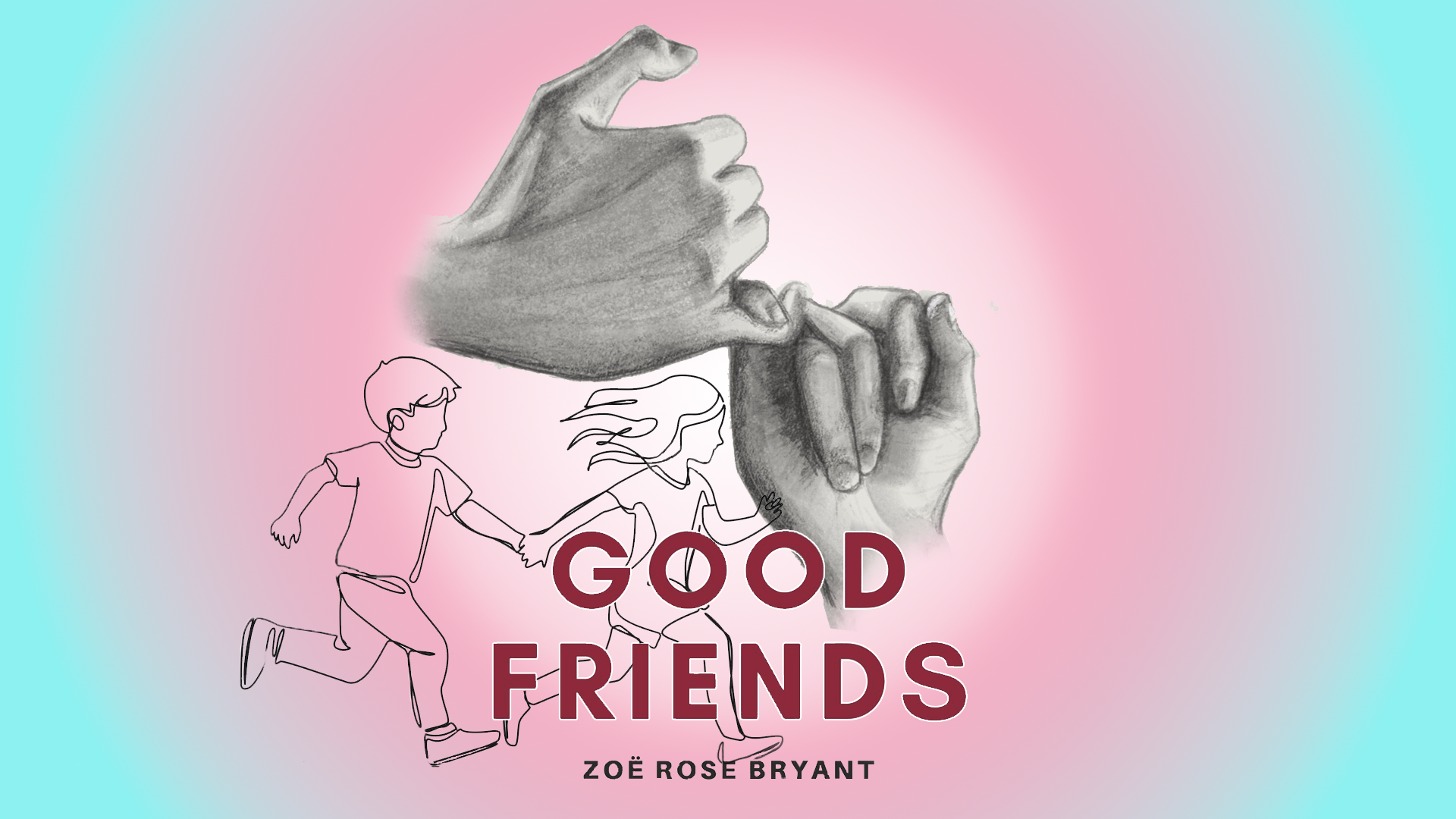
Collage by Matias Pacheco-Ramirez, Photographer
“It felt like (a) child to me. It's scary to throw it to the wolves and see what's going to happen next,” said Zoë Rose Bryant on her debut novel, “Good Friends.” “There's such an internal insecurity as a writer, and I battled that so much over the course of writing this book. But this has given me a lot more confidence to remember to stop doubting myself and trust my instincts.”
For many who recognize her name, Bryant may be synonymous with her Letterboxd one-liners or her frequent Twitter posts. As an active figure in our digital age of online film discourse, Bryant’s rising popularity in these corners of the internet has coincided with her time becoming an author. With this audience in her corner, “Good Friends” debuted at the top of Amazon’s list of hot new LGBTQ+ romances after its release in mid-February.
“Good Friends” follows Andy as he grows up in small-town Nebraska. Drifting through life, everything changes when he meets Owen, setting off a decade-spanning story of Andy’s exploration of gender identity and sexuality. Growing up as a trans woman in Nebraska, Bryant’s personal experiences certainly find their way into Andy’s characterization.
“I think it's something I've been trying to write most (of) my life, just to reconcile with my own coming of age and identity as I got older,” said Bryant. “It's not an out-and-out autobiography. It's more like autofiction where there are elements of my own emotions and experiences woven in. But it started out as a way of letting my loved ones in on what that journey looks like.”
As the book follows Andy from 13 years old to their 20s, “Good Friends” doesn’t offer the explosive coming out narratives played for shock value in much of today’s media. Rather, the choice to follow Andy’s slow understanding of who they are paints a much more nuanced and personal perspective of the queer experience.
“When I came out as trans to friends and family who had known me for most of my life, they were really surprised and kind of taken aback,” said Bryant. “Not that I was queer, but just this whole new development. I think because so much of it is internal from a very young age, that awareness is there, even if you don't have the words for it.”
This is a narrative that “Good Friends” aims to contend with. Instead of presenting a singular moment of realization, the narrative arc of Andy’s developing queer identity becomes more of a squiggle than a neatly defined straight line.
“I wanted to do something that brought people along for that journey,” said Bryant. “You get to grow up with this character, slowly putting the puzzle pieces of their identity together. At one point, you may gravitate towards one label, and then eventually everything else comes into view and you get to watch them blossom into who they were always born to be.”
While the book has its fair share of dramatic turns, Bryant’s writing clings to an optimistic tone that seems lost in many contemporary queer spaces. To Bryant, this optimism is an essential part of queer narratives, especially when reflecting on the confusing queer coming of age experiences.
“This book really forced me to engage with younger me again for the first time in a long time. Not with hate, but with love,” said Bryant. “I think I just learned to love the entirety of my identity a little bit more. Then a few months later, I started teaching (pre-K students) and it was very intimidating at first — being in Nebraska and being trans — but I was met with so much love. Those kids just showed me so much light in the world at a very dark time.”
Some of these personal experiences find their way into Bryant’s online writing. While she posts plenty of one-liner Letterboxd quips, her personal essay-style reflections on films like “Poor Things” and “Everything Everywhere All At Once” are an essential part of her popularity on the site.
This style of writing is unique to our current age of social media, but it’s a quality that Bryant intentionally brings to her writing in “Good Friends.”
“2023 was the first year I started to kind of do that longer form identity writing with ‘Everything Everywhere All at Once.’ It was about me and my mom and our relationship and stuff over the course of transitioning,” Bryant said. “It's not really a review. It's more about me, but also about the movie.”
Bryant’s original plans for “Good Friends” actually wasn’t a book at all. Initially moving to Los Angeles to write a screenplay, she quickly noted how the story was a better fit for the novel format. However, Bryant’s background in film criticism and analysis is still present through lingering cinematic qualities in her writing.
“When I was trying to pitch it in the publishing world, it was difficult because I feel like my influences are a blend between both film and literature,” said Bryant. “Most publishers ask what books you comp and what genre. But ‘Boyhood’ was the initial blueprint. That's not a book so I was trying to maneuver how to pitch it as such a huge cinephile.”
After trying to connect and find a publisher, some of Bryant’s friends ultimately advised her to follow the self-publishing route. With enough of a following online, Bryant had a built-in audience that ultimately showed up with the book’s chart-topping release.
“Self-publishing (initially) scared me because it's just so much more on me, and I was already doing so many new things,” said Bryant. “The publishing industry at large is pretty progressive, but there's still a little cold feet right now with some of the subject matter.”
These restrictions on queer subject matter haven’t deterred Bryant. Today, in spite of transphobic and homophobic rhetoric in politics, the internet still has pockets of safe spaces where queer communities continue to thrive. These online spaces are crucial to the optimistic tone Bryant finds in “Good Friends,” and spaces whose resistance speaks to the perseverance of queer culture in the face of continued adversity.
“I think something for me, as a queer person, that I always find faith and hope in is how we have endured so much and still persisted and survived,” said Bryant. “There are so many kids who reach out to me over things I say online who may not even be out yet, and they feel at least seen by it. That's what I wanted the book to be on a bigger scale. It's not easy, and there will be really dark days. There still are, even for me. But I think what we can control is what we put out into the world, who we surround ourselves with and those little pockets of love that keep us going.”