
Reel Roots confronts Dodge’s DEI problem
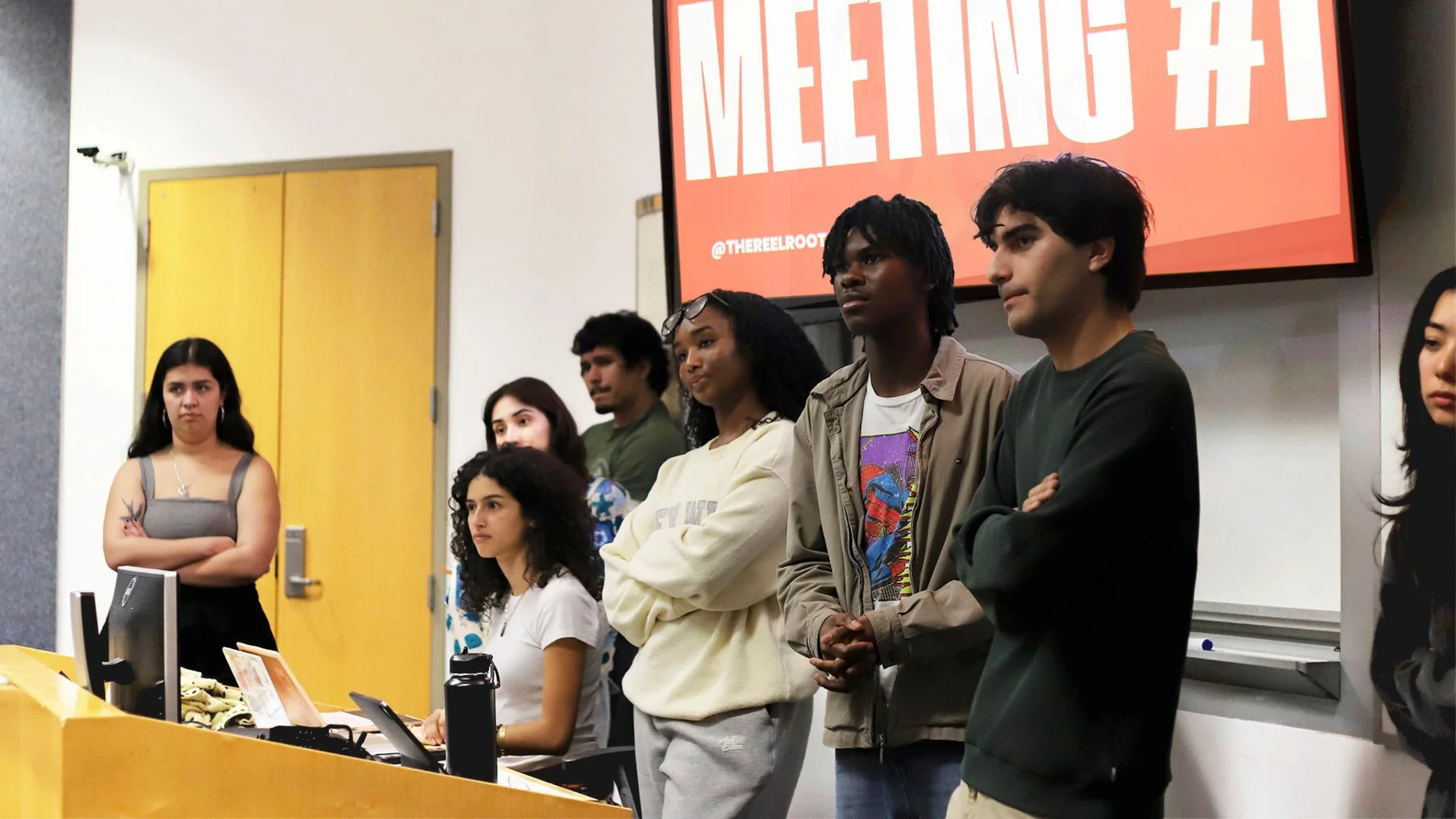
Photo by Trinity Johnson, Photographer
An air of promise and progress settled upon Marion Knott Studios as students gathered on Feb. 24 for the inaugural meeting of Reel Roots, a new club on campus dedicated to uplifting underrepresented voices in the film industry. The room bustled with stickers, snacks and students, and an executive board of 10 who kept things lively.
Formed partly in response to the removal of the DEI office at Chapman University, Reel Roots was originally conceived as a space for students of color; the club has since expanded its reach to all minority groups on campus, including the LGBTQIA+ community and students with disabilities.
“It’s an idea I’ve had since my first year at Chapman,” said Reel Roots co-president and creative producing junior Analysse Macias. “There is no DEI at Dodge now and obviously none at Chapman.”
The meeting began with a rundown of entertainment news related to DEI concerns. High points in representation like Bad Bunny’s Superbowl Halftime Show were highlighted as well as recent lows like the BAFTAs controversy. Club leadership was quick to point out that the BAFTAs broadcast censored a pro-Palestine speech, while a shouted slur was still aired, calling the BAFTAs into question as a politically correct institution.
Next up, students discussed controversies sparked by the release of Emerald Fennell’s already infamous “Wuthering Heights.” In addition to Jacob Elordi’s race-bent casting, members criticized the film for its romanticization of abuse, deviating from the text to turn a moment of sexual violence into one of consent.
The students attending were engaged, heads nodding and listening intently to one another despite uncomfortable subject matter. These are the discussions Reel Roots aims to foster, letting no difficult topics go unaddressed.

Photo by Trinity Johnson, Staff Photographer
The room was then divided into smaller groups based first on where students are from, then their favorite genres and group discussions were held to connect each student’s intersectionality with the stories they want to tell.
“I think that there has been a palpable lack of a space for people with intersectional identities on campus that feels simultaneously productive and professional,” says vice president and junior theatre performance major Karma Carr.
Given that the film industry is run by an aging class of white people and deals almost exclusively in personal expression, there is a dire need to protect and amplify marginalized voices. For the members of Reel Roots, it is not just about succeeding in the film industry but succeeding without compromising one’s identity.
“We have cultural clubs that we can go to, and then we also have professional clubs that we can go to, but those things sometimes feel mutually exclusive,” Carr said. “I think that this is a really professional and humanistic opportunity to branch out and meet other people and embrace new cultures, while also creating real opportunities like getting master classes and scholarships.”
At the end of the meeting, Reel Roots announced a newsletter they will begin releasing covering scholarships, events and other industry-related resources for underrepresented students at Dodge. The club also aims to invite industry professionals for workshops and master classes, and to create mini “production companies,” or groups within the club that will function creatively together throughout the semester.
For the juniors and sophomores who put Reel Roots together, however, their mission is far more enduring.
“I think this club is going to exist way after we’re here at Chapman,” said co-president and junior creative producing major Gizabella Moreno. “We are building Reel Roots to have a strong foundation that will continue to exist after we graduate.”
When asked about what greater purpose the club will come to serve, co-president Macias said, “I always forget that racist or homophobic or sexist things (can) happen at Dodge until it happens, so I just want to have some sort of procedure in place or have faculty who can handle it a lot better.”
As the ground floor of the film industry, it is just as important to work against toxicity and discrimination at Dodge as it is anywhere else in entertainment. Change can start anywhere, and Reel Roots has created a space for film students to gather and actively work toward a more accepting, less bigoted film industry.