
Gen Z and AI caught in a divide
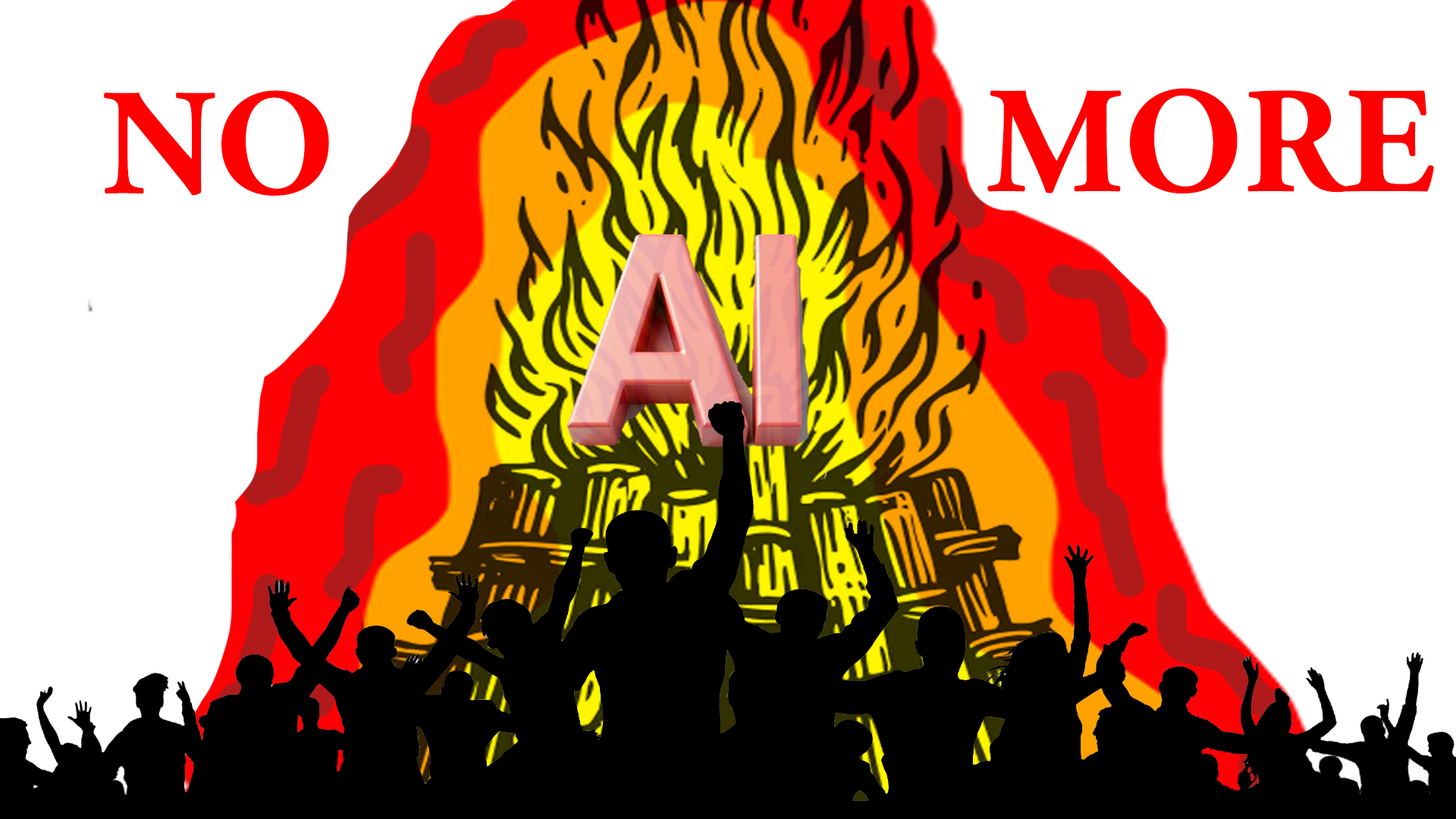
Collage by Matias Pacheco-Ramirez, Photographer
Young adults were early adopters of cell phones, social media and the internet. So does that mean they are eagerly running toward an AI future?
Not exactly.
In a new Gallup survey, more than half of Gen Z individuals living in the U.S. said they use AI regularly, but their feelings towards the technology are becoming more complicated.
The survey of more than 1,500 people was conducted from February to March 2026. Respondents ages 14 to 29 who said they felt hopeful about AI declined sharply since last year, from 27% to 18%. Nearly a third of respondents also reported feeling angry toward AI.
At Chapman, students have varying views towards the future of this technology.
Senior education major Amy Nguyen said she never uses AI and views it as harmful because it undermines critical thinking skills.
“There is no limit to what can be asked, so there is also no limit to what can be bypassed when it comes to actually doing work,” Nguyen said.
On the other hand, sophomore business administration major Levi Black said he uses AI daily for marketing, creative design, studying, coding and other tasks. He added that he trusts AI, and his positive outlook for it has only grown.
“When doing anything with AI, it will very, very rarely lead you somewhere wrong,” Black said. “It might not always do the best, not necessarily even better than a person, but it will avoid the fatal mistakes that humans are susceptible to.”
He did, however, acknowledge that AI can harm learning, especially for younger students, noting that studies have shown a decline in cognitive abilities due to reliance on AI.
Freshman writing for film and television major Colin Silber has a declining view of AI, aligning more closely with national statistics. Silber, who previously used ChatGPT for editing and organizing, now views the technology as harmful to creativity.
“I initially used it as a fun little toy, but once the writers' strike happened, I chose not to use it anymore apart from very few occasions, before ultimately cutting it out of my life altogether,” he said.
Silber said his dad was affected by the strike, which led to a change in his views on AI and the future.
“(My dad) was on the picket line for five months out of fear that he would lose his job,” he said. “This made me realize that not only was his career in jeopardy, but my future would be similar.”
According to Gallup’s report, part of the growing negative sentiment may stem from concerns about AI’s impact on the workplace. Nearly half of respondents — 48% — said the potential risks of AI outweigh the benefits in the workplace, an uptick from 37% from last year.
While students agreed that they see AI being integrated into their future work, not all saw that as a positive.
Nguyen said that she’s already seeing companies require workers to use AI, even if they don’t agree. She also added that while integration may have immediate benefits, it also has drawbacks.
“While it can help save time and produce work much quicker than humans, it also takes away labor and effort, which leads to competent workers leaving their jobs for places that value their effort and passion, and incompetent workers being fired for mistakes and AI hallucinations that should have been looked over,” Nguyen said.
Black, however, had a more positive outlook towards AI’s impact on the workforce.
“The market will change as it always has with any significant technological disruption,” he said. “The cotton gin, the steel plow (and) the internet all caused large market shifts, loss of jobs and creation of new ones. Why is AI any different?”
As AI becomes increasingly embedded in everyday life, Gen Z’s varying attitudes highlight broader uncertainty about its future role. Whether viewed as a powerful tool or a potential threat, one thing is clear: this generation isn’t rushing blindly into an AI-driven world — they’re weighing its impact every step of the way.