
What do Chapman professors think about ‘Heated Rivalry’?
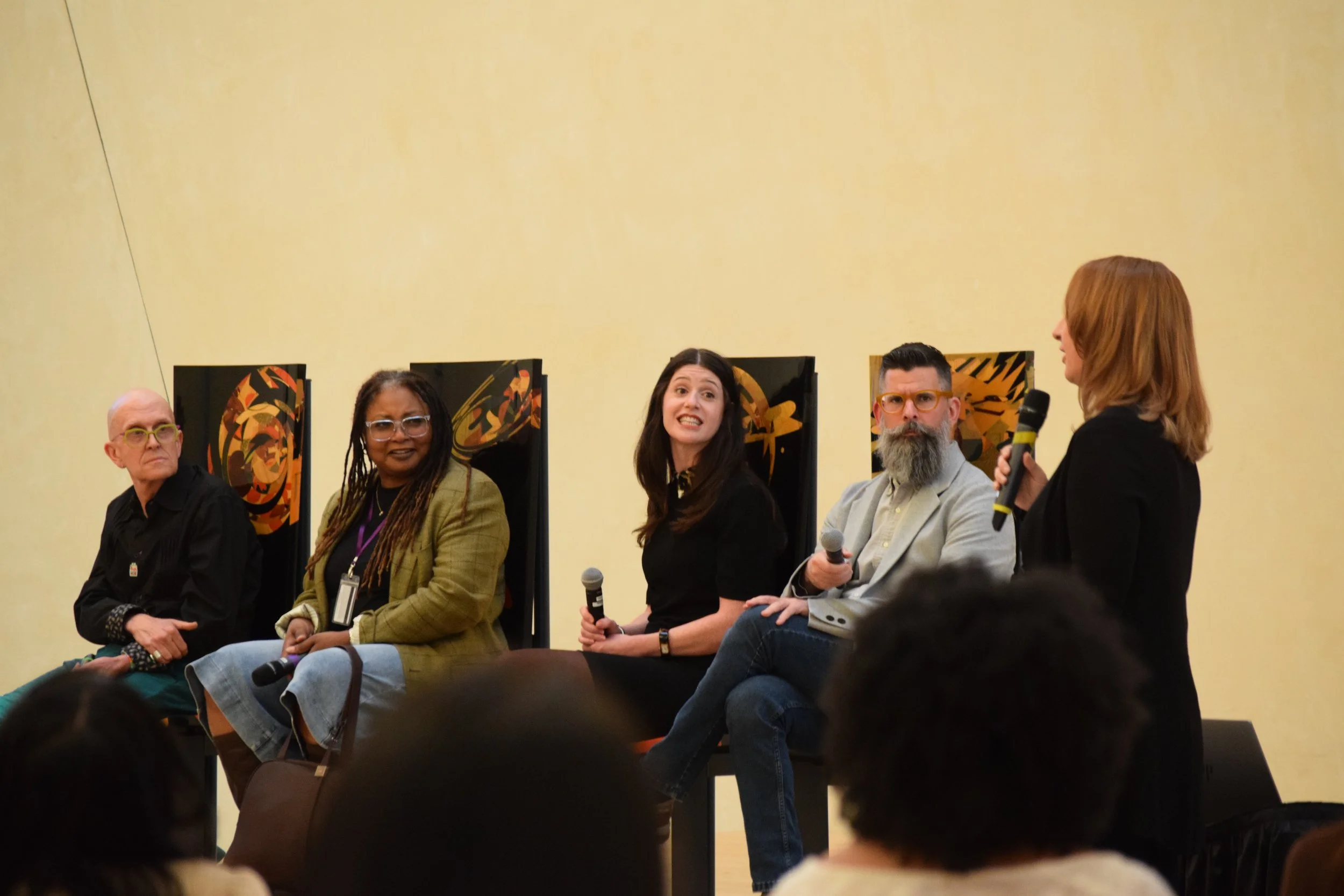
Photo courtesy of Myles Agatep, event photographer
Perhaps the last way you’d expect college students to spend a Monday night would be attending an academic panel. But on April 20, the Fish Interfaith Center was packed with students as the University Honors Program hosted its inaugural Critical Conversations speaker event.
Co-hosted by Psi Chi, the psychology honors society, and the LGBTQ studies minor, the event brought together faculty from four different colleges to engage in an interdisciplinary discussion on the success of the popular Canadian queer romance show, “Heated Rivalry.”
“Heated Rivalry” has sparked a firestorm of passionate fans since its release in Nov. 2025, and is the most-watched acquisition in HBO Max history, averaging 10.6 million viewers per episode. The story centers around Shane Hollander (Hudson Williams) and Ilya Rozanov (Connor Storrie), two fictional National Hockey League (NHL) players wrapped up in a secret romance spanning almost a decade.
“The initial growth and popularity of the show was largely organic; it was driven by strong social media engagement and fandoms,” said Tara Gruenewald, a psychology professor and one of the event’s coordinators. “The show's impact has extended beyond the online world. For example, the NHL experienced a significant increase in online ticket sales.”
However, the show’s fanbase has sparked criticism, with some parasocial viewers feeling a sense of entitlement toward uncovering the actors’ sexualities, and others directing hate toward Williams’ Asian heritage.
To break down both the show’s success and its criticisms, each faculty guest gave a brief presentation about a certain aspect of the show. In mini-lecture formats, these presentations displayed how “Heated Rivalry” can be analyzed and understood differently across different disciplines.
Nick Gabriel, an associate theatre professor, discussed the performance styles making breakout stars Storrie and Williams such an electric duo.
Gabriel described how intrinsic acting added to the show’s psychological realism. The developing relationship between Hollander and Rozanov is conveyed through microexpressions and the nuances of inner monologues, enabling the audience to connect more intimately with these characters.
Next, assistant film and media studies professor Leah Aldridge contextualized the series within the history of melodrama. She said that melodramas like “Heated Rivalry” focus on musicality and rhythm, relying on familiar emotional tropes to create a comforting viewing experience.
“Don’t get mad, (but) ‘Heated Rivalry’ is really just a soap opera,” said Aldridge. “It's a story that bounces back and forth in its progression, and that’s what melodrama does best, which is (portraying) virtue and morality.”
Gruenwald made note of the popularity of “reheating” — the fervent rewatching of the show. She sees the show as a form of escapism from the sociopolitical struggles threatening women and LGBTQ+ individuals.
“(Fans) watch the show over and over to facilitate the experience of joy because it enhances their appreciation and need for love, intimacy and desire,” said Gruenewald.
Gruenewald also argued that this sense of “escapism” can apply to many fandoms. In an increasingly tumultuous world, fandoms have become rare safe spaces where shared experiences of escapism help people cope with uncertainty.
“It provides an opportunity to process things that might have typically hurt us, but to do so in a safe place,” she said. “All those watch parties (and) things at local bars have really enhanced the individual's feelings of belonging and connection.”
Also from the psychology department, associate professor Amy Moors examined the series through the lens of minority stress theory, which argues that stigmatized groups like the LGBTQ+ community face unique stressors that lead to significant health disparities.
Moors praised the show’s focus on Hollander and Rozanov’s queerness, saying the show explores how minority stressors, such as the fear of being outed, also become opportunities to build support networks.
Rounding out the faculty presentations, English professor Ian Barnard offered a different perspective, taking issue with the show’s politics.
Rooting their presentation in queer theory, Barnard critiqued “Heated Rivalry” as a “Hallmark product,” pointing to its participation in rainbow capitalism — the profiting off of queerness without truly supporting the community — and pointed to the troubling lack of agency among female characters in the show.
“I initially didn’t realize that the women in the show are very belittled,” said senior environmental science and policy major Val Lara, an honors student who helped advertise the event. “But I think (professor Barnard) emphasized the importance of representing everyone in an equal manner.”
Barnard also noted how the show presents queer acceptance as a potentially dangerous form of nationalism. They said that “Heated Rivalry” portrays Rozanov’s home country of Russia as homophobic and corrupt, in contrast to the portrayal of the United States and Canada as democratic, welcoming nations despite current legislative attacks on LGBTQ+ rights in the U.S.
“After Russia's 2022 invasion of Ukraine, Russia has replaced Afghanistan, Iran and China in the Western imaginary as the new enemy,” Barnard said. “So, it's terribly convenient that Russia is portrayed in this way in the show, and that our Russian protagonist is played by an American actor with a fake Russian accent.”
Barnard was met with strong reactions from the audience filling Fish Interfaith Center. While no attendees expressed overt criticisms toward Barnard, some students appeared shocked by the sudden shift toward criticizing the series.
The event concluded with a brief Q&A session. One student questioned how the show would be perceived if the two leads were women.
Assistant professor of sociology Joshua Liashenko, who moderated the event, said the hypothetical was hard to imagine, as centering the show on a lesbian romance would bring about an entirely different plotline and cast of characters.
“Queer folks are not interchangeable,” Liashenko said.
The honors program intends to host more Critical Conversations relating to other relevant media phenomena in the near future.
“I think it’s very important to have these conversations because a lot of us are stuck in our own major,” Lara said. “Having panels like these is essential to see how everything we study may converge with other fields.”