
Turning the tides on bankruptcy and student loans
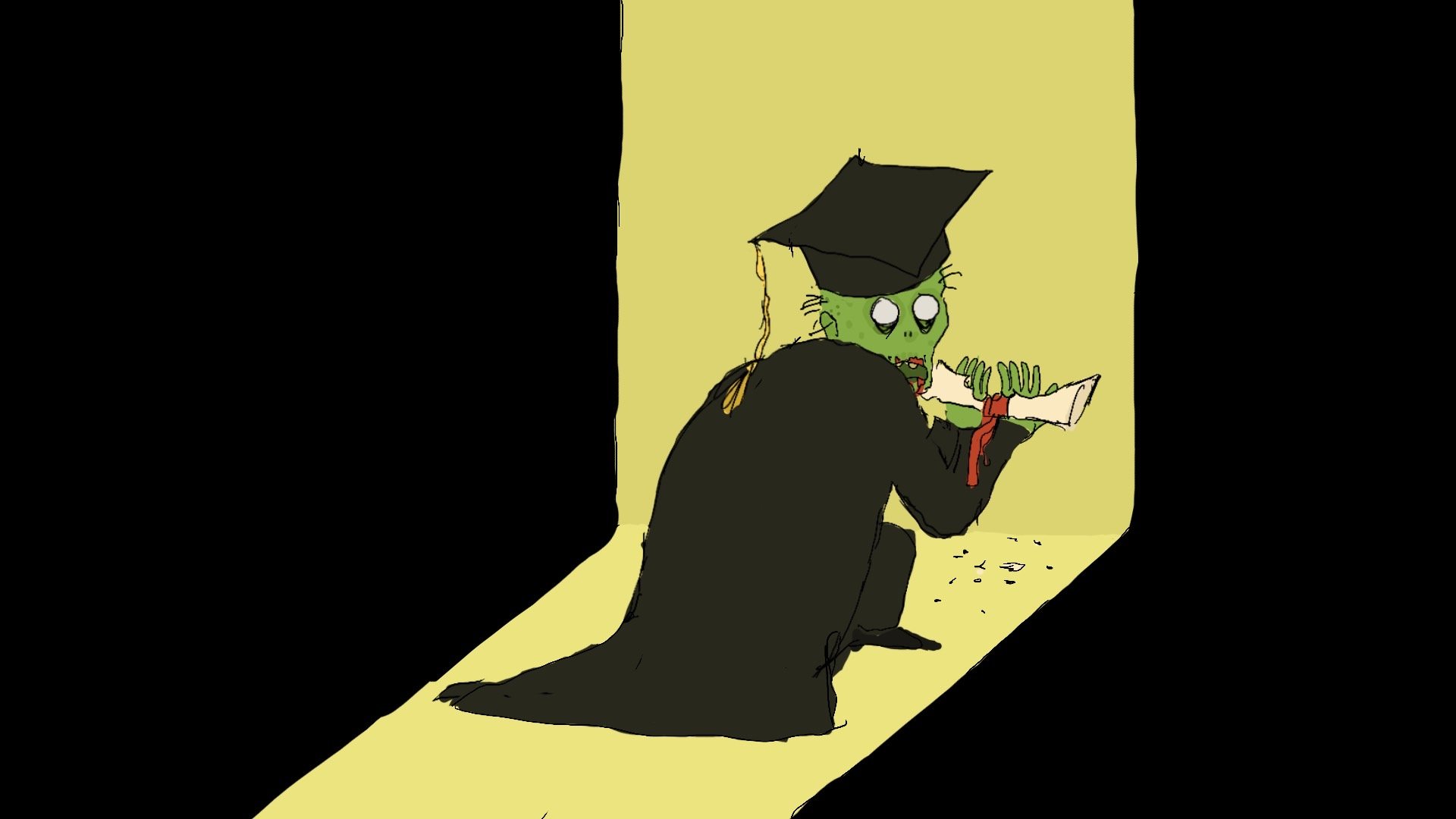
Illustration by Sami Seyedhosseini, Cartoonist
Student loans have earned a reputation for being debt that follows borrowers for life. However, a recent academic analysis reported that student loan discharges through bankruptcy are becoming more common than many borrowers realize.
Jason Iuliano, a professor at the University of Utah S.J. Quinney School of Law who studies student loan debt, reported that about 87% of borrowers seeking to discharge their student loan debt in bankruptcy are now succeeding and have seen an increase of about 61% from 2017.
Student loan bankruptcy is the legal process in which the borrower asks a federal court to erase student loan debt by proving it causes “undue hardship.” To qualify, one must prove that they cannot maintain a minimal standard of living, have made good-faith efforts to repay their loans and these hardships will persist should the debt continue.
While the process exists, many borrowers are unaware that it is an option. As Chapman seniors prepare to enter a competitive job market with student debt, these findings raise questions about how informed students are about their loans.
“Bankruptcy is a really scary word,” said senior sociology major Olivia Dawson. “It makes me scared for the future, especially entering this job market. Schools shouldn’t be so expensive that the word bankruptcy should even be an equivalent.”
While student loan bankruptcy is uncommon, policies revised in 2022 created clearer guidelines for which cases qualify for loan dismissal. Through a standardized process and a 15-page attestation form to assess “undue hardship,” there has been a significant increase in successful student loan discharges nationwide.
Although the process has been streamlined, student loans aren’t as easily discharged in bankruptcy as other consumer loans, like credit cards. Borrowers still need to file a separate lawsuit called an adversary proceeding.
According to David Carnevale, the assistant vice president of undergraduate financial aid, typically less than 4% of Chapman students fail to repay their federal student loans, compared to national averages of 10-11%.
These figures are currently slightly skewed due to the federal student loan repayment pause during the COVID-19 pandemic and the relatively recent return to repayment, according to Carnevale.
While the data shows that Chapman students are statistically less likely to default on their loans, Carnevale acknowledged that concerns about repayment often do not surface until months or even years after students graduate.
“Students struggling to make their student loan payments should contact their loan servicer to see what options are available,” said Carnevale. “It’s difficult to say if students remember their options when they are in crisis.”
With federal loans, there is approximately a six-month grace period from when a student graduates, leaves school or drops below half-time before repayment begins. There are also options for deferment, if they are continuing on to graduate school, or possibly a forbearance that temporarily lowers or stops payments. This means it can be a year or more before a student realizes they might need assistance.
Despite the availability of repayment resources and counseling, Carnevale said students may not always act on that information once financial stress sets in. Borrowers in crisis are more likely to ignore the situation or hope it resolves on its own rather than proactively seek help.
Carnevale also expressed growing concern over student loan advice circulating on social media, warning that some influencers promote repayment strategies that may not be in students’ best interests.
“I think students looking at their repayment options need to look at advice they may be getting from social media with a little more scrutiny so that they don’t end up making costly mistakes or disqualifying themselves from programs that may ultimately help them,” said Carnevale.
While university officials emphasize the resources available, students say those options are not always clearly understood.
“I feel like student loans were one of those things that were just on a checklist to complete before heading into college and never really explained,” said junior education and English double major Alexa Arostico. “There are resources, but it seems like you don’t need them while you’re still in school.”
Arostico also said there is a need for greater transparency between universities and student loan borrowers, especially as graduates navigate life after college.
“I’m still a year out from graduating, but I’m watching the job market, and looking into what would need to be done financially, it all just seems overwhelming without any guidance,” she said.
As discharge rates for student loan bankruptcy rise, the gap between perception and reality highlights the importance of awareness.
Editor’s Note: A previous version of this article misnamed Jason Iuliano. That error has since been corrected.