
Dodge College implements new no-tech policy
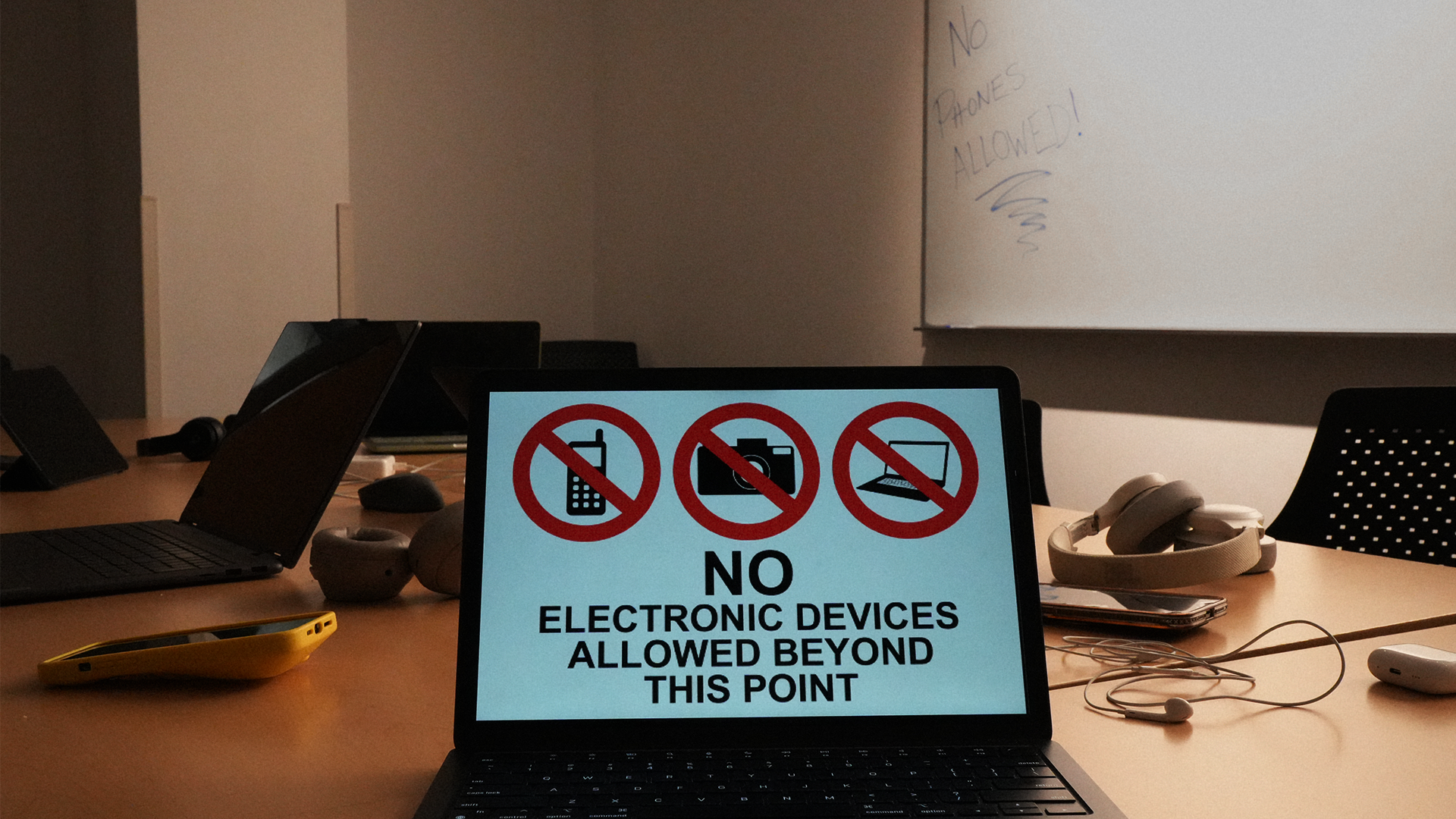
Photo by Riley LeBlanc, Photographer
Students at Dodge College of Film and Media Arts can no longer have phones, computers or any other electronic devices out during their classes unless approved by their professor. The new faculty approved policy is aimed at removing distractions from the learning experience.
Dodge College’s idea is that, in a world where technology has become as prevalent as the air we breathe, students find themselves magnetized to their devices. Whether it’s scrolling in bed in the morning, listening to headphones through the halls or opening their laptops during a lecture, there is hardly a time when a device isn’t present.
The policy cites research indicating that electronic devices can negatively impact students’ ability to focus, retain information and remain present during lectures and discussions.
“Experimental and quasi-experimental studies consistently show that the mere presence of smartphones reduces available cognitive capacity and sustained attention,” communication studies associate professor and media effects expert Sophie Janicke-Bowles said. “Even when not actively used, phones can create 'attentional residue,' subtly pulling working memory resources away from lecture content.”
This cognitive strain identified in experimental studies appears to mirror the engagement concerns raised by the Dodge College faculty. Pavel Jech, associate dean of Dodge College, said professors felt as if their students weren’t paying enough attention.
“They felt that the primary reason why that wasn't happening was because of the technology in their hands,” Jech said.
Along with lack of engagement, studies have shown a positive association with memory retention and undivided attention. Essentially, the more time students spend on devices while in class the less they actually learn.
“Divided attention disrupts elaborative processing — the kind of deeper thinking required for durable learning — leading to poorer recall and reduced conceptual understanding,” said Janicke-Bowles.
There have been mixed reactions from students to the change. Some see technology as a vital part of their education.
“My first reaction was a little confused and annoyed, because a lot of the work we do happens on laptops,” said freshman writing for film and television major Sadie Ceserano. “I understand (a) phone policy, which I think is helpful in some of my classes like screenwriting where we’re doing specific work such as writing scripts, but for my lecture-based classes, it's usually an essential tool.”
However, some said that in a creative environment, students can be positively influenced by taking a break from technology and resetting their brains.
“In a society that relies so much on social media and our screens, we often forget to look around us for inspiration,” freshman writing for film and television major Anna Sprague said. “You get original ideas from experiencing life.”
In addition, research has shown that taking handwritten notes benefits memory more than typing it out on a computer.
“Typing can be efficient, but when students transcribe without processing, learning suffers,” Janicke-Bowles said.
Even with these findings, Jech acknowledged that technology remains essential in certain courses.
“When I teach screenwriting classes, I have stopped requiring students to print out their scripts years ago, since the pandemic,” Jech said.
In a school built on creativity and innovation, it is important a culture of imagination is fostered. This is why at its core, some students argue the policy simply reinforces why they came to Dodge in the first place.
“We come here for an education, and we pay a lot of money for this education, so I don’t think that you’d want to be on your phones when you are learning about stuff that you want to dedicate your life to,” Sprague said.
Even among those unsure about the change, many agree that in order to see its impact, it is necessary to give it time.
“Give it a try. You always have your phone, which means your connection to the world 24/7 — that's a relatively new phenomenon,” Jech said. “It might be the extent of your lifetime, but it hasn't been there before, so enjoy those few moments away from that.”
As the new policy is implemented in Dodge, its success may depend on time and the faculty’s openness to meeting students halfway by creating policies meant to improve student engagement while still respecting situational flexibility.