
What is the true price of disability accommodations?
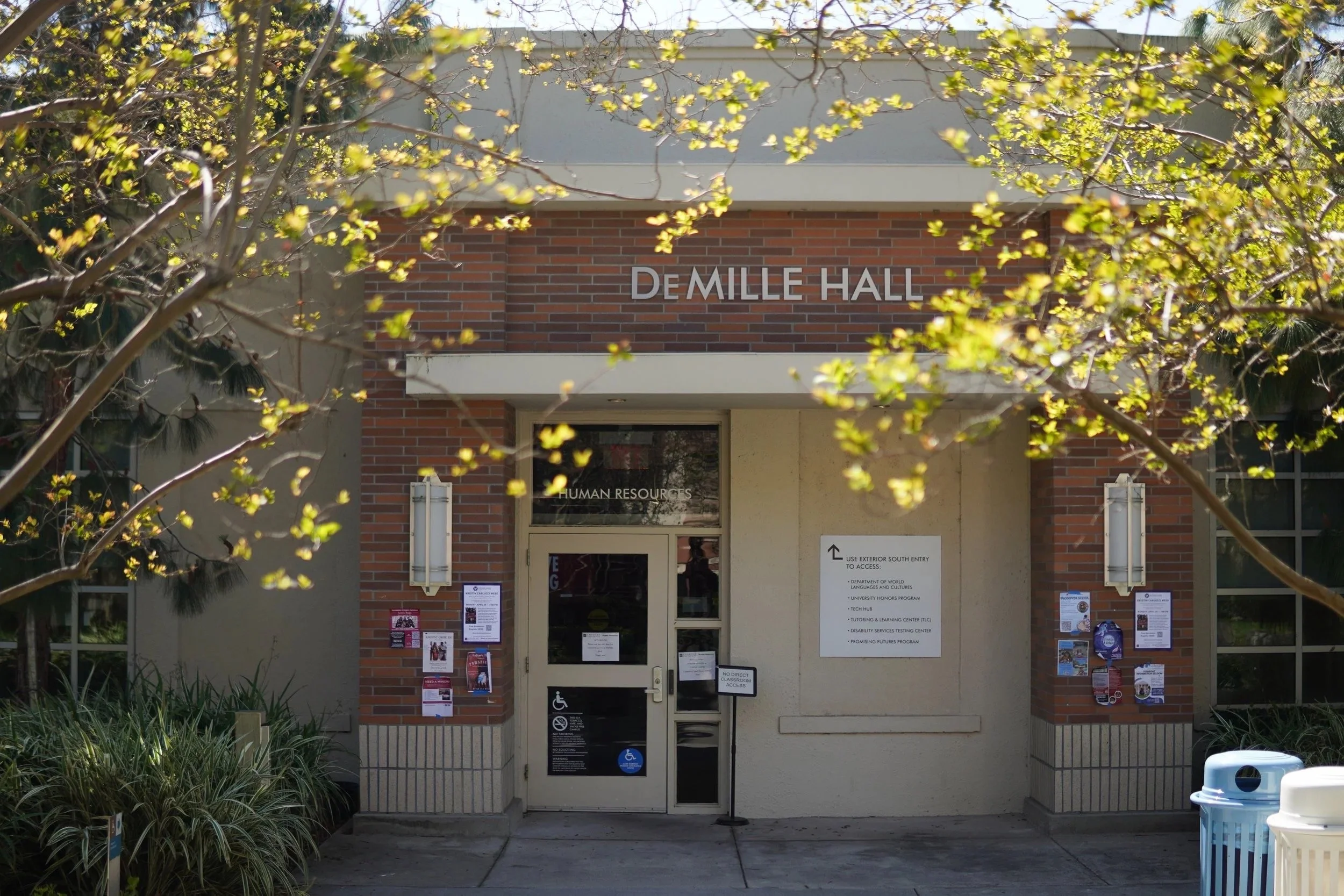
Photo courtesy of Chapman University
A few extra minutes on an exam can change everything.
For students with disabilities, accommodations like extended testing time, digital textbooks, flexible deadlines or other forms of academic support can remove barriers that might otherwise stand between them and academic success. But getting those accommodations depends on something that has little to do with students’ ability to succeed in college and more to do with whether they had the money, resources and knowledge to get diagnosed and documented in the first place.
That tension is becoming increasingly relevant as the number of college students registered with disabilities has reached historically high levels, reflecting the broader shift in how universities accommodate students with disabilities.
Since 2004, there has been a sharp increase in the number of college students who have registered for disability status nationwide, according to the U.S. Government Accountability Office.
Chapman has experienced this trend firsthand.
Over the past four years, nearly 200 additional students have requested testing accommodations.
“Consistent with trends across higher education, Chapman has experienced an increase in students registering for disability accommodations,” said Bob Hitchcock, Chapman’s director of strategic communications.
Due to the increase in accommodation requests, the office maintains a busy schedule. It can sometimes take up to a month to get an appointment.
However, many Chapman students report positive experiences with the disability office.
Stephanie Martinez, a senior political science and strategic communications double major, has had an improved college experience with these accommodations.
“I have never had a bad experience, and they guided me through everything,” Martinez said. “They are extremely helpful and are always willing to support.”
The office has helped her advocate for herself and for her accommodations when speaking with professors.
The disability office “works closely with students and faculty through an interactive process to ensure approved accommodations are appropriately implemented and supported,” Hitchcock said.
Chapman is far from alone with this increase in registrations. In some of the nation’s most selective universities, disability accommodations have also climbed.
According to a report by The Atlantic, over 20% of undergraduates are registered as disabled at Brown and Harvard, and at Stanford University, 38% of undergraduates are registered.
The rise in students seeking accommodations begs another question: Who can access these accommodations in the first place?
For many, this process starts long before these students arrive on a college campus.
Students from wealthier communities may have greater access to psychological services in high school and parents familiar with how special education programs work.
Some students come to college with 504 plans or other documentation already in place, giving them experience in navigating disability accommodations.
504 plans are in accordance with the U.S. Department of Education and protect students with hidden disabilities, most commonly ADHD, depression and an increase in anxiety after the COVID-19 pandemic.
A national study found that students with ADHD in higher education are more likely to have parents who have gone to college and to come from households earning $250,000 or more.
The New York Times has similarly found that the top one percent of students in the nation’s richest districts are more likely to have 504s than lower-income districts.
Research has found that parents’ access to information about special education resources is influenced by their understanding of the school administrative system. These parents may be better equipped to find services for their students, while families without that knowledge may struggle to find or secure those same resources.
The financial barrier can be just as significant.
A diagnosis can be difficult to obtain through testing by psychologists, psychiatrists or other specialists due to the high cost. For students whose universities require documentation for accommodations, the inability to obtain a diagnosis can become an obstacle before they even speak with the disability office.
On one hand, the growing number of students receiving accommodations can mean more students are getting the support they need. On the other hand, unequal access to diagnosis and documentation can mean that students from wealthier families are better positioned to receive support in the first place.
The debate becomes especially complicated around standardized testing.
Students with disabilities may receive additional time on exams such as the ACT or SAT. For a student whose disability affects some aspect of attention, this extra time can provide needed access for equal test-taking.
But the uneven availability of disabilities and accommodations has also prompted questions about whether students from wealthier families have an advantage in navigating the system. Especially when overcrowded testing rooms become counterproductive for students with disabilities when there is a lack of resources.
These questions are particularly relevant in an admissions environment where a small difference, like a test score, can make or break a student’s acceptance.
Still, focusing only on perceived advantages can obscure the students who genuinely need accommodations to participate on equal footing.
For those students, an accommodation isn't a shortcut. It's a way to remove a barrier. Universities are increasingly trying to make those barriers easier to overcome.
For example, Harvard University Disability Resources serves as a central resource for access to accommodations, reducing red tape by requiring less strict documentation and eliminating the need to pay for expensive psychiatric services.
Other accommodations don't necessarily involve testing at all.
The evolution of accommodations at universities like Harvard and Chapman, including digital and structural options such as access to digital textbooks and flexible deadlines, has also helped many college students.
At Chapman, that evolution is already visible in the growing number of students seeking support.
The challenge now may not simply be whether universities are willing to provide accommodations; it is whether every student who needs them has an equal chance of getting through the door.