
Chapman’s student group policies are smothering campus events
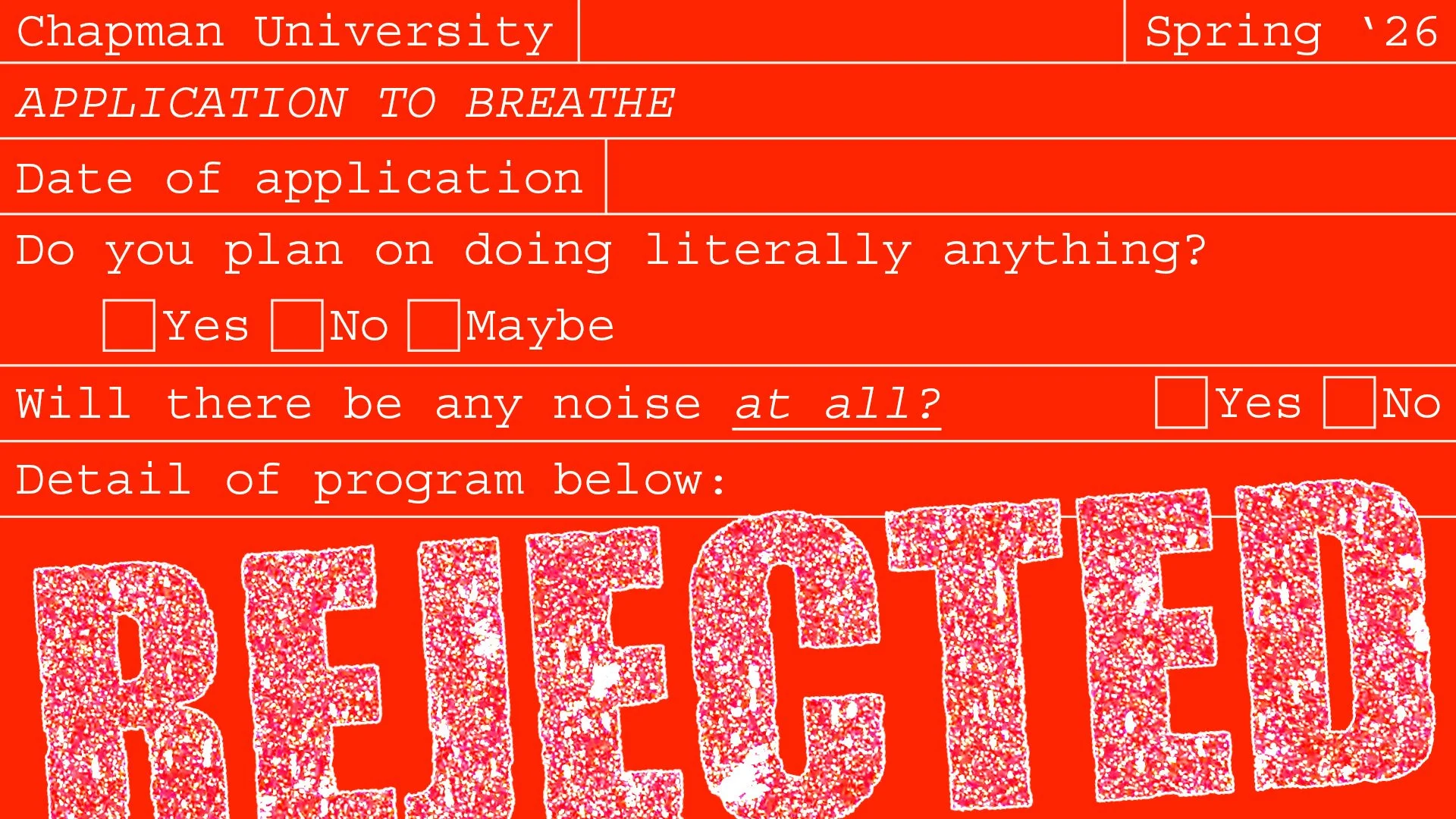
Collage by Easton Clark, Photo Editor
For the past 26 years, Chapman’s Asian Pacific Student Association (APSA) has hosted an annual cultural festival honoring Asian, Pacific Islander and Desi American (APIDA) cultures. The past two years, it almost didn’t happen.
A slew of frustrating changes to Chapman’s student group policies threw our decades-long traditions for a loop. I feel that these changes have been unevenly enforced for different organizations. Furthermore, the university dismantling DEI last year has placed cultural clubs like APSA in a particularly precarious position, as there are far fewer staff members or resources to help my fellow board members and me.
According to The Panther, Chapman banned amplified sound during weekdays after the Gaza encampment. Five students associated with a DEI protest received formal disciplinary warnings for violating that policy. This was just a few weeks before our 2025 cultural festival, called the APIDA Celebration.
Since we had already booked Attallah Piazza for a Thursday and contracted performing artists, we were given a concession: we could have amplified sound strictly between our event hours of 5 p.m. and 10 p.m. as well as a one-hour soundcheck at noon.
Anyone who’s worked in event management could tell you that cramming six artists into a one-hour soundcheck is a logistical nightmare. Additionally, our request for an extension was denied.
On that day, after the one-hour mark passed, we finished with an acoustic “soundcheck” where all artists had to unplug their amplifiers. This didn’t go over well and led an artist to plug in a singular guitar 30 minutes before the event’s start time to complete their soundcheck.
A week after the event, APSA’s board was issued a citation via email for violating the policy, brought into a disciplinary hearing and given a formal warning lasting a minimum of seven years wherein another transgression would result in individual conduct violations on our academic records and mandatory training in accordance with Chapman’s Good Neighbor Promise.
In the year since then, I’ve heard other student groups blasting speakers on campus or speaking through megaphones during class hours. But we wanted to play things safe. So this year, we had our event on a Saturday. Our problems with amplified noise were over, but other issues had just begun.
For example, we used to be able to invite small business owners onto campus to sell handmade keychains or stickers at our events. They’d show up, students would purchase items and they’d pack up and go home — end of story.
For the 2025 and 2026 APIDA Celebration, the amount of regulations just to get the owners approved was endless. They had to sign a contract, apply for a City of Orange business license, purchase general liability and worker’s compensation insurance and send their W-2 to Chapman’s legal team for approval. Last year, we were not even able to receive Student Government Association (SGA) funding for these expenses, so we paid using our own club funds.
For the small business owners who don’t work at these sorts of events full-time, it was an extremely confusing and alienating experience. While we are grateful that SGA covered the purchases of the licenses and insurance this year, I truly hope there are no other clubs that have been discouraged from hosting these sorts of artists because of the restrictions.
Unfortunately, the list of banned activities for student organizations goes on. We were told in an email that Chapman doesn’t currently allow any raffles, giveaways or opportunity drawings (despite Section 7.4.5.4 stating otherwise). Bake sales are banned (Section 6.4.1). Groups like Chapman Flea and Thrift are required to have a professor host a seller’s workshop so that the mere act of students hoping to sell their old clothes can constitute an “educational activity” (Section 6.3.2).
However, I consistently see clubs breaking these very same rules on a weekly basis. Part of me feels encouraged by this, in a weird way, because I feel that these restrictions are far too strict and seeing disobedience (within reason) can be a step toward advocating for change.
But at the same time, it’s frustrating to see student organizations blatantly disregard the student group policies while I feel like APSA is on razor-thin ice. Because of the formal warning against our club (the “seven-year curse,” we joke), we want to stay above board for all of our events. I appreciate how Chapman staff and student employees from SGA, the Department of Student Engagement and Event Operations have helped us navigate these policies this year, but it doesn’t negate the fact that planning our festival has become significantly more difficult these past two years.
The majority of clubs I see blasting music from speakers are Greek organizations, and fee-funded groups like the University Program Board (UPB) and Chapman Radio (which I am also a part of) that host giveaways on an almost weekly basis. Even though these are separate from student clubs, the group policies state that they’re subject to the same regulations (Section 1.1).
The point of all of these student group policies, the document states, is to “provide clear standards and expectations for all student groups” and “understand and accept responsibility for the(ir) actions.” Presumably, they are in place to keep both students and the university safe (physically and legally). But if this is the case, why do I keep seeing groups violating them?
Admittedly, I don’t know if these other organizations have received conduct violations. I also can’t say that Chapman has specifically exerted disciplinary measures against APSA because we are a cultural club, despite us having been publicly listed as supporters of the aforementioned DEI protest.
What I do know is that a seven-year warning is a ridiculously long punishment for someone playing a single guitar for thirty minutes, and that college students should be able to decide for themselves if they want to take the risk of buying a homemade cookie from another student without Chapman fearing litigation.
Furthermore, we shouldn’t be scared to fundraise for Asian American advocacy organizations because we don’t want to violate the rule that donations must be to organizations that “may not be politically affiliated” (Section 7.4.5.5). We also shouldn’t have to host our own senior celebration for APIDA graduates this year (not an affinity ceremony, because that term is banned now) because the Office of DEI that formerly hosted them no longer exists.
The bottom line is that student organizations are the lifeblood of Chapman University. It was student leaders from clubs such as the Black Student Union (BSU) and Students for Justice in Palestine (SJP) that advocated for the Cross-Cultural Center for years, the Office of DEI, the director of Middle Eastern and North African achievement and much more. Only the first of these items still exists, serving as one of the only resource hubs for the vast multicultural student body here.
Next year, I hope to continue to see collective action and solidarity within the diverse (sorry, am I allowed to say that word?) student population here on campus. It may sound corny, but our differences are truly what make us special.
In addition, as I remain a student leader within APSA, I hope to see an ease in the confusing regulations that harm all student organizations, not just cultural ones. This way, more clubs can be incentivized to host unique, creative events on campus without being smothered by needless restrictions.