
Confidence isn’t measured in inches
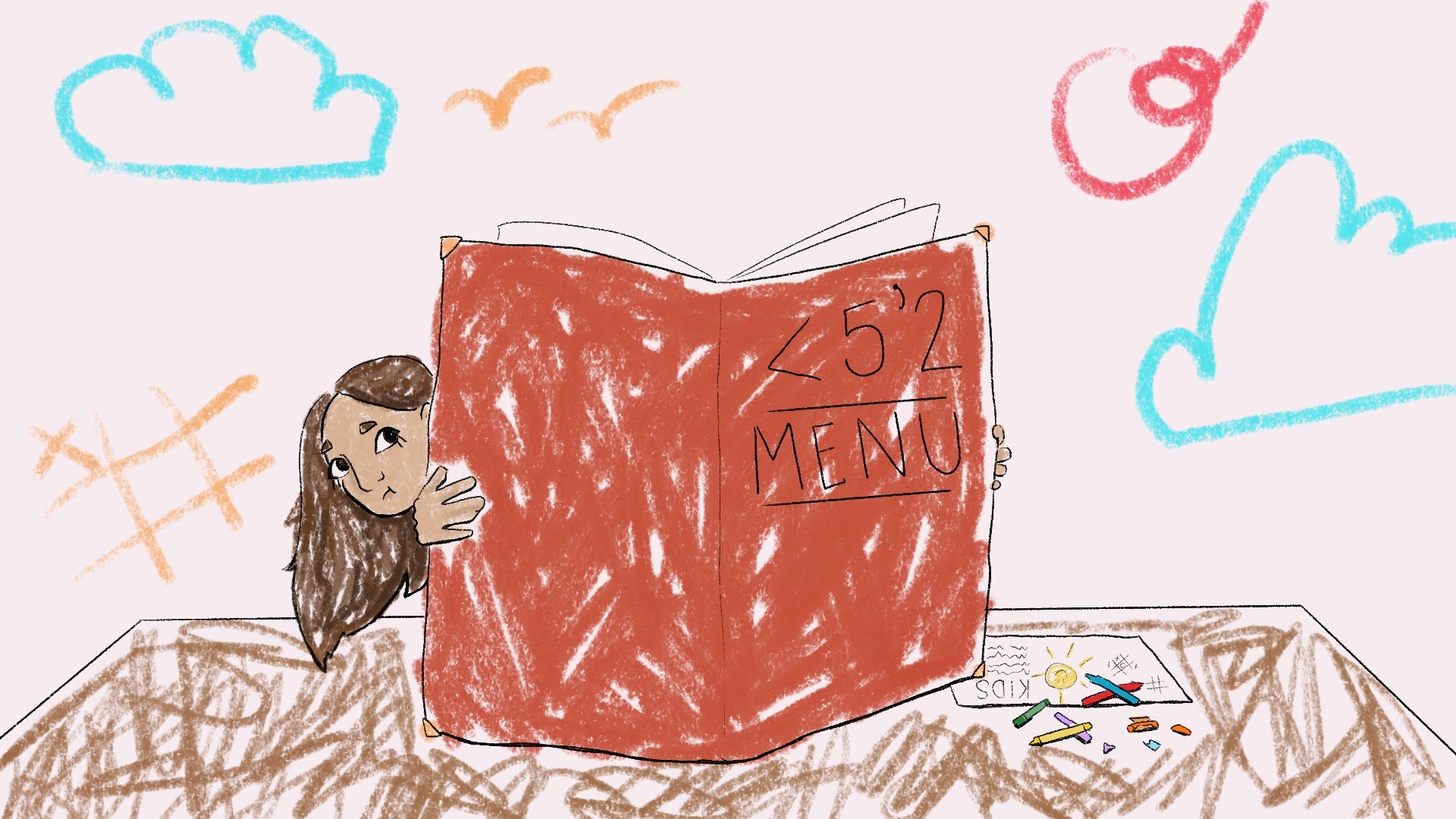
Illustration by Zoe Arntsen, Illustrator
People always say they want to be taller. But let me tell you that being able to reach something on the top shelf has nothing on the benefits of being 5-foot-2.
Sometimes, if you also happen to look younger than your age, things can work suspiciously well in your favor. Like when your parents confidently volunteer you to order from the kids’ menu because “there’s no way you're finishing an adult portion anyway.” Apparently, if you’re short enough and look young enough, all it takes is one nod and a hoodie to qualify for the children’s discount.
I’ve gotten used to the double takes when I mention my age. The surprise when people realize that I’m no longer a high schooler. The way strangers speak to me with this softened, overly careful tone, as if youthfulness automatically translates to fragility or inexperience.
And when you’re introverted on top of that, people tend to complete the story themselves. You start realizing how quickly people associate physical smallness with personal smallness, as though being slightly shorter than average says something about your authority, competence or adulthood.
Those perks and moments of people perceiving me as smaller and younger are funny because they’re harmless.
The problem is that the same perception follows you into spaces where you want to be taken seriously.
Last December, I got my second ear piercing. Nothing dramatic or rebellious, just a simple piercing. I was already 20 years old, a fully capable adult, able to sign my own paperwork and pay for it, too. And yet the piercer looked at me, then looked at my mom, and asked for her ID and signature for consent forms instead of mine.
When I pulled out my own ID, there was a brief hesitation and a split second where she looked genuinely surprised.
It was funny afterward, but in the moment, it carried a familiar sting. When things happen repeatedly, they stop feeling isolated and start reinforcing the same underlying message: people see youth before they see you.
That perception follows you, and people become dismissive. You become aware of how much effort it takes to counter assumptions you never asked for in the first place. Even shopping reminds me of it.
Occasionally, I have to buy pants from the kids’ section because they genuinely fit better than adult sizes. The proportions make more sense for my body type, and I don’t have to deal with jeans swallowing my ankles or waistbands sitting weirdly. But standing in the middle of a children’s clothing section as a college student can create this odd emotional disconnect — like the world keeps subtly giving you evidence that you haven’t quite caught up to the age you actually are.
You become more hesitant, more apologetic and start shrinking yourself because you already feel physically small. You begin mistaking other people’s assumptions for objective truths.
For a long time, I thought confidence belonged to people who looked older, taller or louder — people whose presence immediately registered as authoritative. I thought maybe confidence was something physical, something visible before a person even spoke.
But college has slowly forced me to rethink that.
Because confidence is not the same thing as being instantly perceived correctly by strangers. Some people move through the world with assumptions working in their favor. Others have to push against them constantly. Neither experience actually determines someone’s intelligence, maturity or worth.
I still get mistaken for younger than I am. I still have moments where people underestimate me before I’ve said a word. I still occasionally benefit from children’s pricing in deeply unethical ways.
But I’m learning that confidence has less to do with changing people’s first impressions and more to do with refusing to let those impressions define you.
Sometimes taking up space isn’t loud or dramatic. Sometimes it’s just quietly insisting that you do not get to decide who I am based on how small I appear.