
From the Oscars to Chapman: How K-pop is for everyone
by Daniel Kim
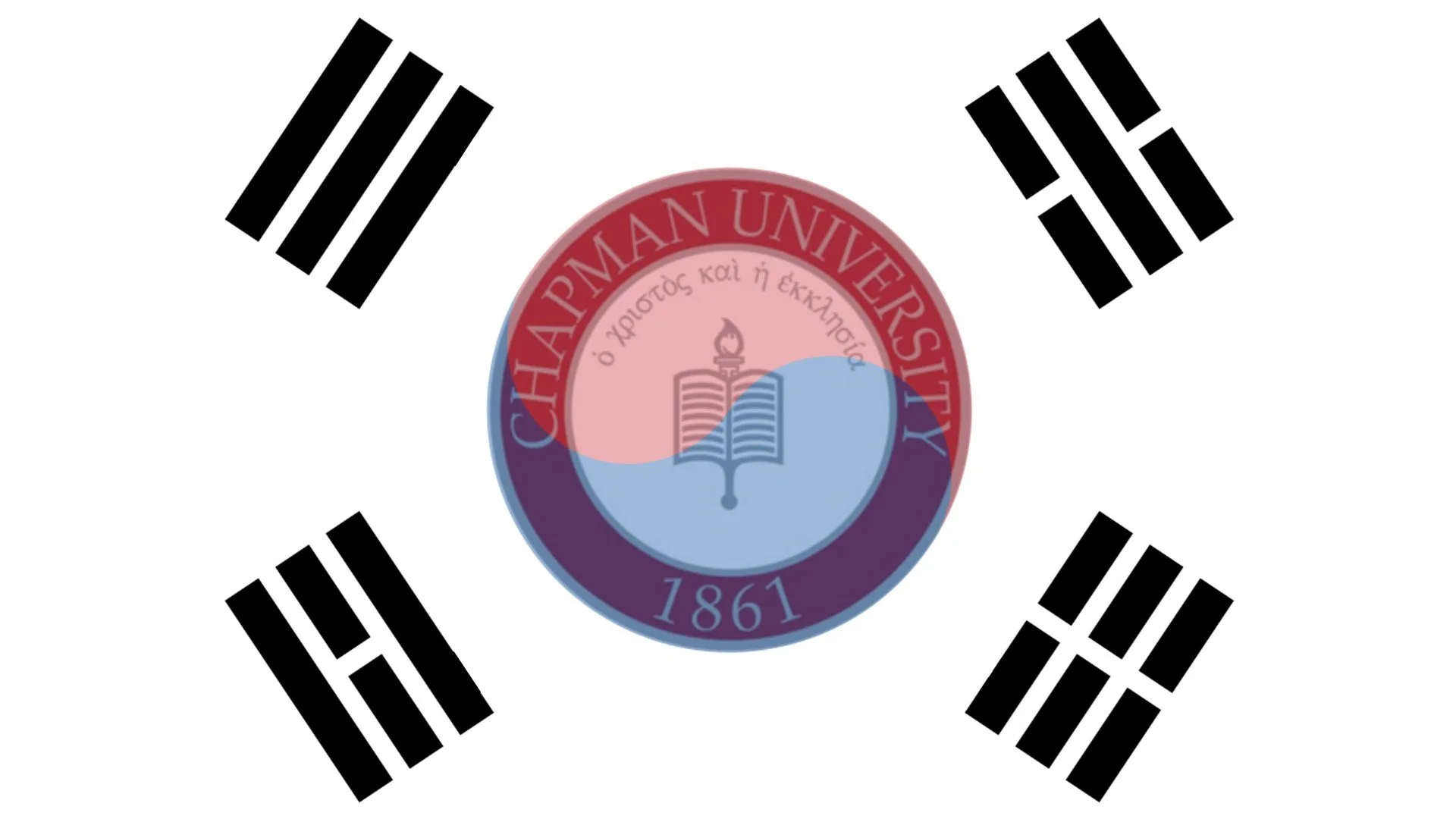
Collage by Riley LeBlanc, Photographer
“We’re goin’ up, up, up, it’s our moment/ You know together we’re glowin’/ Gonna be, gonna be golden.”
The song “Golden” recently won the Academy Award for Best Original Song, while “KPop Demon Hunters” took home the Oscar for Best Animated Feature. These historic wins marked a major moment for Korean American artists and for the global reach of K-pop. It was the first time a K-pop song won an Oscar and the first Korean American animated film to receive the award.
For artists like EJAE, REI AMI and AUDREY NUNA, the moment symbolized perseverance. During her acceptance speech, EJAE reflected on the journey that led to this recognition: “Growing up, people made fun of me for liking K-pop, but now everyone’s singing our song and all of the Korean lyrics.”
Hearing those words resonated with me as a Korean American. Seeing artists like EJAE, REI AMI and AUDREY NUNA succeed on such a global stage reminds me that dreams that once seemed distant are possible.
In recent years, Korean films have also made historic breakthroughs at the Academy Awards. The film “Parasite,” directed by Bong Joon Ho, became the first non-English language film to win Best Picture. Soon after, “Minari” brought another milestone when Youn Yuh-jung won Best Supporting Actress, becoming the first Korean actor to receive an Oscar. These moments represented more than individual achievements — they showed that Korean stories and voices belong on the world stage.
For many Korean Americans, including myself, the rise of Korean culture in the United States feels personal. Growing up, I was sometimes teased for enjoying Korean food, listening to K-pop or speaking Korean with my friends at school. At the time, these parts of my identity felt misunderstood. Today, however, Korean culture has become increasingly visible and celebrated across the country.
That growth is visible even here at Chapman. One student organization, Chapman Twilight, is a K-pop dance group that performs at campus events such as Midnight Breakfast and participates in Asian Pacific Islander Desi American (APIDA) celebrations alongside Chapman APSA. I remember attending Midnight Breakfast as a freshman and watching their performance. Seeing students enthusiastically perform K-pop choreography in front of a packed crowd made me proud of how far Korean culture has come.
The influence of K-pop and Korean media on campus was also highlighted when “KPop Demon Hunters” directors Maggie Kang and Chris Appelhans visited Dodge College of Film and Media Arts in December. During a master class, Kang spoke about the power of K-pop to connect people across cultures. As she explained, “K-pop is so inclusive — it’s just about the music and good vibes. It’s breaking down barriers of language and culture and connecting people from all different backgrounds.” Her message resonated deeply with me because it reflects the spirit of what Korean culture represents today.
Being Korean American means carrying both heritage and opportunity. It means remembering traditions while also sharing them with others. The growing popularity of K-pop and Korean media shows that culture does not need to stay confined to one language or one community. Instead, it can bring people together.
Winning an Oscar may be historic, but awards alone do not define a culture. What matters more is how people share their identity and represent their heritage. For Korean Americans like me — and for students across Chapman — K-pop shows that culture, music and storytelling can connect people everywhere.