
Propaganda under the guise of ‘bridging the gap’
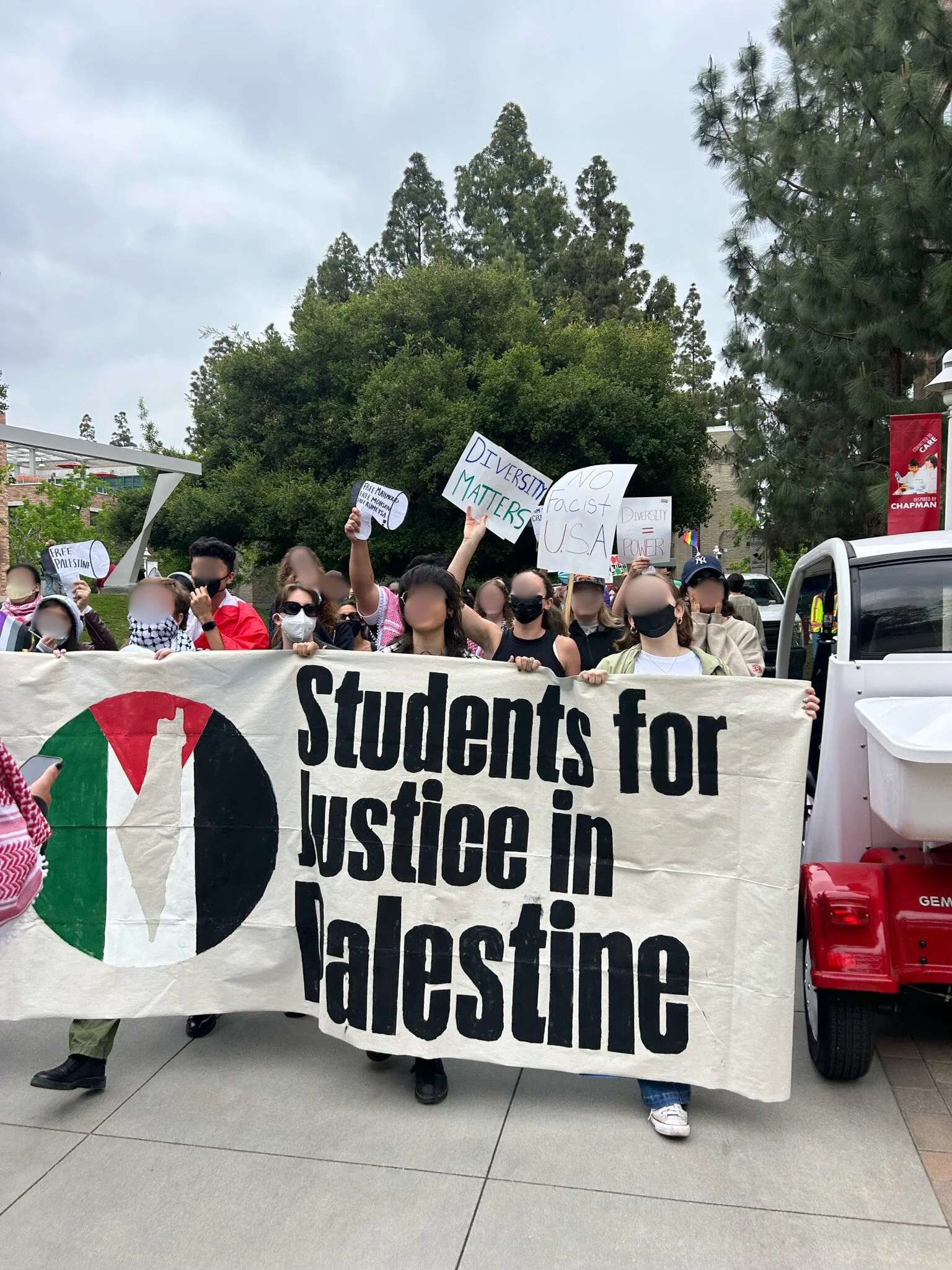
Photo courtesy of Students for Justice in Palestine
On Feb. 9, the Or Initiative, headed by professor Vikki Katz, officially launched itself with the stated purpose of “developing evidence-based alternatives to how young people (dis)engage with each other over contentious and complex issues, including the Israeli-Palestinian conflict and U.S. antisemitism.”
The launch event, which notably lacked Chapman student and faculty presence, played videos of teen actors performing dramatized quotes from an Or Initiative study. These interviews were conducted in Orange County and New York City and reached eighth and eleventh graders in private, public and Jewish Day Schools. On the lack of Muslim and Arab representation in the study, the Or report said it would make “a priority on including more Muslim and Arab student voices” in the future. However, their pattern of unbalanced focus and questionable guest speakers raises major concerns about the initiative’s ability to bring about substantive change, and who they intend to bring that change for.
Since their first event in April 2025, Fostering Dialogue Amidst Campus Conflict, Chapman administrators have sung praises about Or bringing people together for discourse — while simultaneously doling out disciplinary action for student activists raising their voices in dissent to ICE kidnappings, the genocide in Palestine and the destruction of DEI at our university. There is a clear message that said discourse needs to be on the institution’s terms, with no mention of Chapman’s complicity in the U.S.-Israel backed genocide of Palestinians or actions people can take to bring about justice.
Or has hosted guests like Ahmed Fouad Alkhatib, a pro-Israel propagandist who has blamed the genocide of Palestinians on peaceful protesters, and a tech entrepreneur named Adnan Jaber whose speech on Palestine has been moderate at best, as it promotes coexistence without explicitly calling for an end to the Zionist Entity or acknowledging the breadth of injustice occurring against the Palestinian people.
The launch event cemented our belief that Or promotes a line of centrism and advocacy for reform that is contingent on trust in government institutions that are rapidly succumbing to our country’s descent into fascism.
While the Or Initiative claims the goal of fostering civic engagement among students, there is a disconcerting evasion of systemic issues that underlines every conversation. The panelists at the launch event failed to mention Israel’s internationally recognized genocide of the Palestinian people, nor did they acknowledge that the “conflict” began long before Oct. 7, 2023.
One panelist, Louise Dubé of iCivics, bluntly said antisemitism will always be here and that we need to put our trust into institutions to combat it. We wholeheartedly reject this idea, seeing how Jewish identity has continually been weaponized for the political means of an apartheid state and by our own university.
We at Chapman Students for Justice in Palestine (SJP) are working towards a world where all forms of hate, bigotry and racism are eradicated; refusing to acknowledge root causes and claiming defeat before the work has been done will not bring about an end to antisemitism. Global liberation will.
Even though the Or Initiative has focused its sights on K-12 education, the program still has an impact on our campus. Or must be scrutinized by all of us to understand how they are representing contentious issues and struggles for justice, through their events and discussion circles. We cannot blindly put faith in our institutions, which have shown a willingness to turn against the very people they are meant to serve.
Until full liberation.