
Photo by Trinity Johnson, Photographer.
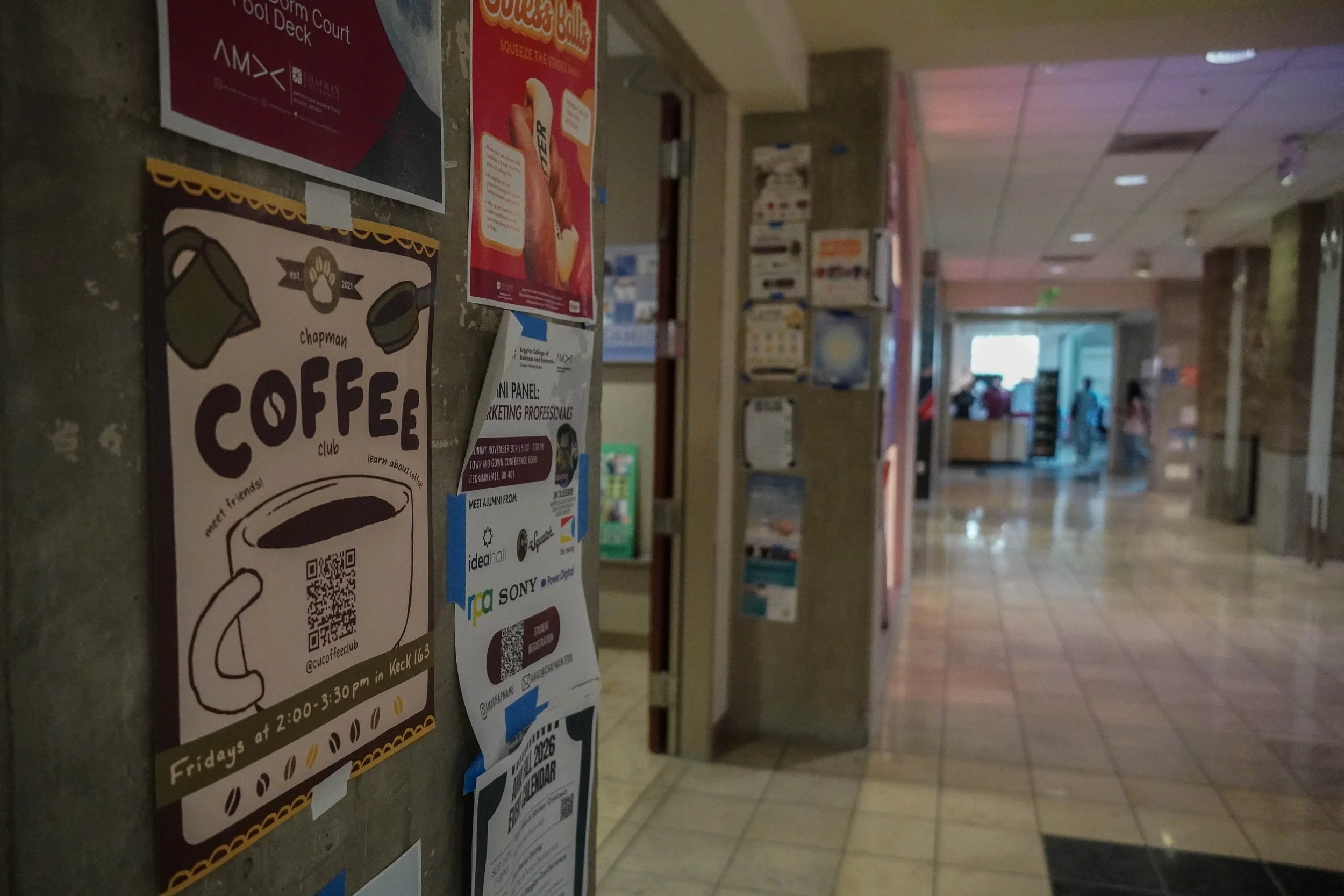
New clubs on campus are striving to make marginalized communities and the environment more inclusive. Some students may say this is a radical shift. To the founders, it’s just bare minimum human empathy.
LookSee and Heart & Hands are just two of many new student-run organizations joining campus.
LookSee
Sophomore creative writing major Edsel Tinoco, founder of the student-run organization LookSee, is leading the conversation of how to better implement invisible disability studies on campus.
“We know that is a surprisingly large group that is completely underserved, especially with the freezing of The Spoonies,” said Tinoco. The Spoonies was a student-run organization dedicated to bringing visibility to students with chronic illness and other disabilities.
It is unclear why The Spoonies club froze.
LookSee came to fruition after Tinoco and his friends realized that they couldn’t join Spoonies, as the club was no longer running. After being given the opportunity to take over Spoonies, he ultimately declined because he wanted to make sure he could adequately support the community that he served.
“You know, I felt very lonely for a very long time, and I wanted to make sure that people who are like me are able to easily find a community of like-minded people and be able to be connected with resources at Chapman,” said Tinoco. “I know that there's a lot of people like me here at Chapman, but we just don't have that good visibility.”
According to Tinoco, an invisible disability is something that hinders a person's ability to to normally live, but is invisible to the outside world.
“So currently our specialty isn't with mental disabilities. I'm autistic. A lot of the people on the board are autistic, but there are also very many physical disabilities that are also invisible,” said Tinoco.
According to the Invisible Disabilities Association, invisible disabilities can range from debilitating pain to fatigue, cognitive dysfunctions, brain injuries, learning differences and mental health disorders.
“I think there is a very huge misconception, especially with people with mental disabilities, that people say that we have superpowers to make us feel better, but I think that really denies how hard it is to live with an invisible disability,” said Tinoco.
LookSee is a space to counteract this misconception, showing the community that they deserve to be seen and part of the conversation.
“I feel like disability services are being kind of underfunded and undersupported by Chapman as a whole,” said Tinoco. “So we want to make sure we make those connections.”
Professor Brian Glazer, the head of disability studies, is the current faculty advisor for LookSee.
According to Tinoco, he feels that students have to fight for inclusion. However, this is not a fight against faculty.
“Even with disability services, I think we are fighting on the same side,” said Tinoco. “We're mainly trying to fight against the administration, upper management. So we will fight for our visibility of students, but we'll fight alongside faculty and people who do support us.”
Hearts & Hands
On the larger scale, sophomore accounting major Olivia Kim, founder of Hearts & Hands, is striving to remind the Chapman community on the importance of community service.
Hearts & Hands serves communities outside of Chapman, such as homeless shelters, women’s shelters and senior care homes. In doing so, Kim hopes that this will also help strengthen the communities already on campus.
“Growing up, being born and raised in Hawaii, we're kind of instilled with this moral and ideal that we take care of everyone around us, no matter who they are,” said Kim. “They don't have to be related to you. You don't have to know them. We just take care of them because that's what we do. That's our culture, and I wanted to bring that with me to this new community that I'm in.”
Since Chapman is a smaller school, student organizations and clubs have been able to thrive and make an impact on student’s lives.
“And I thought, what can I do, or what can we do as a school in this community to give back to the one around us, and that's kind of why I wanted to start the club,” said Kim. “I wasn't aware of any community service clubs at Chapman, so I thought, oh, this is a perfect opportunity to bring a little piece of my home and something that I'm passionate about, and plant that seed here at Chapman.”
Leaning into the community aspect at Chapman, Kim wanted to build a place where anyone could feel comfortable. Longing for community her freshman year, she wanted to encourage those around her to uplift the people around us.
“Personally, I've never had a class where it's very community service-based,” said Kim. “But then again, I haven't taken a lot of leadership classes like that, so I can see how Chapman doesn't really focus and stress upon that. It's more on the students to take that initiative and take a look around like the Chapman bubble and see, oh, there's a world around us that is not as blessed, is not as fortunate as us and it's our job to go out into that world and help them up.”
Marketing for the club was the biggest challenge at first. Encouraging college students who are busy with their workload to join community service initiatives had to be strategic.
“You know, college is scary for a lot of people. It was scary for me my freshman year. Everyone's in the same boat here,” said Kim. “Build bonds, but at the same time strengthen your sense of community and strengthen your sense of wanting to do good and put good out there.”
Other clubs joining campus include Chapman Caribbean Club, Anime and Manga Club and Chapman Renaissance Club.
In a culture obsessed with “the grind,” it is easy to overlook the people right beside us. Yet, student leaders are proving that real progress happens when we slow down and advocate for one another. We are all in the same boat, and meaningful change begins with how we treat each other.